Becoming the police chief of my hometown was a dream I had nurtured for over twenty years. From the moment I put on my first uniform, I had envisioned this day: leading a team I had once been part of, making strategic decisions, and improving the community I loved.
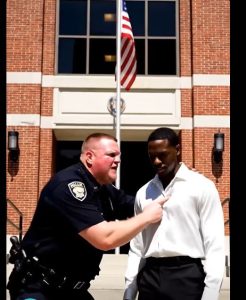
Yet, nothing could prepare me for the strange feeling of stepping into the role and realizing that the team I had worked alongside for years might see me differently — or not see me at all.
A Transformation They Didn’t Expect
The promotion came with perks, responsibilities, and a uniform that was subtly different from the one I had worn for most of my career. New insignia, a polished badge, a freshly pressed suit for administrative work — it all signaled change.
But it wasn’t the uniform that surprised me; it was the reaction, or lack thereof, from my team.
As I walked into the precinct that morning, I noticed their heads turn slightly, unsure expressions on familiar faces. Officers I had trained, mentored, and laughed with for years looked at me as if I were a stranger.
The First Challenge
Moments later, I realized that my team didn’t just see me differently because of my uniform. The dynamic had shifted. Where I had once been one of them, now I was the person in charge. The person who made final decisions, who evaluated performance, who controlled schedules and resources.
I watched as some officers exchanged glances, quietly assessing me the way they would any new leader. I understood that respect must be earned, even when the team already knows your history.
The first day tested my patience. Every conversation, every instruction had to be carefully measured. I couldn’t be too familiar, but I couldn’t be distant either. It was a delicate balance.
A Small Misunderstanding
During the morning briefing, I noticed Officer Ramirez whispering to a colleague. He didn’t recognize me in my new role and even doubted whether the chief had arrived on time.
When I spoke, giving directives calmly and clearly, there was a moment of pause in the room. The realization slowly dawned on them: the chief they had trained under, the colleague they had relied on in the field, was now the one setting the standard.
Earning Recognition
Throughout the day, I made it a point to engage with every member of my team. I walked the floors, stopped by each unit, listened to their concerns, and acknowledged their hard work.
It wasn’t about asserting authority; it was about demonstrating that leadership didn’t mean losing connection. I shared small stories from my past days on patrol, reminded them of challenges we had overcome together, and subtly reinforced the message: I knew the streets, I knew their struggles, and I was here to guide, not just supervise.
A Lesson in Leadership
By mid-afternoon, the team began to treat me differently. Smiles returned, conversations flowed more naturally, and even the most skeptical officers sought my advice. I realized that leadership isn’t a title; it’s action, consistency, and approachability.
They didn’t need me to remind them who I was; they needed me to show them the value of my leadership. My first day taught me that respect is built through trust, presence, and empathy.
The Moment of Connection
Just before leaving the precinct that day, I paused by the squad room. Officer Ramirez approached me. “Sir… I didn’t recognize you at first. I mean, I knew it was you, but you look… different. And now, I can see why they made you chief.”
I smiled, feeling a mix of relief and pride. It was a small moment, but it symbolized everything I had learned that day: transformation is mutual. Leadership changes both the leader and the team.