When Alexandra Stepanova and Ivan Bukin took the ice at Bolshoi on Ice 2015, the audience expected elegance, precision, and refined choreography. But what they witnessed was far more profound—an unforgettable performance that blended classical artistry with modern emotion, transforming the rink into a living stage.
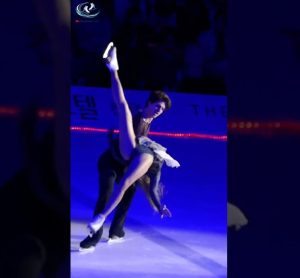
The chemistry between the two skaters was undeniable, and their seamless movements created a visual harmony that felt closer to ballet than to traditional ice dancing. With every turn, lift, and glide, they reminded viewers that ice dance is not just a sport; it is a powerful storytelling art form.
The Beauty of a Perfect Partnership
Their performance stood out not just because of talent but because of their partnership—years of training, trust, and communication manifesting in a flawless collaboration. Ice dancing requires absolute synchronization, and Stepanova and Bukin have built a reputation for moving as though they share a single mind. In Bolshoi on Ice 2015, this unity reached a new peak.
Each step Stepanova took seemed anticipated by Bukin before it even happened. Their eyes met often, not for show, but for connection—for understanding where the story needed to go next. The audience could see the unspoken conversation between them, a delicate give-and-take that brought authenticity to the performance. Their skating was less a routine and more a dialogue, a soft conversation told through motion.
This harmony allowed them to explore both powerful and tender moments throughout the program. When the music swelled, their movements grew grander, filling the space with energy. When the melody softened, they brought the crowd closer, using subtle gestures and intricate footwork to convey emotion. It is this dynamic range that sets them apart as ice dancers who can tell a story without a single spoken word.
Choreography That Captivated Every Heart in the Arena
One of the most memorable aspects of their Bolshoi on Ice performance was the choreography—lush, expressive, and filled with details that elevated the entire routine. The piece featured sweeping lifts, dramatic spins, and needle-sharp transitions, each executed with impeccable timing. But more importantly, the choreography built a narrative, guiding the audience through different emotional landscapes.
There was passion, communicated through deep edges and intertwined spins. There was joy, expressed through playful footwork and synchronized gliding. And there was vulnerability, shown in the moments when the music softened and the skaters leaned into each other with near-weightless trust. These layers made the routine more than a technical demonstration; it became an emotional journey.
The choreography made full use of the vast canvas of the ice, allowing Stepanova and Bukin to paint with movement. They swept across the rink in wide arcs, then tightened their path into compact, intricate sequences.
Costumes and Music That Elevated the Story
A performance becomes iconic not only through movement but through aesthetic and auditory details. At Bolshoi on Ice 2015, the costumes and music created the perfect atmosphere, enhancing the duo’s expression and lending depth to the narrative.
Stepanova wore a delicate, flowing dress that mirrored her movements, capturing light with every spin. The soft fabric seemed to dance alongside her, amplifying the elegance of her lines. Bukin’s costume, equally refined, complemented her look with classic simplicity, reinforcing the balance between the two skaters.
The music choice tied everything together—a rich, emotional score that shifted smoothly between tempos and moods. Each rise in the melody propelled them forward, and every quiet moment allowed them to slow down, breathe, and connect with the audience. This thoughtful combination of visual and auditory elements created a holistic experience, immersing the crowd in a story that lingered long after the final notes faded.