They walked into the café like they owned more than just the place—they owned the moment, the air, and apparently the people in it. Designer coats draped carelessly over their arms, expensive watches catching the light with every dismissive gesture. Money had given them confidence, but somewhere along the way, it had also stripped them of something far more valuable: basic decency.

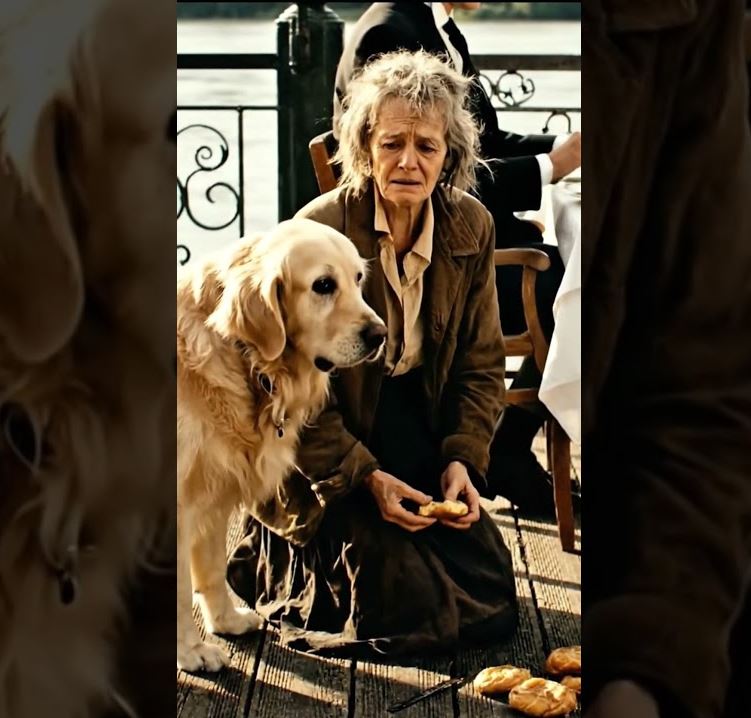
The café was warm and quiet, the kind of place where conversations stayed low and time slowed down. An elderly woman sat near the window, carefully stirring her tea, a gentle smile resting on her face. At her feet lay a Golden Retriever, calm and attentive, his golden fur glowing softly in the afternoon light. He didn’t beg. He didn’t move. He simply stayed close, doing what he had clearly been trained to do—protect, comfort, be present.
That calm didn’t last long.
The wealthy couple approached the counter, irritation already written across their faces. The line was short, but to them, even a brief wait felt like an insult. Their voices rose quickly—sharp, impatient, dripping with entitlement. The barista stiffened, doing her best to remain polite as the couple complained about the service, the temperature, the wait, the world. Each word landed heavier than the last.
When the elderly woman politely asked if they could lower their voices, the man turned on her with a smirk that cut deeper than shouting ever could.
“Mind your business,” he snapped. “Some of us have places to be.”
The room fell silent.
You could feel it—that collective discomfort when kindness is met with cruelty. The elderly woman’s smile faded, her shoulders sinking slightly as she looked down at her tea. No one spoke. No one intervened.
Except someone did.
The Golden Retriever rose.
It wasn’t sudden or aggressive. There was no bark, no growl. Just a slow, deliberate movement as he stepped forward and placed himself between his owner and the couple. His posture changed—head high, body steady, eyes locked. He wasn’t threatening. He was unmistakable.
The man laughed nervously. “Get your dog under control.”
The retriever took one more step forward and sat.
Right in front of them.
Calm. Silent. Unmovable.
Something about that stillness was unsettling. The dog didn’t need to show teeth. His presence alone was enough. He represented something the couple clearly lacked: loyalty, respect, and an instinct to protect the vulnerable without expecting anything in return.
People began to notice. Phones came out. Whispers spread. The power in the room shifted—not toward wealth or status, but toward dignity.
The woman tugged at her partner’s sleeve. “Let’s just go.”
For the first time since they’d entered, they looked uncomfortable. Exposed. Their money couldn’t buy authority here. It couldn’t silence a room or move a dog whose entire purpose was love and protection.
As they left, the retriever calmly returned to his spot at the elderly woman’s feet and lay down, resting his head against her shoe. She reached down and stroked his ears, her smile returning—this time stronger.
The café exhaled.
The barista whispered a quiet “thank you.” Someone paid for the woman’s tea. A few people applauded softly, not for drama, but for justice served without a single harsh word.
Because in the end, wealth can buy influence, comfort, and power—but it can’t buy character.
And it certainly can’t intimidate a Golden Retriever who knows exactly what he stands for.