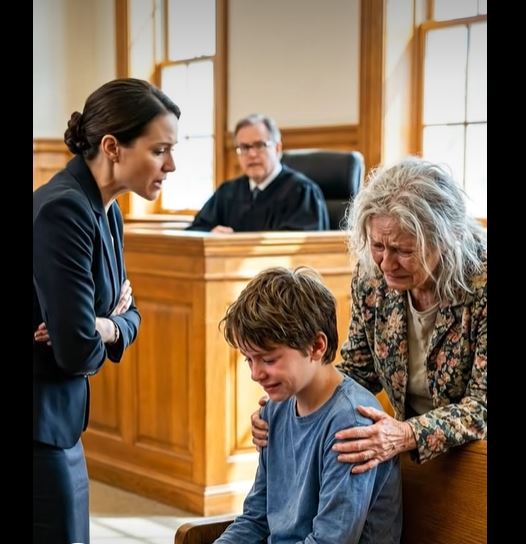
My daughter left her autistic son behind on a rainy afternoon, carrying only a suitcase and promises she never kept. She said she needed time to “fix her life,” that she would come back once things were stable.
I watched her walk down the driveway without looking back, while her little boy stood beside me, gripping my hand with silent confusion. He didn’t cry or ask questions. He just stared at the ground, rocking gently, as if trying to make sense of a world that had suddenly shifted beneath his feet. In that moment, I knew my life had changed forever.
Raising my grandson was nothing like raising my own children. He was three years old then, nonverbal, sensitive to noise, frightened by change, and overwhelmed by emotions he couldn’t express.
The nights were the hardest. He would wake up screaming, unable to explain what scared him, and I would sit on the floor beside his bed for hours, humming softly until his breathing slowed. I learned patience in ways I never imagined, learned to listen with my eyes instead of my ears, learned that love doesn’t always come back in words or hugs, but in small signs of trust.
The years passed slowly and quickly all at once. Therapy appointments replaced vacations. Visual schedules covered my refrigerator. I celebrated victories most people would never notice—his first time making eye contact, his first calm grocery trip, the day he finally said “Grandma” in a whisper that shattered my heart and healed it at the same time. My daughter rarely called. When she did, it was brief, distant, always rushed. She said life was complicated. I stopped expecting more.
By the time my grandson was ten, he had found his world. He loved numbers, patterns, and computers. While other children played outside, he sat for hours teaching himself to code simple programs. His teachers were astonished by his focus and intelligence. I simply watched with quiet pride, knowing how hard he had fought to get there. He still struggled socially, still needed routine and reassurance, but he had confidence now—something no one could take from him.
She arrived in a sleek car, dressed in expensive clothes, her confidence unmistakable. She had found success, she said. A thriving career. Stability. She hugged me politely, then turned her attention to the boy standing behind me—the boy she barely recognized. He was taller now, calm, composed, eyes steady instead of lost. She smiled, as if proud, as if she had somehow been part of the journey.
She said she wanted to reconnect. To “be a mother again.” To take him with her, give him opportunities, schools, a better life. I listened quietly, my hands folded, my heart pounding. My grandson didn’t speak. He stood close to me, his shoulder brushing mine, grounding himself in familiarity. When I asked him later how he felt, he typed three words on his tablet: “I stay here.”
That was the moment everything became clear.
Success had brought her back, but love had never left this house. It had lived in sleepless nights, in therapy waiting rooms, in patience stretched thin and rebuilt stronger. It lived in every small victory we celebrated alone. My daughter saw the outcome. I had lived the process.
I told her the truth—not angrily, not cruelly, but firmly. She had given birth to him, yes, but she had not raised him. She had not learned his triggers, his fears, his triumphs. She had not held him through meltdowns or taught him how to survive a world that rarely understands him. She cried. She said she had been afraid. I believed her. But fear does not excuse abandonment.
Today, my grandson is thriving. He attends a specialized program, builds software that amazes his instructors, and still sits beside me every evening, content in the quiet we share. He calls me his safe place. My daughter visits sometimes now, slowly rebuilding trust, learning who her son truly is—not the success story, but the human being.