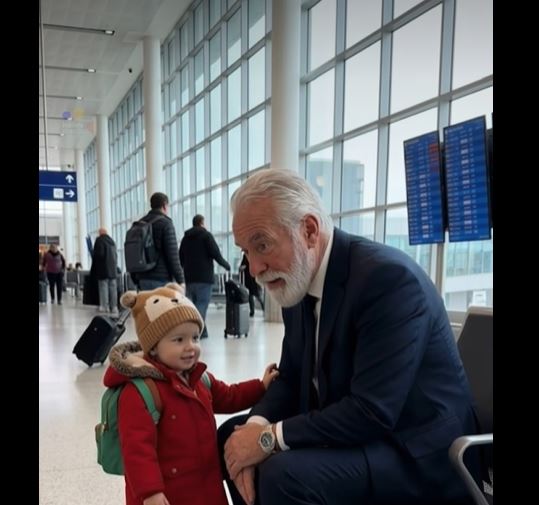
A millionaire waiting for his flight looks beside him—and everything changes in a way no amount of money could have prepared him for.
The airport lounge was quiet in the way only expensive places manage to be. Soft lighting, muted colors, and the low murmur of business travelers created an atmosphere designed to feel detached from the chaos beyond its glass walls. Nathan Cole sat alone near the window, his tailored suit immaculate, his leather briefcase resting neatly at his feet. He had arrived early, as he always did, preferring control over chance. His private jet was grounded for maintenance, forcing him onto a commercial flight for the first time in years.
Nathan didn’t like disruptions.
He checked his watch, skimmed through emails on his phone, and mentally reviewed the agenda waiting for him on the other side of the flight. Meetings, contracts, numbers—everything that made sense. People passed by without registering as individuals, just movement in the periphery of his vision.
Then someone sat down beside him.
Nathan barely glanced over at first, assuming it was another traveler killing time. But something about the stillness made him look again. The man next to him wore worn jeans and a faded jacket, his shoes scuffed and mismatched. His hair was uncombed, his face weathered, as if life had pressed too hard for too long. A small backpack rested at his feet, clearly old but carefully zipped, as though its contents mattered deeply.
Nathan felt an instinctive flicker of irritation. This was a premium lounge. He wondered briefly how the man had gotten in.
The stranger noticed Nathan looking and offered a polite nod. “Delayed flights bring everyone together,” he said lightly.
Nathan forced a neutral smile. “Seems that way.”
They sat in silence for a few moments. Nathan returned to his phone, but his focus slipped. The man beside him stared out the window at the runway, his expression thoughtful, almost peaceful. It was strange—Nathan couldn’t remember the last time he had looked at anything without calculating its value.
The man didn’t answer immediately. Instead, he reached into his jacket and pulled out a folded photograph. It was creased and worn from handling. He looked at it for a moment before handing it to Nathan.
In the photo was a younger version of the man, standing beside a woman and a small boy. They were smiling widely, arms wrapped around each other, standing in front of what looked like a modest house.
“That’s my family,” the man said quietly. “Or it was.”
Nathan felt a tightening in his chest he hadn’t expected. “What do you mean?”
“My wife died eight years ago. Cancer,” he said calmly. “My son was six. After that… things unraveled. Medical bills, missed work, depression. One bad decision after another.”
Nathan handed the photo back slowly. He didn’t know what to say. He was used to success stories, not collapse.
“I’m sorry,” he said finally.
“Thank you,” the man replied. “I don’t tell people for sympathy. Just… perspective.”
They fell silent again. Nathan stared out at the runway, but his thoughts were elsewhere now. He thought of his own life—his penthouse apartment, his cars, the awards on his office wall. He thought of the empty rooms he rarely spent time in, the phone calls he postponed, the relationships he had let fade because they didn’t fit his schedule.
He thought of his own daughter, studying abroad. He sent her money regularly but couldn’t remember the last real conversation they’d had. He was always busy. Always later.
An announcement echoed through the lounge, calling passengers to board. Nathan stood automatically, then paused.
Nathan reached into his wallet and pulled out a card. Then, after a moment’s hesitation, he did something he had never done before. He wrote his personal number on the back.