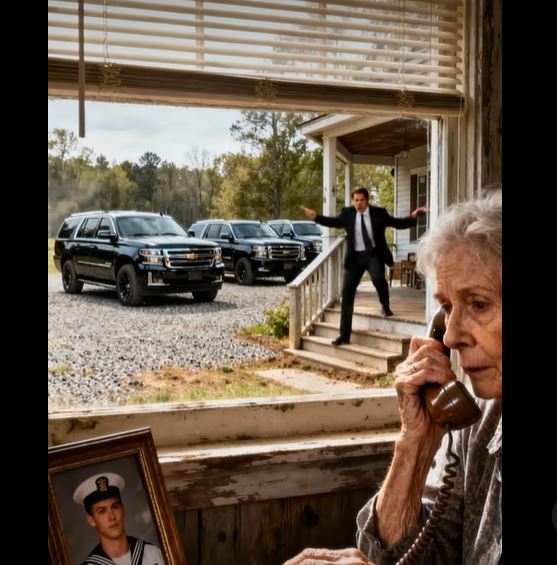
It arrived on a Tuesday morning, folded neatly and slipped into the old metal mailbox at the end of the dirt road. Thomas Miller read it standing in his kitchen, the smell of fresh coffee still in the air. The words were polite, professional, and devastating.
They called it development. A logistics hub, hundreds of jobs, progress for the region. The letter explained that the land was perfectly located, flat, accessible, and underused. Compensation would be provided. The timeline was firm.
Thomas read it twice, then sat down heavily at the table.
The farm had been in his family for four generations. His great grandfather had cleared the first field by hand. His grandfather built the barn. His father had planted the orchard that still bloomed every spring. Thomas was not rich, not influential, not loud. He was just the man who stayed when others left.
He folded the letter and placed it carefully in the drawer beneath the window, the one where important things went.
At first, he said nothing.
He kept feeding the chickens at dawn. He kept repairing fences. He kept selling produce at the local market on Saturdays. Most people did not even know anything was happening. That was how the battle began. Quietly, with routine and restraint.
Soon, officials began stopping by, always polite, always reassuring. They talked about numbers, surveys, timelines. They said things like inevitable and beneficial. They smiled as they spoke.
Thomas listened. He nodded. He never agreed.
Neighbors began to hear about it. Some shook their heads sympathetically. Others encouraged him to take the money and retire. A few avoided the topic altogether.
Thomas began hosting open days, inviting local schools to visit. Children came to learn where food came from, to hold baby goats, to walk the orchard paths. Teachers posted photos. Parents shared stories online. Slowly, Miller Farm stopped being just a piece of land.
It became a place.
Then came the community dinners. Long tables set up in the field. Local musicians played. Neighbors who had not spoken in years shared meals grown from the soil beneath their feet. Thomas did not talk about the letters. He did not ask for help.
He simply let people remember why the farm mattered.
The county noticed the activity and sent a representative to observe. She walked the grounds with a clipboard, noting the number of visitors, the noise levels, the traffic. Thomas greeted her kindly and offered her cider from the orchard apples.
Survey markers appeared along the edges of the land. Red flags in the soil. Machines parked just beyond the fence line. The message was clear. Time was running out.
He applied for historical agricultural status, citing documented records, original structures, and continuous family operation for over a century. He submitted photos, journals, land deeds, and testimonials from elders in the community.
The room was small. Fluorescent lights. Folding chairs. Officials sat behind a table, prepared for a brief formality. They expected resistance, maybe a speech, then approval of the acquisition.
He did not raise his voice. He did not accuse anyone. He spoke about soil quality, about crop rotation, about what happens when farmland disappears and cannot be replaced. He spoke about his grandfather’s hands, cracked and steady. About mornings that smelled like earth instead of exhaust.
Local media picked up the story. Not because of protests, but because of contrast. A quiet farm versus a massive development. A man who refused to shout. A community that chose to gather instead of fight.
The pressure shifted.
Investors began asking questions. Environmental impact reports were reviewed more closely. Traffic concerns grew. Suddenly, the logistics hub did not seem as simple as it once had.
Miller Farm would be preserved.Not just preserved, but designated as a protected agricultural and educational site. Funding would be allocated for conservation, infrastructure repair, and local programs. The county representative slid the document across the table.