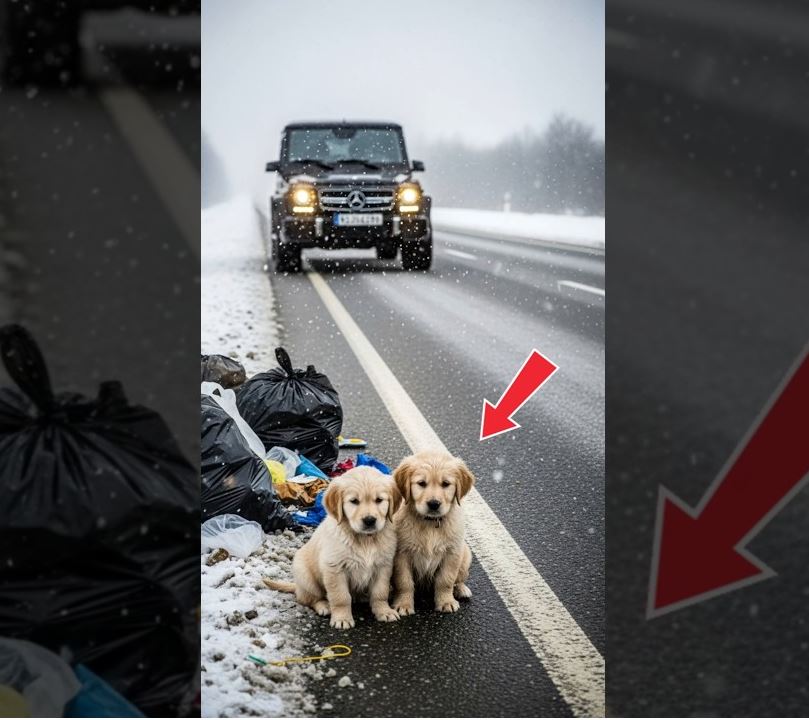
Every morning, Mr. Harold Thompson followed the same routine. He woke before sunrise, brewed a cup of weak coffee, put on his old wool coat, and walked slowly down the quiet street near his home. At seventy-eight years old, his steps were careful but steady, guided more by habit than strength. The neighborhood had changed over the years, but the walk gave him a sense of purpose and peace that nothing else could replace.
That morning, the air was colder than usual. Frost clung to the grass, and the sky hung low and gray. As Harold passed the small park at the edge of the block, he heard a sound that stopped him. It was faint, almost lost in the wind, but unmistakable. A soft whimper.
At first, he thought he imagined it. His hearing was not what it used to be. But then he heard it again, closer this time, followed by a weak, desperate yelp. Harold tightened his grip on his cane and followed the sound toward a row of bushes near the park’s trash bins.
Two tiny puppies were huddled together on a piece of cardboard, shaking uncontrollably. Their fur was dirty and matted, their ribs visible beneath their skin. One of them tried to stand when it saw him but collapsed immediately, too weak to support itself. The other pressed closer, as if trying to share what little warmth it had left.
Harold knelt slowly, ignoring the ache in his knees. Someone had left them there. No food. No water. No blanket. Just two helpless lives abandoned to the cold.
The puppies looked up at him with wide, fearful eyes. They did not bark or run. They did not have the energy. Harold removed his coat without hesitation and wrapped it gently around them. Their small bodies trembled violently at the sudden warmth.
He looked around, hoping someone might appear and explain the situation, but the park was empty. Whoever had left them was long gone.
Harold knew he should call animal control. He also knew how long that might take. He checked his watch and made a decision that felt instinctive rather than planned.
Carefully, he lifted both puppies into his arms. They weighed almost nothing. As he carried them back toward his house, one of the puppies let out a weak sigh and rested its head against his chest. Something inside Harold broke open then, a familiar ache he had learned to live with but never truly healed.
His wife, Margaret, had passed away five years earlier. Since then, the house had been quiet. Too quiet. The children lived in other states. The days stretched long and empty. He had learned to accept the silence, but holding those puppies reminded him how alive it felt to be needed.
At home, Harold placed them near the heater and called his neighbor, a retired nurse, who helped him clean them gently and give them water in small amounts. The puppies drank greedily, then curled up together again, finally sleeping deeply for the first time in who knows how long.
Later that afternoon, Harold took them to the local veterinary clinic. The vet confirmed what he already suspected. The puppies were malnourished, dehydrated, and only a few days away from not surviving the cold.
Word spread quickly through the neighborhood. A kind grandfather had rescued two abandoned puppies. People stopped by with blankets, food, and toys. Someone offered to adopt them. Another suggested a shelter.
Harold listened politely, but his heart had already decided.
Caring for them was not easy. They cried at night, needed frequent feedings, and required vet visits Harold had not planned for. But each morning, when he woke up to two wagging tails and soft noses pressed against his hand, the effort felt small.
The puppies grew stronger every day. Their fur filled out. Their eyes brightened. They followed Harold everywhere, clumsy and joyful, turning his quiet house into a place of movement and sound again.