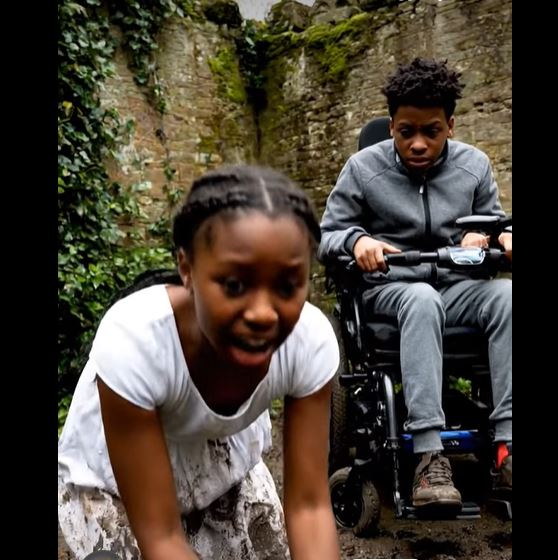
At first, I thought it was nothing more than a child’s curiosity. That was the mistake I would replay in my mind for weeks afterward. It was late afternoon, the kind of quiet hour when the world slows down and nothing seems urgent. I was in the kitchen, rinsing dishes, when I noticed her through the back window. She was crouched near the old oak tree, hands deep in the soil, digging with a determination that felt strange for her age.

I stepped outside and walked toward her, irritation bubbling up. The ground near the tree was uneven, freshly disturbed, as if she had been working at it for some time. Dirt clung to her fingers and knees, but she didn’t seem bothered by it. Her attention was fully locked on the hole she was digging.
She finally looked up at me. Her face was serious, almost tense, nothing like the carefree expression she usually wore. “I have to,” she said simply, then went back to digging.
I reached out and gently pulled her hands away from the soil. “That’s enough,” I said. “You don’t dig in the yard without asking.”
She resisted, not violently, but with an urgency that made my stomach tighten. “Please,” she said. “I’m almost there.”
That was when I noticed something different in the hole. Beneath the loose dirt, there was a patch where the soil looked darker, denser, as if it had been disturbed long ago and then covered again. My irritation faded, replaced by unease.
I laughed it off at first, telling myself she meant a memory, a feeling, imagination. Children say strange things all the time. Still, my hands moved instinctively, brushing away dirt from the spot she had been digging. I expected to find rocks, maybe an old root, perhaps debris from years before we bought the house.
Instead, my fingers struck metal.
I stopped breathing for a moment. Slowly, carefully, I cleared more soil away. A small, rusted tin box emerged from the ground, dented and sealed shut. It looked old, far older than anything that should have been buried there.
She shrugged, suddenly unsure of herself. “I don’t know. I just kept thinking about this tree. I dreamed about it.”
I lifted the box from the hole. It was heavier than I expected. We brought it inside and set it on the kitchen table. For a long moment, neither of us touched it. The house felt unusually quiet, as if even the walls were listening.
Inside were photographs, neatly stacked despite their age. Black-and-white images of people I didn’t recognize. A young couple standing in front of the same house we lived in now. A child, about my daughter’s age, smiling nervously at the camera. Beneath the photos lay a folded letter, yellowed and fragile.
The letter was dated over forty years earlier. It was written by a woman whose name I did not know, but whose words carried a weight that pressed against my chest. She wrote about loss, about hiding something precious until someone kind enough would find it. She wrote about hope, about trusting the future even when the present had failed her.
“If you are reading this,” the letter said, “then my daughter’s laughter did not disappear forever. It waited.”
The child in the photographs had lived here. Played in this yard. Dug near this tree. And somehow, across decades, my daughter had been drawn to the same place, compelled by something she couldn’t explain.
That night, I barely slept. My rational mind searched for explanations. Coincidence. Suggestion. Imagination. But none of them explained the precision, the certainty with which she had dug. Or the timing.
The next day, I contacted the local historical office. With the photographs and letter, it didn’t take long to trace the family. The woman who wrote the letter had lost her child in an accident shortly after burying the box. The house had been sold soon after. No one had ever returned for it.