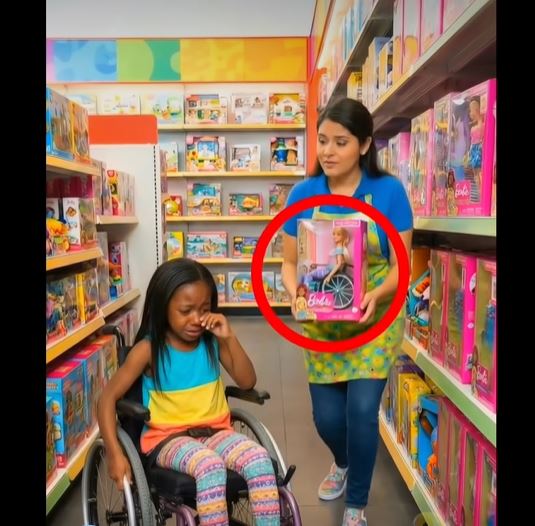
It was a typical afternoon at the bustling grocery store, the kind of place where the aisles hum with quiet conversations, carts squeak along the polished floors, and the faint smell of fresh bread drifts through the air. Shoppers moved quickly, some focused on their lists, others distracted by phones or children tugging at sleeves. Employees went about their routines, stocking shelves, ringing up purchases, and offering polite smiles to customers as they passed.
Among the crowd was a girl in a wheelchair, her movements careful and deliberate as she navigated the store’s narrow aisles. She had a list clutched in her hand, her eyes scanning the shelves, but one item had proven stubbornly out of reach. She paused, hesitated, and then, with a soft but audible voice, called out to an employee. “Excuse me,” she said. “Could someone help me reach this?”
The request was simple, ordinary even, but it immediately drew the attention of a few nearby shoppers. Most assumed it would be handled quickly—after all, helping a customer is part of the job, and employees are trained to assist whenever needed. What no one expected was how the response would unfold.
A young store worker approached, smiling politely. “Of course! Let me get that for you,” he said, moving toward her with ease. He reached for the item, adjusted it so she could take it, and passed it into her hands. The interaction was brief, courteous, the kind of small kindness that often goes unnoticed. But then something remarkable happened.
Instead of continuing on her way, the girl paused. She looked up at the worker, then around the store, her eyes bright with determination. “Thank you,” she said, but not in the usual way of simply acknowledging help. “Would you help me with something else?”
The worker paused, unsure. In most cases, people in wheelchairs would rely on assistance for items out of reach, and he could easily have offered to do it for her. But there was something about the way she looked at him—confident, unafraid, insisting politely but firmly—that made him reconsider. With a careful adjustment, he positioned her wheelchair slightly closer, angled it just right, and offered a hand of support rather than taking control.
Then, she leaned forward, stretched her arms, and managed to grasp the item herself. The crowd of shoppers watching gasped, not in alarm but in astonishment. In that small, ordinary aisle of the store, a girl had done what no one expected: she had taken control of a moment, asserting independence while still accepting help in the exact measure she needed.
The worker clapped softly, and a few shoppers joined in with smiles and murmurs of encouragement. The girl beamed, holding the item triumphantly. But she wasn’t done. She continued down the aisle, asking politely for assistance when necessary, but each time making clear that she was capable of more than anyone had assumed.
By the end of her shopping trip, the energy in the store had shifted. People who had only glanced at her before now saw her determination, her confidence, and her courage. The employee who had helped her said later that he had never felt so moved by a simple request for assistance, realizing that sometimes helping isn’t just about doing things for someone—it’s about empowering them to do what they can for themselves.
What surprised everyone that day wasn’t just that a girl in a wheelchair had asked for help—it was the way she combined independence and trust, strength and humility, showing that capability isn’t always obvious, and courage often comes quietly. Shoppers left with a sense of admiration, employees returned to their duties with renewed awareness, and the girl went home with her groceries and a reminder that she had changed more than her own day—she had reminded everyone around her of the extraordinary power of determination and dignity.