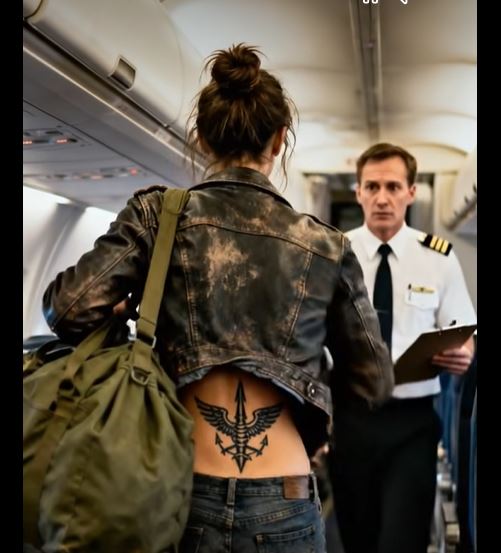
The boarding process had already been tense, the kind that turns grown adults into impatient children. Overhead bins slammed shut, flight attendants repeated the same instructions with forced calm, and passengers argued softly over armrests and legroom. When she stepped onto the plane, she noticed it immediately—her seat was occupied.
A man in his late forties sat there comfortably, jacket folded neatly, headphones already in, legs stretched just far enough to make it clear he had no intention of moving. He looked successful in the loud way—expensive watch, crisp shirt, confidence that took up space. The kind of person who assumed inconvenience only happened to other people.
He sighed loudly, drawing the attention of nearby passengers. “Listen,” he said, lowering his voice in a way meant to sound reasonable but carried a sharp edge. “I’ve got a tight connection, and I need to get off quickly. Just take my seat. It’s right there.”
He pointed to the middle seat beside him.
Several people watched now. No one said anything.
She looked at the middle seat, then back at him. “I’m sorry,” she said. “I specifically booked the aisle.”
The man laughed softly, shaking his head. “Unbelievable. You know what? Fine. If you want to make a scene, call the attendant.”
The flight attendant checked both boarding passes and smiled professionally. “Sir, this seat does belong to her.”
The man leaned back, crossed his arms, and smirked. “I’m already settled. We’re about to take off. Surely you can make an exception.”
The attendant hesitated, eyes flicking briefly to the woman. The unspoken question hung in the air: Is this worth delaying the flight?
The woman answered quietly, “It’s okay. I’ll take the other seat.”
The man’s smile widened, victorious.
“See?” he said, sliding his headphones back on. “No harm done.”
She sat down without another word, folding her hands in her lap. To anyone watching, it looked like another small injustice swallowed for the sake of peace. Another person backing down to avoid conflict.
But as the plane taxied down the runway, the woman wasn’t angry.
Because she knew something the man didn’t.
Halfway through the flight, turbulence rattled the cabin. Drinks spilled. The captain’s voice came over the intercom, steady but serious, explaining that weather ahead might require adjustments on landing. A few passengers shifted nervously.
Then another announcement followed—short, direct.
“We have an unexpected issue with our landing clearance. Please remain seated.”
The man in seat 3C frowned, pulling his headphones off again. “What does that mean?” he muttered to no one in particular.
A few minutes passed. Then the lead flight attendant approached the front row, her expression noticeably different now—focused, respectful.
She stopped beside the woman in the middle seat.
“Dr. Morales,” she said quietly, but clearly enough to be heard. “The captain would like a word with you.”
Inside the cockpit, the situation was more serious than the passengers knew. A passenger in the rear had collapsed earlier, and now the weather complications meant emergency medical support on the ground would be delayed. The captain had reviewed the manifest.
Dr. Elena Morales wasn’t just any doctor.
She was a globally recognized trauma surgeon. A consultant for aviation safety boards. Someone who had trained flight crews on emergency response protocols.
She assessed the situation quickly, asked precise questions, and gave clear instructions. Her presence steadied everyone.
Back in the cabin, the man shifted uncomfortably in his stolen seat. The confidence he’d boarded with was gone. Around him, passengers whispered.
“Did you hear? She’s a surgeon.”
“Apparently she’s the reason they’re not diverting.”
“She saved someone on another flight last year.”
The man swallowed.
Minutes later, Dr. Morales returned, speaking briefly with the flight attendant before turning to address the nearby passengers.
“The situation is under control,” she said calmly. “Everything is going to be fine.”