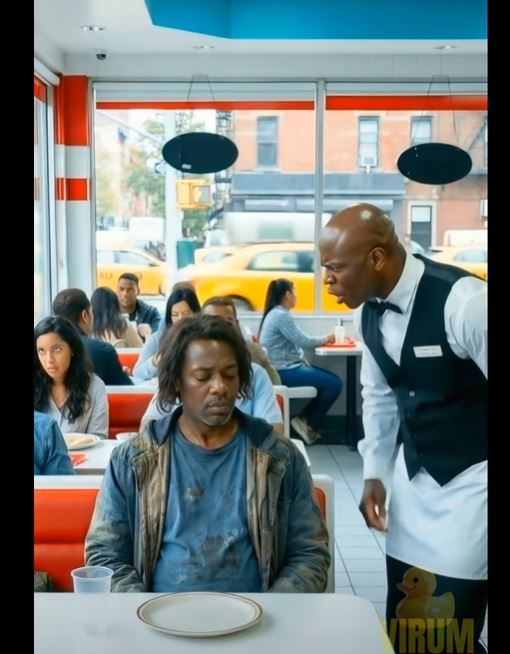
The restaurant was the kind of place where appearances mattered. Soft piano music floated through the air, crystal glasses caught the light just right, and the clientele usually arrived in tailored suits, designer dresses, and polished shoes that never touched a crack in the sidewalk. Reservations were made days in advance, sometimes weeks, and the hosts were trained to read people the moment they walked through the door. They knew who belonged and who didn’t — or at least they thought they did.

That evening, as the dinner rush began, a man stepped inside who didn’t fit the picture.
His jacket was worn, the sleeves frayed at the edges. His shoes were clean but old, scuffed by years of walking. His hair was neatly combed, yet unmistakably gray and thinning, and his hands bore the marks of labor — rough skin, small scars, nails cut short out of habit rather than style. He paused just inside the entrance, glancing around as if unsure whether he was in the right place.
Her smile flickered, eyes darting briefly to his shoes, then to the reservation list. She asked, politely but stiffly, if he had a reservation. The man shook his head and said softly that he didn’t, but if there was a free table, he would appreciate it. There was something calm in his voice, something unassuming. Still, the hostess looked uncertain. On a busy night like this, tables were valuable, and guests like him were… unexpected.
Before she could respond, another server walked past — a young woman named Elena.
Elena had been working at the restaurant for nearly three years. She knew the unspoken rules, the quiet hierarchy of guests, the subtle ways servers were encouraged to prioritize certain tables. But she also carried something else with her — a habit she’d never lost, no matter how polished the restaurant became. She looked people in the eyes. All of them.
She noticed the man standing there, waiting, hands clasped loosely in front of him, trying not to draw attention. She saw the way others looked past him, already making assumptions. Without hesitation, Elena stepped forward.
The hostess glanced at her, surprised, but said nothing. Elena led the man to a small table near the window — not the best in the house, but not hidden away either. She pulled out the chair for him and handed him a menu, just as she would for any other guest.
As Elena walked away, she felt eyes on her. Another server raised an eyebrow. One whispered, “You know he’s probably just going to order water.” Elena ignored them. She had learned long ago that dignity cost nothing.
Throughout the evening, Elena treated him no differently than her other tables. She explained the specials patiently, recommended a mid-range dish without assuming his budget, refilled his glass promptly, and checked in with the same easy attentiveness she gave to well-dressed couples and business executives.
He noticed that she didn’t rush him, didn’t speak louder or slower as if he couldn’t understand, didn’t avoid eye contact. When he asked about an ingredient, she answered without a hint of impatience. When he joked lightly about not being used to such fancy food, she laughed with him, not at him.
Around them, the restaurant buzzed with quiet luxury. At a nearby table, a group of sharply dressed diners snapped their fingers for service and sent food back twice. At another, a couple argued in hushed tones over wine choices that cost more than a week’s groceries for most people. Through it all, the man ate slowly, savoring each bite, as if this meal meant something more than just dinner.
Halfway through the evening, a subtle shift occurred.
The manager emerged from the back office, his posture instantly changing when he spotted the man at Elena’s table. His steps slowed. His expression tightened. He leaned toward another staff member and whispered something urgently.