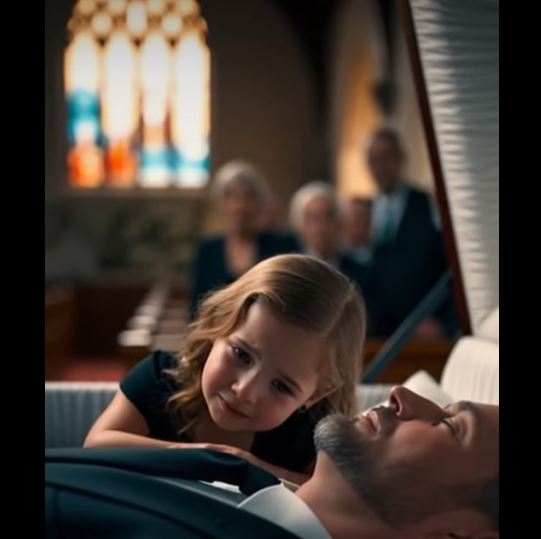
The room was too quiet for a place where life was supposed to be saved. Machines hummed softly, their steady rhythms indifferent to the human drama unfolding beneath them. Fluorescent lights cast a pale glow over white sheets, stainless steel trays, and faces trained to remain calm no matter the outcome. To the doctors, it was another difficult case. To my family, it was the end.

Not officially, not with the final paperwork signed, but close enough that hope had already begun to fade. I had been unconscious for hours after a massive accident on the highway—a collision so violent that witnesses later said they didn’t understand how anyone survived it at all. Broken ribs, internal bleeding, severe trauma to the head. The words sounded clinical, distant, as if they belonged to someone else.
I heard the doctor’s voice first, low and measured. “We’ve done everything we can. There’s no response. No neurological activity we can measure.”
Another voice followed, softer but resolute. “We should prepare the family.”
I felt myself drifting somewhere strange—not asleep, not awake. Time didn’t exist there. I floated in darkness, heavy and weightless at the same time, as if my body had been left behind but my mind refused to let go completely.
“No! No, you can’t!” she cried. Her voice was raw, broken, and filled with a kind of terror that no child should ever know. “That’s my mom! She’s still there!”
My daughter, Lily, was only seven years old. She had been waiting with my sister in the hallway when the doctors came out to deliver the news no one ever wants to hear. They explained gently, carefully, using words they thought a child wouldn’t fully understand. But Lily understood more than they realized.
“I know she can hear me!” Lily screamed. “She promised she’d never leave me!”
I felt it then—an ache deeper than pain, deeper than fear. It was love. It was memory. It was the weight of every promise I had ever made to that little girl with the crooked smile and the endless questions.
Doctors moved quickly, trying to calm her. “Sweetheart,” one said softly, kneeling in front of her, “we’re so sorry. Your mom is very sick.”
Lily shook her head violently. “You’re wrong! You’re wrong!” she shouted. “She squeezes my hand when I’m scared. She always does. She hasn’t squeezed it yet!”
She grabbed my hand with both of hers, her small fingers wrapping tightly around mine. “Mom,” she sobbed. “If you can hear me, squeeze my hand. Please. Just once.”
My body felt like it was buried under miles of concrete. I pushed against it with everything I had left—memories of bedtime stories, of scraped knees I had kissed better, of the way Lily laughed when I pretended to forget her name on purpose.
She leaned closer, pressing her forehead against my arm. Her voice dropped to a whisper, trembling but fierce. “You told me monsters aren’t real. You told me you’re stronger than scary things. Don’t let this be scarier than you.”
It wasn’t much. Barely a movement. So small that, under different circumstances, it might have gone unnoticed. But Lily felt it.
Hands moved fast. Machines beeped louder now, urgently, no longer indifferent. Someone called for additional staff. Another doctor leaned over me, shining a light into my eyes, his calm replaced with disbelief..
Lily clung to my hand, crying now not from fear, but from relief. “I knew it,” she whispered. “I knew you were still here.”
They stopped preparing for the end and started fighting again—for me. Treatments were adjusted. New tests were ordered. Specialists were called in. What had been written off as silence was now understood as something else entirely: a mind trapped inside a body that hadn’t given up yet.
The days that followed were a blur I only learned about later. I drifted in and out, sometimes aware of voices, sometimes lost again in darkness. But every time I felt myself slipping too far, I heard Lily’s voice. She talked to me constantly—about school, about her favorite cartoons, about how she was being brave just like I taught her.
Weeks later, when I finally opened my eyes for real, Lily was there. She gasped so loudly the nurse rushed in, thinking something was wrong.
They had been ready to bury me—not because they were careless, not because they were cruel, but because medicine has limits. What they didn’t measure, what they couldn’t chart or scan, was the power of a child’s love.