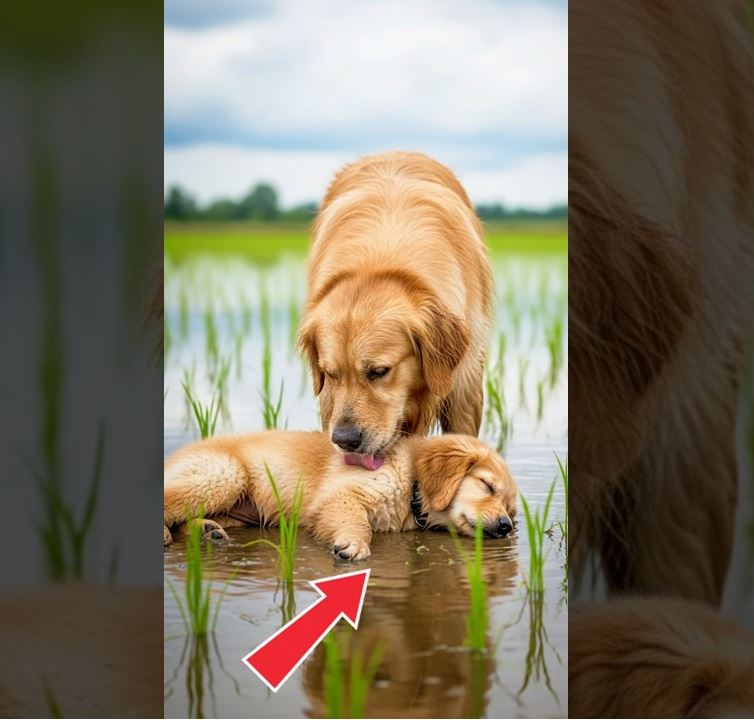
The morning began like so many others for George Whitaker. At seventy-four, his days followed a gentle rhythm shaped by habit rather than obligation. He woke early, made himself a simple breakfast, and took his slow walk through the neighborhood park just as the sun began to lift the fog from the grass. Since his wife passed away five years earlier, these walks had become more than exercise—they were his way of staying connected to the world, of reminding himself that life still moved forward, even when his own felt quieter.
As George approached the far edge of the park, near the old drainage canal that most people avoided, he heard a sound that didn’t belong. It was faint at first, almost swallowed by the wind, but unmistakable once it reached his ears—a small, desperate whimper. George stopped walking. His heart tightened instantly.
Without thinking, George changed direction, ignoring the ache in his knees as he followed the sound toward the canal. The area was muddy from the previous night’s rain, littered with wet leaves and debris. As he peered down the slope, he saw it—a tiny puppy trapped at the bottom, shivering, its fur soaked and clumped with dirt.
The puppy looked no more than a few weeks old. One of its paws was stuck between rocks, and its body trembled violently, not just from the cold, but from fear. Its eyes locked onto George, wide and pleading.
There was no hesitation. No thought of danger. No pause to consider his age or the risk of slipping. He set his walking stick aside, lowered himself carefully, and began climbing down toward the puppy.
George reached the bottom, his shoes sinking into the mud, and knelt carefully despite the sharp protest from his joints. He examined the trapped paw gently, moving slowly so as not to cause pain. The puppy cried out softly, and George felt his chest tighten.
“I know, I know,” he said quietly. “Just a moment more.”
With steady hands and more patience than strength, he loosened the rocks enough to free the paw. The moment it was released, the puppy collapsed forward, pressing its small body against George’s coat as if instinctively knowing it was safe.
He wrapped the puppy carefully in his scarf, holding it close to his chest for warmth. The puppy’s trembling gradually slowed, its breathing evening out as it nestled into him. George stood slowly, using the canal wall for support, and climbed back up, every step deliberate.
At his modest house, George dried the puppy with a towel, warmed some milk, and created a small bed near the fireplace. As he worked, memories surfaced—of raising his own children, of late nights soothing cries, of the quiet satisfaction that came from caring for someone smaller and more vulnerable than himself.
Later that afternoon, George took Oliver to the local veterinarian. The vet confirmed the puppy was dehydrated, slightly injured, but would recover fully with care. When the vet asked if George planned to leave the puppy at a shelter, George didn’t even let him finish the sentence.
Oliver grew stronger quickly. He followed George everywhere, his small paws tapping eagerly across the wooden floors. He waited patiently outside the bathroom door, slept curled at George’s feet, and greeted him every morning with unfiltered joy. The house, once echoing and still, now hummed with life.
Neighbors began to notice.
They saw George walking more often, standing a little straighter, smiling more easily. Children stopped by to pet the puppy. Conversations lingered longer. People waved.
On difficult nights, when loneliness crept in, Oliver pressed close, grounding him in the present. On mornings when George felt his age most sharply, Oliver gave him a reason to move, to care, to laugh. The puppy had not just been rescued—he had become a lifeline.
George stared at the screen for a long time. He realized how close the puppy had come to disappearing entirely—cold, trapped, unheard.
That night, as Oliver slept beside the fireplace, George placed a gentle hand on his back.
“You were meant to be found,” he whispered.
Months passed. Oliver grew into a strong, affectionate dog. George’s routine adapted around him—vet visits, training sessions, longer walks. His days filled again, not with obligation, but with purpose.
When winter came, George sat by the window, Oliver’s head resting on his knee, watching snow fall quietly over the park where they first met.
George thought about that morning. About how easily he could have ignored the sound. How simple it would have been to assume someone else would help.