Ontario is experiencing one of the most extreme winter events in modern history, with temperatures and wind chills plunging to levels colder than parts of Antarctica. A powerful Arctic air mass has settled over large areas of Canada and the United States, bringing record snowfall, dangerous cold, widespread disruptions, and a growing human toll across North America.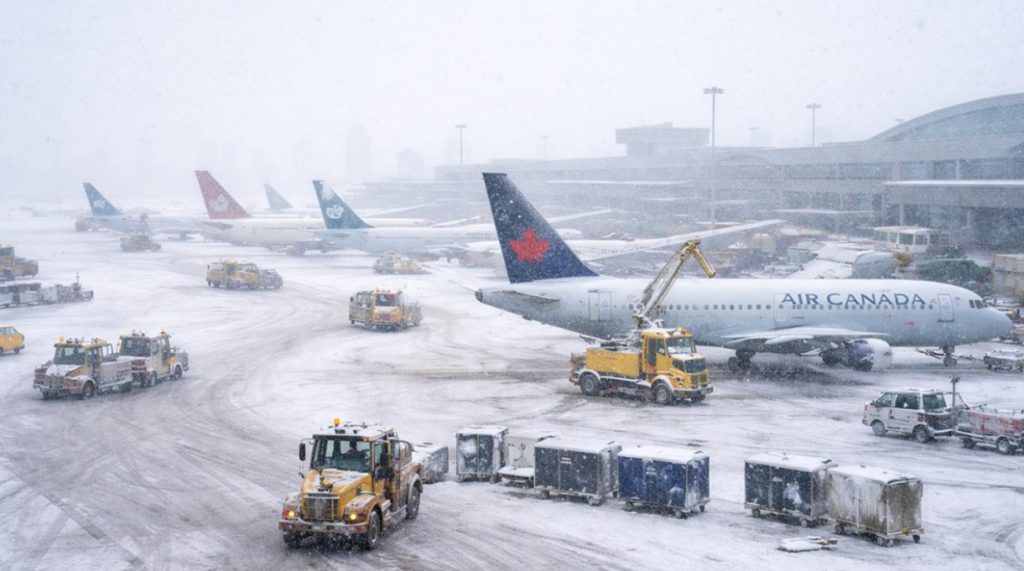
Meteorologists confirmed that on January 24, the planet’s most concentrated pocket of Arctic air was positioned directly over Ontario and Quebec. In some regions, wind chills dropped between −45°C and −50°C, briefly making parts of Ontario among the coldest inhabited places on Earth. These readings surpassed typical winter temperatures recorded in Antarctica and Siberia during the same period, highlighting the severity of this cold snap.
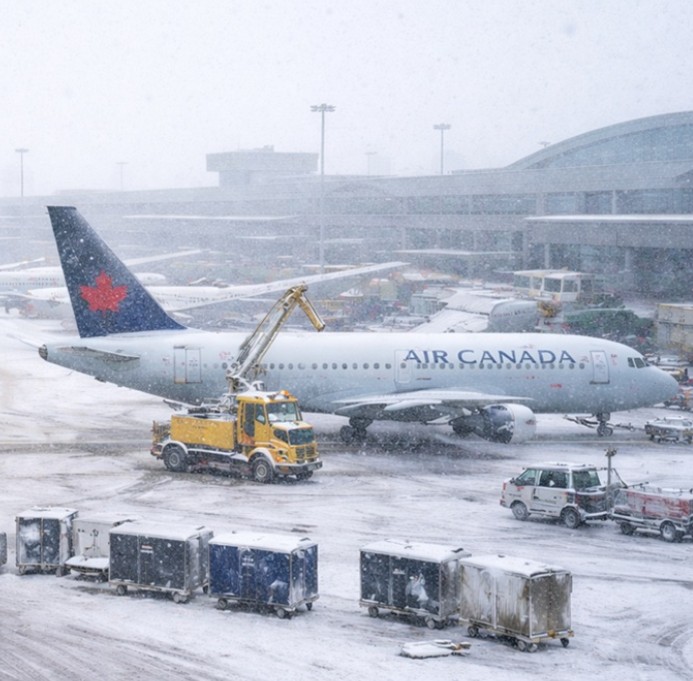
The extreme cold has been accompanied by record-breaking snowfall. Portions of Ontario received between 46 and 60 centimeters of snow in a short period, overwhelming municipal services and paralyzing transportation networks. Toronto Pearson International Airport reported more than 560 flight cancellations as it experienced its largest single-day snowfall since record keeping began in 1937. Across the United States, over 11,000 flights were canceled on Sunday alone, followed by another 5,100 on Monday.
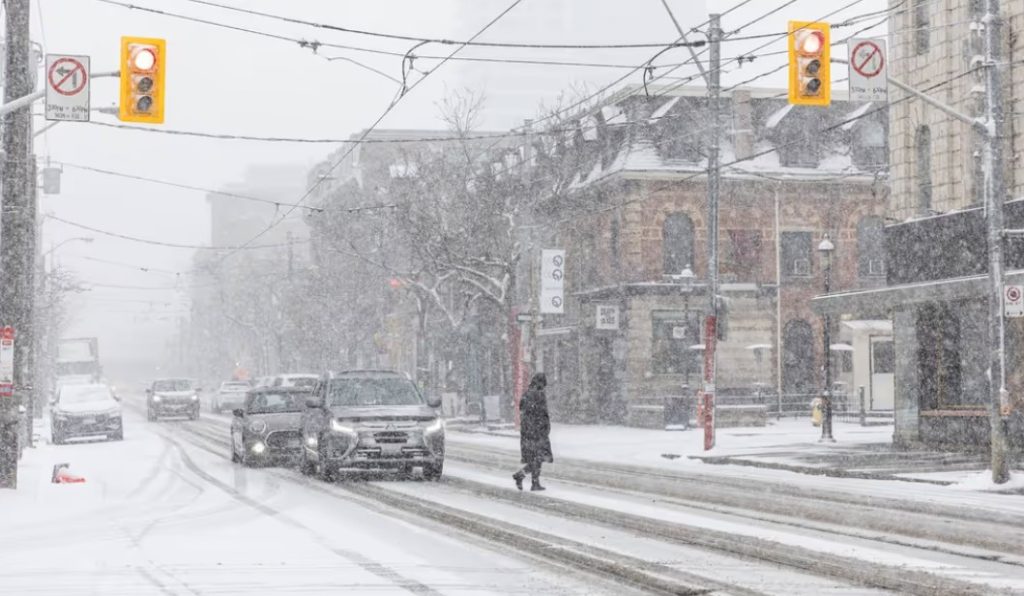
Road conditions quickly deteriorated as snow, ice, and poor visibility made travel hazardous. In Toronto, more than 430 collisions were reported in a single day, with hundreds more incidents across Southern Ontario. Provincial police responded to over 200 highway crashes and found approximately 150 vehicles stranded in ditches or snowbanks. Officials urged residents to avoid non-essential travel as emergency crews struggled to keep up with the volume of incidents.
The storm’s impact has extended far beyond transportation. Power outages swept across large parts of North America, leaving more than one million customers without electricity. The U.S. South was particularly hard hit, as ice accumulation caused extensive damage to power lines and infrastructure in states including Tennessee, Mississippi, and Louisiana. In Canada, isolated outages were also reported as heavy snow and strong winds stressed aging power systems.
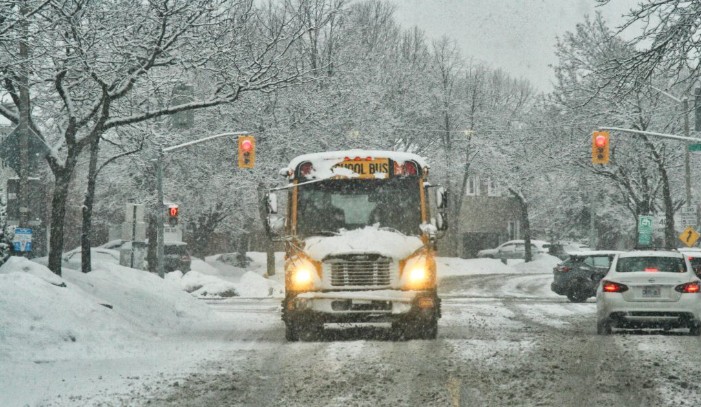
Schools and public services were forced to shut down in many regions. Across Ontario, school boards in the Greater Toronto Area closed on Monday following the historic snowfall. On Tuesday, school bus cancellations continued in several regions, including Windsor-Essex, Wellington-Dufferin, and the Kingston area, as road conditions remained unsafe. In the United States, widespread school closures and travel bans remained in effect across parts of the Northeast and South.
Tragically, the storm has been linked to a rising number of fatalities. At least 50 deaths across North America have been confirmed as connected to the extreme cold and severe weather conditions. In the United States, fatalities were reported in New York City, where at least eight people died, as well as in Louisiana, Texas, and Tennessee. In Canada, one woman in Montreal died during a storm-related power outage, underscoring the deadly risks posed by prolonged cold and infrastructure failures.
Health officials have issued repeated warnings about the dangers of exposure. At current temperatures, frostbite can develop on exposed skin in less than two minutes. Emergency services have urged residents to dress in multiple layers, limit time outdoors, and check on vulnerable individuals, including the elderly and those without reliable heating.
Despite the scale of the storm, forecasters warn that the threat is not yet over. A new major winter system is expected to move into eastern parts of the United States and Canada later this week, potentially bringing additional snowfall and dangerously cold temperatures. Authorities are preparing for continued disruptions and urging the public to remain cautious.
As Ontario and much of North America endure this historic deep freeze, the storm serves as a stark reminder of winter’s power and unpredictability. With records broken, infrastructure strained, and lives lost, communities now face the challenge of recovery—while bracing for what may still lie ahead.