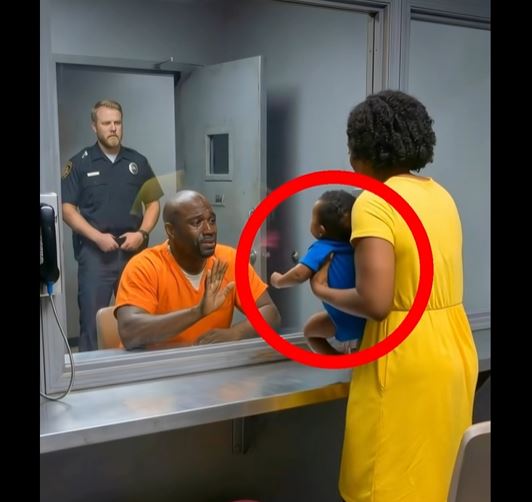
The hospital corridor was quiet in a way that felt heavier than silence. It was early morning, the kind of hour when the world outside hadn’t fully woken up yet, but inside the maternity wing, life had already begun—fragile, miraculous, and complicated.

Daniel stood alone near the neonatal intensive care unit, his hands pressed flat against the cold glass that separated him from everything he had been waiting for.
Tiny. Swaddled. Surrounded by wires, soft beeping monitors, and machines that breathed for them. Daniel leaned forward slightly, afraid that if he pressed too hard, the glass might remind him how far away they really were. He had imagined this moment a thousand times—holding them, feeling their warmth, counting their fingers and toes. He had never imagined that his first glimpse of his children would be through a barrier.
The twins had arrived far earlier than expected. What was supposed to be a routine checkup had turned into an emergency delivery within hours. His wife, Laura, had been rushed into surgery, and Daniel had been ushered into a waiting room with no answers, no control, and no way to help. When the doctor finally came out, the words “premature,” “complications,” and “NICU” echoed in his head long after the conversation ended.
Laura was still recovering, sedated and exhausted. Daniel had been told she would see the babies later. For now, he was alone.
He stared through the glass, memorizing every detail. One twin had a tiny crease between her brows, as if already concentrating on the world. The other’s hand twitched slightly, fingers curling and uncurling in a slow, uncertain rhythm. Daniel felt his throat tighten. He wanted to tell them he was there. He wanted to promise them safety, strength, a future. Instead, all he could do was watch.
Other families came and went. Nurses moved efficiently, adjusting monitors, speaking in hushed, practiced tones. Daniel barely noticed them. His reflection stared back at him from the glass—unshaven, eyes red, shoulders tense. He didn’t recognize himself. He looked like someone who was failing at the very first task of fatherhood.
He whispered, barely audible, “I’m sorry.” He wasn’t sure who it was for—his children, his wife, or himself.
That was when someone noticed.
Nurse Evelyn had been working in the NICU for over twenty years. She had learned to read body language the way others read words. She had seen joy, fear, hope, and heartbreak play out daily in this corridor. When she saw Daniel standing so still, so focused, for so long, she recognized the look immediately—not panic, not hysteria, but something quieter and heavier.
She paused for a moment, considering. Rules were rules, but compassion was part of the job too. She could see how tightly Daniel was holding himself together, like one wrong word might cause everything to collapse.
She led him through a side door, had him wash his hands thoroughly, and helped him put on a gown. His hands shook as he tied it, his breath shallow and uneven. Every step closer felt terrifying and sacred at the same time.
When they reached the incubator, Evelyn spoke calmly, explaining each wire, each monitor, grounding him in the moment. “They can hear you,” she said. “They already know your voice. That started long before today.”
Daniel’s breath caught. His eyes filled instantly, tears spilling freely now, unchecked. He didn’t try to hide them. He didn’t care anymore. In that small, powerful moment, the glass barrier disappeared. He wasn’t a helpless observer. He was a father.
Daniel nodded, unable to speak. His shoulders shook as emotion poured out of him—fear, relief, love, all tangled together. For the first time since the emergency began, he felt something shift inside him. Not certainty. Not safety. But connection.
Later that day, when Laura was finally awake enough to hear about the babies, Daniel sat beside her bed and held her hand, telling her everything. About the glass. About the fear. About the nurse who noticed. About the tiny fingers that held his own.
Weeks passed. The twins stayed in the NICU longer than anyone wanted, but they grew stronger each day. Daniel came every morning and every evening, reading to them, talking to them, placing his finger in their hands whenever he could. The glass no longer felt like a wall—it felt like a window, temporary and necessary.
On the day the twins were finally cleared to go home, Daniel held them both against his chest, overwhelmed by their warmth, their weight, their quiet breaths. He thought back to that first morning, standing alone in the corridor, broken by distance and fear.