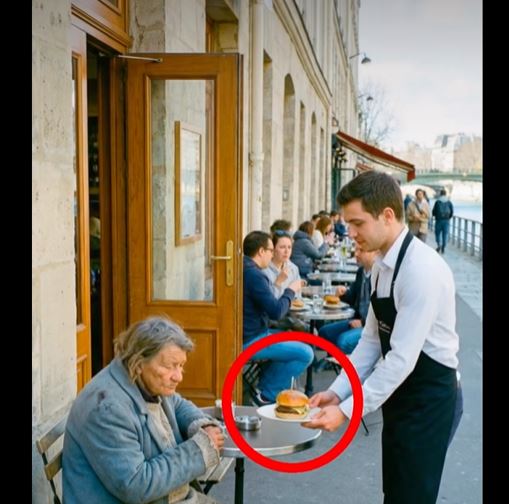
It was a busy Friday evening at La Belle Maison, one of the most upscale restaurants in the city. The dining room was filled with the clinking of fine china, the hum of conversation, and the occasional laugh of guests enjoying their evenings.
Servers moved quickly and efficiently, balancing plates of gourmet dishes and responding to the needs of patrons with practiced professionalism. Among them was Ethan, a young waiter who had recently joined the restaurant. He was still learning the ropes, but he had a simple rule he lived by: treat everyone with respect, no matter their appearance or demeanor.
As the evening wore on, a woman entered the restaurant alone. Her clothes were modest, her shoes scuffed, and she carried herself with a quiet humility that contrasted sharply with the opulent surroundings. Many patrons barely noticed her, and a few glanced dismissively, whispering to one another about how out of place she seemed.
Ethan, however, noticed immediately. He saw her hesitation at the entrance, the way she lingered uncertainly near the hostess stand, and the subtle signs that she might need help—whether it was a gentle suggestion for a menu item or simply a reassuring smile.
Without a second thought, he approached her table and spoke warmly, “Good evening, ma’am. Can I help you with anything tonight? I’d be happy to suggest some dishes or assist with anything you need.”
The woman smiled softly, appreciative of his attention. She nodded and allowed him to guide her through the menu, offering suggestions based on her preferences. She didn’t reveal much about herself, only expressing gratitude for the consideration Ethan showed.
Meanwhile, across the room, the restaurant manager, Mr. Langston, noticed the interaction. He frowned, confused and annoyed. In his mind, Ethan’s attention seemed misplaced.
The woman looked like any other diner, but Langston had strict rules: tables needed to be served efficiently and according to protocol. “Ethan,” he barked quietly from across the floor, “stop hovering. Follow the rotation. We don’t single people out here.”
Ethan nodded reluctantly but continued to check on the woman subtly, making sure her water glass was filled and her meal came promptly. He was careful not to break protocol, but he couldn’t ignore the sense that she genuinely needed a bit of extra attention.
When the woman finished her meal, she requested the check and prepared to leave. Ethan processed the payment with the same care he gave every patron, smiling and thanking her for visiting. She paused before walking out and looked at him, her eyes sparkling.
“Thank you,” she said softly, “for your kindness. Not many people would have treated me the way you did tonight.”
At that moment, Ethan realized something startling. The woman removed her coat and revealed a familiar crest on her jewelry—a symbol he recognized immediately. It was the Whitmore family emblem, the same family that owned the restaurant. His heart sank. Had he been reprimanded unfairly for giving special attention to… the owner herself?
Suddenly, the manager approached, red-faced and ready to chastise Ethan further. But before he could speak, the woman interjected with a calm authority that silenced him. “Mr. Langston,” she said, smiling, “I came tonight to observe. I wanted to see how our staff treats those who may seem overlooked or vulnerable. And Ethan, your behavior has exceeded my expectations.”
Ethan froze, shock and relief mingling together. The room, previously tense with managerial authority, seemed to pause in recognition of the revelation. The woman continued, “Kindness and attentiveness are more important than following rules blindly. This restaurant is about more than fine food—it’s about how people are treated. You understand that.”
Mr. Langston’s frown melted into a mixture of embarrassment and awe. He realized he had misjudged both Ethan and the situation. The woman, the owner, had been testing the staff all along, observing not just efficiency but character. Ethan had passed in a way that left a lasting impression.
The story of that night spread quietly among the staff in the following days. Ethan, once a young waiter worried about following protocol, became an example of integrity and genuine care. He had treated someone with respect without knowing her identity, demonstrating that true service comes from empathy, not obligation.
From that day forward, the restaurant’s culture shifted subtly but profoundly. Managers and staff began to place a higher value on kindness, attentiveness, and noticing the needs of every customer, not just the high-paying ones or the regulars.
And for Ethan, the lesson was clear: doing the right thing, even quietly and without recognition, could change perceptions, earn trust, and even leave a lasting impression on those in the highest positions of authority.