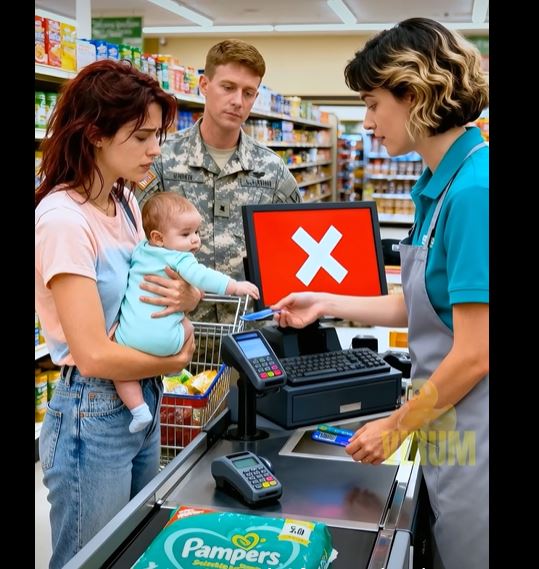
The fluorescent lights of the supermarket felt blindingly bright as Sarah stood at the checkout counter, her hand resting protectively over the curve of her eight-month pregnant belly. She had been careful—meticulous, even—with her mental math as she walked the aisles.
She had bypassed the fresh berries for the canned fruit, chosen the store-brand cereal, and skipped the coffee she craved to ensure she had enough for the essentials: milk, eggs, bread, and the expensive prenatal vitamins her doctor insisted she take.
But as the cashier scanned the last item, the total on the glowing red screen mocked her. It was twelve dollars more than the crumpled bills and the dwindling balance on her debit card could cover.
“I’m sorry,” Sarah whispered, her face flushing a deep, hot crimson as the line behind her began to shuffle with impatience. “I… I must have miscalculated. Can we put the vitamins back? And maybe the detergent?”
The cashier, a teenager with tired eyes, sighed and began the process of voiding the items. The man behind her tapped his foot loudly, checking his watch. The silence of the store felt heavy, amplified by the rhythmic beep-beep-beep of neighboring registers. Sarah felt the baby kick, a sharp movement that brought a sudden, stinging lump to her throat. She wasn’t just failing herself; she felt like she was failing the life she was carrying.
Once the items were removed, Sarah paid the remaining balance. She gathered her two small bags of groceries, her movements slow and heavy. She didn’t look at the cashier, and she certainly didn’t look at the people in line. She kept her head down, her eyes fixed on the scuffed linoleum floor as she walked toward the automatic sliding doors.
The cool evening air hit her face, a sharp contrast to the stifling heat of the store. As she reached the edge of the parking lot, the first tear escaped, trailing a cold path down her cheek. She didn’t sob; she didn’t have the energy for that. She just felt a profound, hollow exhaustion. She had worked forty hours that week on her feet, and it still wasn’t enough to buy vitamins and soap. She sat on a concrete planter, resting her bags at her feet, and let out a long, shuddering breath, trying to gather the strength to walk the three blocks to her apartment.
The Unseen Observer
Inside the store, the man who had been tapping his foot—a middle-aged construction worker named Jim—had watched the entire scene. He hadn’t been impatient because he was mean; he was impatient because he was late for his daughter’s recital. But the sight of the young woman’s shaking hands as she counted her coins had stayed with him.
As Sarah sat on the planter, the sliding doors opened again. Jim walked out, carrying a small plastic bag. He scanned the lot, spotted the yellow of Sarah’s maternity top, and walked over. He didn’t say anything at first; he just set the bag down on the concrete next to her.
Inside the bag were the vitamins and the detergent she had put back, along with a bouquet of grocery-store carnations and a twenty-dollar bill tucked into the receipt.
“I think you dropped these, ma’am,” Jim said, his voice gruff but kind.
Sarah looked up, her eyes wide and blurry with tears. “I didn’t… I can’t take this. You don’t even know me.”
Jim offered a small, crooked smile. “My wife was where you are twenty years ago. Someone helped us. I’m just paying back the interest. Besides,” he nodded toward her belly, “that little one needs those vitamins to grow up and change the world, right?”
He didn’t wait for a formal thank you. He tipped his cap and hurried toward his truck, disappearing into the evening traffic before Sarah could find the words to stop him.
Sarah sat there for a long time, looking at the bright pink carnations and the bottle of vitamins. The weight of the world hadn’t changed—the bills were still due, and the work was still hard—but the crushing loneliness had vanished. She realized that while she had walked out of the store feeling invisible, someone had been looking.
She stood up, picked up her bags, and began the walk home. This time, her steps were a little lighter, and the tears were gone. She wasn’t just carrying groceries; she was carrying the reminder that even in a city of strangers, no one truly walks alone.