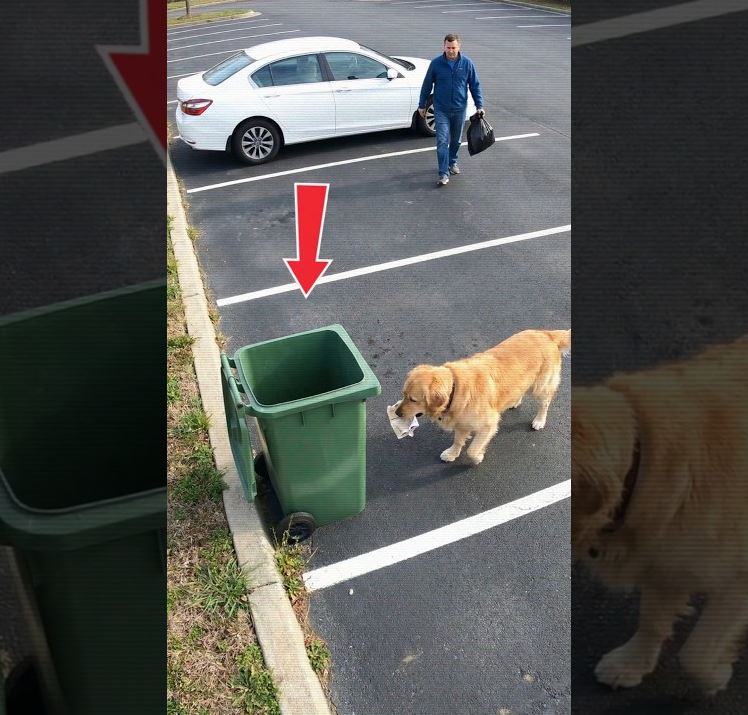
It was a quiet suburban street, the kind of place where every neighbor knew one another’s business, and the hum of daily life created a predictable rhythm. Lawns were trimmed, mailboxes lined the sidewalks, and children’s laughter often echoed through the air.
But on this particular day, something unusual was about to unfold — something that would teach a man a lesson about empathy, patience, and the intelligence of a creature he had long underestimated.
The man, Jonathan, was in his late forties, a successful businessman who prided himself on discipline and control. His life revolved around schedules, efficiency, and authority. At home, he expected order, and his family had long learned to navigate his strict expectations. Even the family dog, a border collie named Max, was often subjected to Jonathan’s impatience.
Max was not just any dog. From the moment he had been brought home as a puppy, it was evident that his mind worked differently from other dogs. He learned commands faster, understood subtle cues, and seemed to anticipate situations before they unfolded. But Jonathan, in his pride, had always dismissed Max’s intelligence as mere coincidence, or worse, seen it as defiance.
That afternoon, Jonathan returned from work frustrated. A meeting had gone poorly, a deal had fallen through, and his temper was shorter than usual. Max, sensing the tension, wagged his tail cautiously as Jonathan entered the house.
“Max!” Jonathan barked, more sharply than intended. “Get in the yard. No more messing around in the house today!”
Max’s ears lowered, but he obeyed. Jonathan’s family exchanged uneasy glances, aware that his impatience could escalate. Max had done nothing wrong — yet Jonathan’s temper often sought an outlet, and the dog was convenient.
Outside, Max paced in the yard, watching Jonathan with alert, intelligent eyes. Jonathan, in a mix of irritation and a misguided attempt at discipline, threw a tennis ball at the fence, expecting Max to chase it mindlessly. But Max did not react as expected. Instead, he tilted his head, studied Jonathan, and made a deliberate choice. He didn’t move toward the ball.
Jonathan, frustrated by what he perceived as defiance, raised his voice. “I said, fetch! What are you doing?”
But Max simply sat, eyes fixed on Jonathan. It was as if the dog were saying, You don’t understand the consequences of what you’re asking.
Moments later, the situation escalated. Jonathan, in a fit of anger, grabbed a stick and swatted at Max, intending to show dominance. Max yelped but did not flee. Instead, he did something Jonathan had not anticipated. With remarkable speed, Max dodged, circled Jonathan, and ran toward the yard gate.
Jonathan, irritated, chased after him. That’s when it happened. Max, in a calculated move, guided Jonathan toward a hidden patch of the yard — a shallow, muddy trench Jonathan had never noticed. As Jonathan’s foot caught in the mud, he tripped and fell, landing on his side.
Pain shot through Jonathan’s ankle, and as he struggled to get up, he noticed Max standing at a distance, watching him calmly, tail wagging slightly. The dog had not attacked. He had merely used his intelligence to demonstrate a lesson: every action has a reaction, and patience and understanding are more effective than aggression.
Jonathan sat in the mud, frustrated and humbled. Max approached cautiously, sniffed his owner’s hand, and nudged it gently. The gesture was clear: there was no malice, only a desire to teach. Jonathan’s anger melted into realization. He had underestimated Max for years, seeing his intelligence as a threat rather than a gift.
Over the following weeks, Jonathan’s behavior toward Max changed. Training sessions became collaborative rather than authoritarian. Instead of yelling, he began to observe Max, noticing the cues and subtle communications the dog provided. Max thrived, responding eagerly to the mutual respect and patience now present in their interactions.
One afternoon, Jonathan watched as Max guided a young child across the street, stopping traffic with precise, deliberate motions to ensure the child’s safety. At that moment, Jonathan fully comprehended the depth of Max’s intelligence.
This dog, whom he had tried to intimidate, had a mind capable of reasoning, problem-solving, and understanding human emotions in ways he had never expected.
Jonathan’s family, too, noticed the transformation. Max was no longer merely a pet — he was a teacher, a guardian, and a reminder that intelligence and compassion can coexist in unexpected forms.
The lessons Jonathan had learned extended beyond obedience or tricks; they were about humility, respect, and recognizing value in others, regardless of their form.