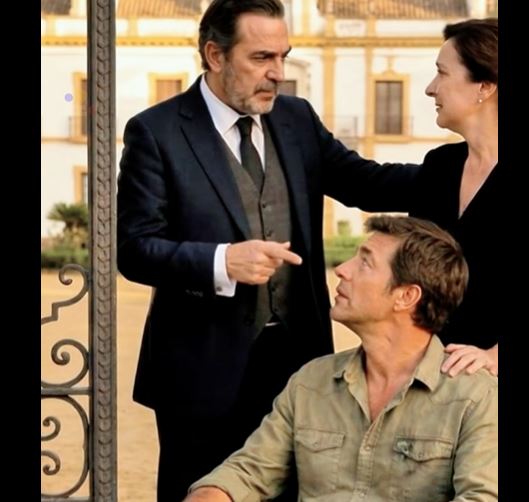
It had been nearly fifteen years since Thomas had last seen his parents. As a boy, he had vanished without a trace during a summer outing to the countryside, leaving a void in the lives of his mother, Margaret, and father, Richard.
Their days had become a blur of worry, guilt, and endless searching. Flyers had been posted, police reports filed, and countless nights were spent awake, hoping for any sign of him. Over time, their hope had dimmed into resignation. Life, as cruel and indifferent as it seemed, had moved on—or so they thought.
Meanwhile, Thomas’s life had taken a turn they could never have imagined. A rare spinal condition, worsened by an accident during his teenage years, had left him paralyzed from the waist down.
Yet, despite the physical limitations, Thomas had cultivated resilience, intelligence, and a determination that carried him through years of rehabilitation, therapy, and solitude.
He had learned to navigate the world from a wheelchair, but more importantly, he had learned patience, compassion, and a profound understanding of the human spirit. He had built a life on his own terms, far from the small town where he had been lost, yet the wound of separation from his parents had never fully healed.
One spring afternoon, after years of planning and contemplation, Thomas returned to the town he once called home. The familiar streets, lined with shops and old brick houses, were both comforting and haunting.
Memories of childhood laughter, birthday celebrations, and innocent arguments came flooding back. Yet beneath the nostalgia was a deep, simmering anger—a mixture of abandonment, disappointment, and grief. He had to see them, to confront the people who had claimed to love him yet had allowed him to disappear into nothingness.
He found their house easily: a modest two-story home with a neatly trimmed garden and a white picket fence. The air was thick with the scent of blooming flowers, the kind his mother had always insisted on planting, saying they brought warmth and life to the home.
He wheeled up to the front door, heart pounding, rehearsing the words he would say. With a deep breath, he rang the bell. Moments later, the door swung open, and there they were—Margaret and Richard, older, lines of worry etched deep into their faces, eyes wide in shock.
“Thomas?” Margaret’s voice trembled, barely above a whisper. She stepped back, as if seeing a ghost. Richard’s jaw tightened, and his eyes darted between their son and the wheelchair that confined him.
Neither of them could quite process the scene before them. The child they had mourned, the boy they had cried over for more than a decade, had returned—but not as the child they remembered.
Without hesitation, Margaret’s voice rose with disbelief and, unexpectedly, harshness. “What… what are you doing here? You can’t just come back after all these years!” Richard’s expression mirrored hers, and together, they began to repeat words of rejection and blame.
They accused him of shaming them, of bringing trouble to their door, of showing up with a condition they could not understand or accept. Thomas, hurt but composed, listened quietly. His heart ached, but his years of struggle had taught him the value of measured responses.
For a moment, he said nothing. The room was filled with the heavy silence of disbelief and shame, punctuated only by the soft hum of the spring breeze through the open windows.
Then, slowly, deliberately, Thomas spoke. “I didn’t come back to beg for forgiveness,” he said, his voice steady and calm. “I came back to show you what it means to truly live, even when life has been cruel.
Margaret and Richard stared, their faces pale and frozen in shock. The boy they had lost, whom they had imagined as helpless and dependent, now exuded a quiet strength that was almost frightening in its clarity.
Thomas wheeled himself forward, navigating the space with confidence and grace. “I survived without you,” he continued. “I learned to walk again in my own way. I built a life, helped others, and never let bitterness define me. You, however, chose to shut me out when I needed you most.”
He reached into his bag and pulled out a folder containing letters, documents, and photos that chronicled the life he had lived while they had mourned him.
Volunteer work with children with disabilities, awards for academic excellence, stories of kindness he had extended to strangers—they were tangible proof of a life full of purpose and resilience. Margaret’s hands trembled as she reached for the papers, her voice cracking. “Thomas… we didn’t know… we thought—”