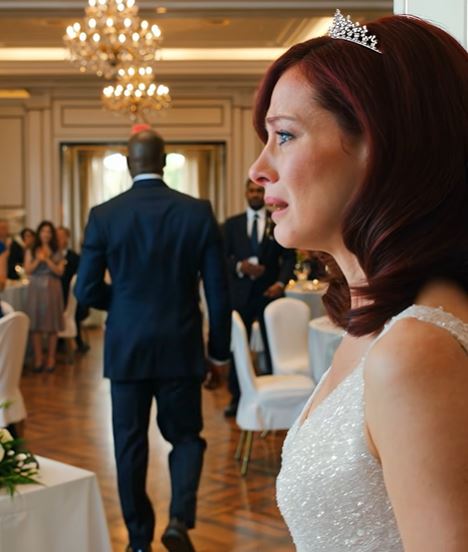
The evening of my sister’s wedding was supposed to be perfect. Months of planning had led to this moment—the grand ballroom glowing under crystal chandeliers, soft music drifting through the air, and nearly three hundred guests gathered to celebrate what everyone believed would be the happiest day of her life.
Outside, the Chicago skyline shimmered against the night sky, its lights reflecting off the calm waters of the lake, creating a breathtaking backdrop for a celebration meant to unite two families forever.
I arrived dressed carefully, choosing a simple yet elegant dress, determined to support my sister despite the complicated relationship we had shared for years. Our bond had always been fragile, shaped by rivalry, misunderstandings, and unspoken resentments. Yet she was my sister, and I wanted her day to be beautiful.
From the moment I entered the venue, however, something felt different. Conversations hushed as I passed, curious eyes lingering a little too long. I dismissed the feeling as anxiety, telling myself I was simply overwhelmed by the scale of the event. After all, weddings were emotional occasions, filled with tension and excitement.
The ceremony itself was stunning. White roses lined the aisle, candles flickered softly, and the air was filled with the gentle sound of a string quartet. My sister looked radiant in her gown, her smile bright as she walked toward her groom. He stood waiting at the altar, his expression serious, almost contemplative, as though weighed down by thoughts no one else could see.
They exchanged vows, promising love, loyalty, and partnership before the assembled guests. Applause filled the room as they were pronounced husband and wife. It seemed, for a moment, that the evening would unfold exactly as planned.
The tension emerged during the reception.
After dinner, when laughter and conversation had softened the formal atmosphere, my sister rose to give a speech. She lifted her glass gracefully, her voice steady as she thanked our parents, her new husband, and the guests who had gathered to celebrate.
Then her gaze shifted toward me.
A strange silence fell over the room as she paused, her smile tightening slightly. I felt my chest tense, sensing something unexpected approaching.
“I’d also like to thank my sister,” she began, her voice carrying clearly through the microphone. “She’s taught me many lessons in life—especially about what I never want to become.”
A ripple of uneasy laughter moved through the crowd. I felt heat rise to my face, unsure whether she was joking or serious.
She continued, her tone cool and deliberate.
“Unlike me, she’s what some might call a used product,” she said, her words sharp and unmistakable. “A reminder of mistakes, of poor choices, of what happens when you don’t value yourself.”
The room froze.
Three hundred guests sat in stunned silence, their expressions shifting from confusion to discomfort. The words struck me like a physical blow. My heart pounded in my ears, and for a moment I could not breathe. The insult was cruel, public, and deliberate—a humiliation designed to wound deeply.
Memories of past struggles flashed through my mind: a painful divorce, personal challenges I had fought to overcome, chapters of my life I had worked hard to heal from. She had taken those private wounds and displayed them for public judgment.
I sat motionless, fighting tears, trying to maintain dignity as whispers spread among the guests. Some looked at me with sympathy, others with curiosity, but none spoke.
What happened next changed everything.
Before my sister could continue, her groom suddenly stepped forward. At first, everyone assumed he was approaching her to comfort or support her. But instead of turning toward his bride, he walked down the steps of the stage and moved directly toward me.
The room seemed to hold its breath.
His footsteps were steady, deliberate, echoing across the silent ballroom. He stopped in front of me, his expression filled not with anger but with resolve.
Then he spoke—not into the microphone, but clearly enough for the surrounding guests to hear.
“No one deserves to be spoken to that way,” he said quietly.
His words, though gentle, carried a weight that silenced the entire room.
He turned back toward the stage, addressing the stunned bride and the gathering of guests. Taking the microphone from her trembling hand, he spoke with calm conviction.
“Marriage is built on respect,” he said. “On kindness, empathy, and compassion—not cruelty.”
The atmosphere shifted instantly. What had been a celebration transformed into a moment of raw confrontation. My sister stood frozen, her confident composure shattered, while murmurs of agreement spread among the guests.