The rain in Seattle wasn’t just weather; it felt like a permanent mood that had settled deep inside Richard Cole’s mansion. At forty-five, Richard had everything most people dreamed of: a real estate empire stretching across the West Coast, more money than he could ever spend, and a reputation as a man who never lost control. Yet he would have traded every building, every dollar, every title just to hear one simple sound again — the footsteps of his son running down the hallway.
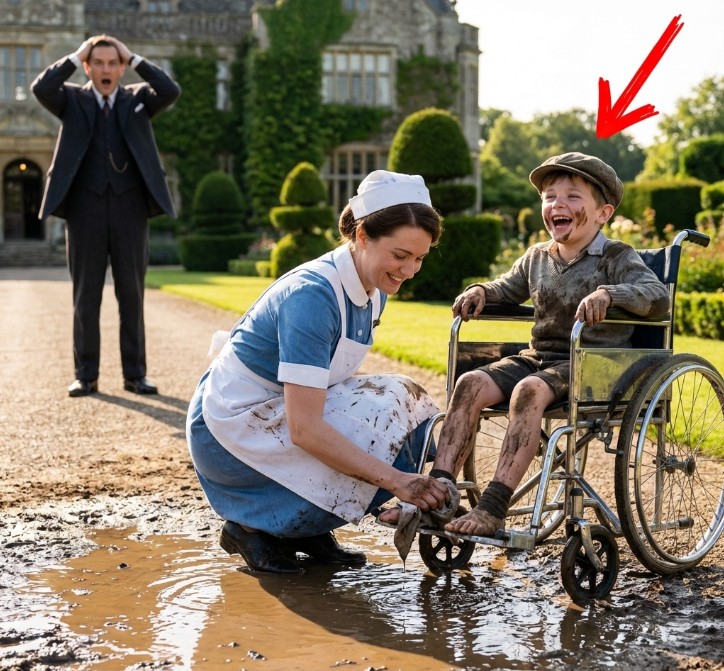
Three years earlier, Richard’s life had split into a “before” and an “after.” The accident had taken his wife and left eight-year-old Ethan with a severe spinal injury. Doctors worked tirelessly to stabilize him, but the damage to his spinal cord meant he would rely on a wheelchair. The diagnosis was delivered with clinical honesty: recovery would be extremely limited.
The mansion, built of marble and glass, became painfully quiet. Ethan, once full of laughter and energy, now spent hours staring out at the gray garden. Specialists in Switzerland, neurologists in New York, rehabilitation experts in Japan — Richard sought them all. Every treatment plan was explored responsibly and under medical supervision. Yet the conclusion remained the same: Ethan would need long-term care and support.
Richard accepted the medical reality. What he struggled to accept was watching his son’s spirit slowly fade.
Two weeks earlier, their longtime housekeeper had retired, and the agency sent Maria. She was middle-aged, warm-eyed, calm, and observant. She didn’t carry medical credentials, nor did she claim to. What she brought instead was patience — and an unusual ability to connect with Ethan.
One Tuesday afternoon, a business deal collapsed unexpectedly. Restless, Richard returned home hours earlier than usual. As he stepped inside, something felt different.
He heard laughter.
Not background noise. Not television.
It was Ethan’s laughter.
Richard’s heart pounded. He hadn’t heard that sound — bright and genuine — in years.
He followed it to the living room. Ethan’s wheelchair was nearby, but Ethan himself was sitting on a thick rug. Maria knelt beside him, gently supporting his legs while guiding him through what looked like assisted movement exercises.
Ethan was laughing.
Then Richard noticed something that made him stop breathing for a moment.
Ethan’s right toes twitched.
Just slightly. But intentionally.
“What’s going on?” Richard demanded, his voice a mix of fear and shock.
Maria stood immediately. “Sir, I would never put him in danger,” she said calmly. “I’m only helping him practice gentle sensory stimulation and guided movement. I read about techniques used in rehabilitation to encourage nerve response. I stay within what’s safe.”
Ethan looked up, excited. “Dad, I can feel tingling when she helps me focus. It’s like my legs are waking up.”
Richard’s instinct was protective. “You’re not a doctor,” he said firmly. “I can’t allow anything that could harm him or give him false hope.”
Maria nodded respectfully. “I understand. I don’t promise cures. I only help him stay engaged — physically and emotionally. If you’d like, we can speak with his neurologist before continuing.”
That night, Ethan barely spoke at dinner. Later, Richard found him awake.
“When she helps me move, I feel something,” Ethan whispered. “Maybe it’s small. But it makes me feel like I’m not trapped.”
That word stayed with Richard.
Not trapped.
The next morning, instead of going to the office, Richard called Maria into the sitting room.
“If we do this,” he said carefully, “it must be fully transparent. His doctor will approve everything. I’ll be present. No risks.”
Maria agreed immediately.
The neurologist, Dr. Evans, reviewed the exercises. He explained that while full recovery was unlikely, guided sensory stimulation, assisted physical therapy, and consistent engagement could sometimes encourage minor neural responses or improve muscle tone. As long as everything was supervised and safe, there was no harm in trying.
And so they began — properly, carefully, collaboratively.
Maria helped Ethan focus during sessions. She spoke gently, encouraging visualization techniques commonly used in rehabilitation therapy. Richard watched every movement. Dr. Evans monitored progress.
Weeks passed.
At first, progress was subtle. A stronger twitch. Slight improvement in muscle response. Better posture. Increased appetite. But something else changed too.
The house no longer felt silent.
Ethan smiled more. He participated in therapy willingly. He laughed again.
Three months later, during a routine neurological exam, Dr. Evans tapped Ethan’s knee with a reflex hammer.
The leg reacted.
Not dramatically — but clearly.
The doctor repeated the test.
Another reflex.
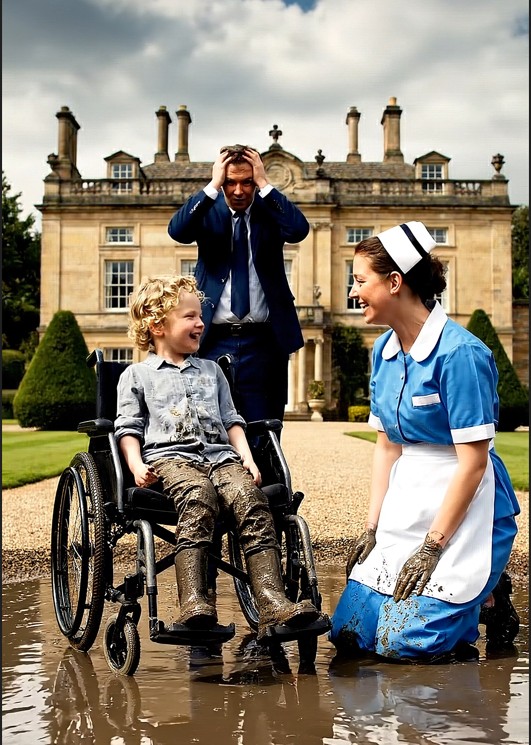
Dr. Evans looked up, surprised but professional. “This indicates partial neural responsiveness,” he said. “It doesn’t change the overall diagnosis, but it’s meaningful progress.”
Richard felt his knees weaken — not from shock, but from relief.
Years passed. Ethan did not become an athlete. He did not run marathons. But with consistent medical care, structured therapy, and unwavering emotional support, he gained strength doctors once thought unlikely. By eighteen, he could stand and walk short distances with assistive devices.
At his high school graduation, Ethan walked across the stage using a cane. Slowly. Steadily. On his own.
Richard sat in the audience beside Maria, who had long since become family. Neither of them spoke as Ethan received his diploma.
They didn’t need to.
Richard had learned something no business deal could ever teach him:
Modern medicine is essential. Professional care matters. But emotional support, hope, patience, and human connection are powerful companions to treatment. Healing isn’t always dramatic. Sometimes it’s measured in millimeters. Sometimes in moments.
As Ethan lifted his diploma and smiled toward the crowd, sunlight streamed through the auditorium windows.
And for the first time in years, the future didn’t feel heavy.
It felt possible.