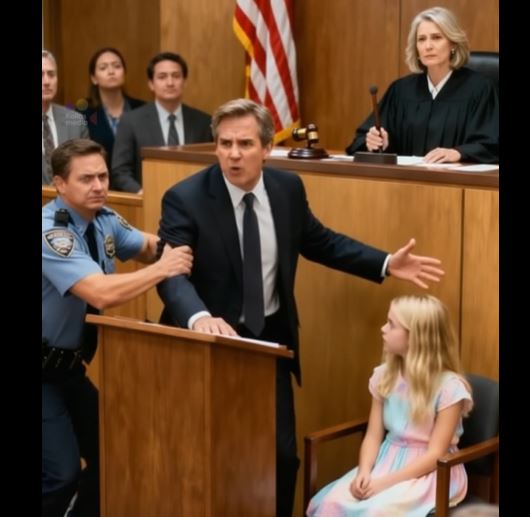
The courtroom was suffocatingly quiet, the kind of silence that presses against your chest and makes every breath feel heavy. I sat at the wooden table, my hands trembling in my lap, watching the man I had once loved stand across from me like a stranger.

My husband — soon to be my ex-husband — looked confident, composed, and disturbingly calm. Roland had always known how to play his role well. In the courtroom, he wore the mask of a devoted father, a concerned protector fighting for his children’s well-being.
And I was painted as the villain.
“Your Honor,” his lawyer said firmly, “my client believes the children’s mother is unstable, irresponsible, and emotionally unfit. The children would be safer and better provided for under their father’s care.”
Each word struck like a blade.
Roland stepped forward, lowering his head slightly, his voice carefully measured.
“She’s a terrible mother,” he said. “I’m taking the kids.”
A murmur spread quietly through the courtroom. I felt my throat tighten, but I refused to cry. I had spent months preparing for this battle, gathering evidence, trying to prove my love and dedication as a mother. Yet somehow, everything I said seemed to sound weak beside his confident accusations.
The judge, an older man with sharp, observant eyes, listened attentively. His expression revealed little, but the direction of the hearing made my heart sink. The documents Roland’s legal team presented painted a picture of financial instability, emotional distress, and alleged neglect — exaggerations twisted into convincing arguments.
I knew the truth. But truth often struggles against carefully crafted lies.
When it was my turn to speak, my voice shook despite my efforts.
“I love my children,” I said quietly. “They are my world. I would never harm them.”
But love alone, it seemed, was not enough evidence.
The judge leaned forward slightly. “Given the information presented, I am inclined to consider primary custody to the father, pending further evaluation.”
The words felt like the ground collapsing beneath my feet.
I looked at my children seated behind me — my two precious souls, my reason for living. My six-year-old son sat beside his older sister, clutching a small toy in his hands. His wide eyes moved anxiously between his father and me, sensing the tension far beyond his understanding.
Or so I thought.
As the judge prepared to move forward, a small voice broke the heavy silence.
“Your Honor?”
The entire courtroom turned.
It was my son.
He stood hesitantly, his tiny figure barely visible behind the large bench. His voice was soft, yet carried a startling clarity.
“Your Honor,” he continued, “should I tell you why Daddy really wants us?”
A wave of confusion rippled through the room. The judge raised an eyebrow, surprised by the interruption.
“Child,” he said gently, “this is a serious proceeding. What do you mean?”
My heart pounded violently as Roland’s face suddenly drained of color.
“Sit down,” Roland snapped sharply, his calm facade cracking for the first time.
But my son continued, his innocent eyes fixed on the judge.
“The thing he said,” he whispered, “about the money Grandma left in our names.”
The courtroom froze.
A chilling silence followed.
Roland’s composure shattered completely.
“Shut up!” he shouted, his voice echoing harshly against the courtroom walls.
Gasps filled the room.
The judge’s expression darkened instantly. He slammed his gavel with force.
“Order!” he commanded. “Bailiff, detain him.”
Two officers moved swiftly, gripping Roland’s arms as he struggled, his face twisted with panic and rage.
“This is ridiculous!” he shouted. “He’s just a child! He doesn’t know what he’s saying!”
But the damage was done.
The judge leaned forward, his sharp gaze fixed on Roland. “Explain the child’s statement regarding money held in the children’s names.”
Roland’s lawyer attempted to intervene, but the judge silenced him with a raised hand.
My mind raced as realization slowly dawned. Years earlier, Roland’s mother — the children’s grandmother — had established a substantial trust fund for them. The money was protected until they reached adulthood, accessible only for their direct benefit. I had never viewed it as anything more than a gift for their future.
But Roland had.
The judge called for a brief recess while court officials reviewed the financial records related to the trust. During that time, my son ran to me, wrapping his small arms tightly around my waist.
“He told someone on the phone,” he whispered. “He said if he had custody, he could manage our money.”
Tears filled my eyes as I held him close. A child’s honesty had revealed what months of legal preparation had failed to uncover.
When the session resumed, the atmosphere had shifted entirely.