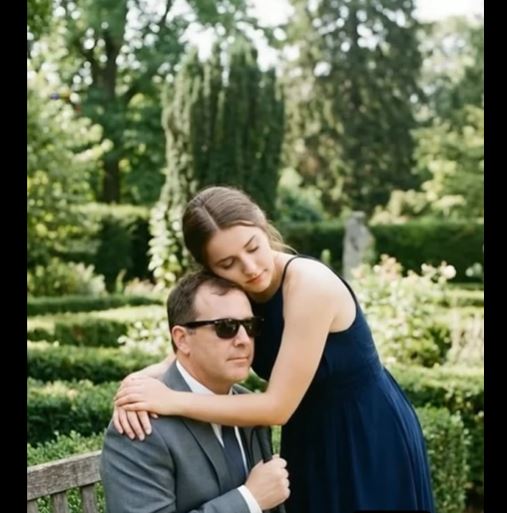
When the billionaire announced that he had suddenly gone blind, the world reacted with shock and sympathy. Newspapers spoke of tragedy, business partners sent condolences, and distant relatives suddenly remembered his existence. But behind the carefully crafted headlines and public statements lay a secret no one knew.
The blindness was a lie.
It had been Adrian Voss’s idea — a calculated test, a dangerous experiment, and perhaps the most desperate decision of his life. After building an empire worth billions, Adrian had learned one painful truth: money attracted everything except certainty. Loyalty, affection, kindness — he had never been sure which of these were real and which were purchased.
And now he was about to marry the woman he loved.
Or at least, the woman he hoped truly loved him.
Her name was Elena, a graceful, intelligent woman who had entered his life two years earlier at a charity gala. She had not seemed impressed by his wealth or status. She laughed at his jokes, challenged his opinions, and treated him like an ordinary man. For the first time in years, Adrian felt seen rather than admired.
Yet a lifetime of betrayal had made him cautious. Former friends had sued him. Past relationships had ended in costly settlements. Even members of his own family had once tried to declare him mentally unfit to control his fortune. Trust, for Adrian, was not easily given.
So weeks before their wedding, he created a plan.
A staged accident was arranged during a late-night drive. His car “lost control,” crashed into a barrier, and he was rushed to a private hospital. The next morning, a carefully rehearsed announcement was released: complications from the accident had left Adrian permanently blind.
The world believed it.
Elena was devastated when she heard the news. She rushed to the hospital, her face pale with worry, her hands trembling as she held his. Adrian, pretending to stare into darkness, listened carefully to every word she spoke, every breath she took, searching for hesitation or disappointment.
But all he heard was sorrow and concern.
“I’m here,” she whispered, her voice breaking. “I’m not going anywhere.”
For weeks afterward, Adrian maintained the illusion. His mansion was rearranged to accommodate his “condition.” Staff were instructed to treat him as blind. Doctors on his payroll confirmed the diagnosis. Only his most trusted assistant knew the truth.
At first, Elena’s devotion seemed genuine. She visited daily, guided him carefully through rooms, read to him for hours, and reassured him that nothing had changed between them. She insisted the wedding should still take place.
“You are the same man,” she told him gently. “Your eyes don’t define you.”
Her words filled Adrian with cautious hope. Perhaps he had finally found someone sincere.
But as the weeks passed, subtle changes began to appear.
Adrian noticed her growing silence during phone calls she thought he could not understand. He heard whispers with lawyers in another room. Once, he caught her discussing financial matters with unusual urgency. She asked detailed questions about his assets, his will, and the structure of his companies.
Doubt returned.
Had his fears been right all along?
One evening, while she believed him asleep, Elena spoke quietly with someone on the phone near his bedside.
“If his condition is permanent,” she said softly, “everything will have to be managed differently.”
Adrian’s chest tightened. The words pierced him like a blade. He felt foolish for believing in love again.
Yet he continued the act, determined to uncover the truth completely.
As the wedding date approached, Elena made an unexpected request.
She asked Adrian to sign documents granting her temporary control over certain aspects of his business affairs. Her explanation was simple: she wanted to help him manage his responsibilities now that he could not see.
Adrian’s suspicions deepened. Though he pretended compliance, he delayed signing anything, telling her he needed time.
Days later, something happened that changed everything.
Late one night, Adrian awoke to faint sounds downstairs. Believing himself alone, he quietly followed the noise, carefully maintaining his performance of blindness even though no one could see him. The voices led him to his private office.
The door was slightly open.
Inside, Elena stood with his senior financial advisor. Documents covered the desk. Adrian remained hidden in the hallway, listening.
“I refuse to let him lose everything,” Elena was saying firmly.
The advisor sounded confused. “But if the board discovers his condition, they may remove him as CEO. Investors will panic.”
“Then we protect him,” she insisted. “Transfer vulnerable assets into secure trusts. Strengthen his voting power. Make sure no one can take advantage of him.”