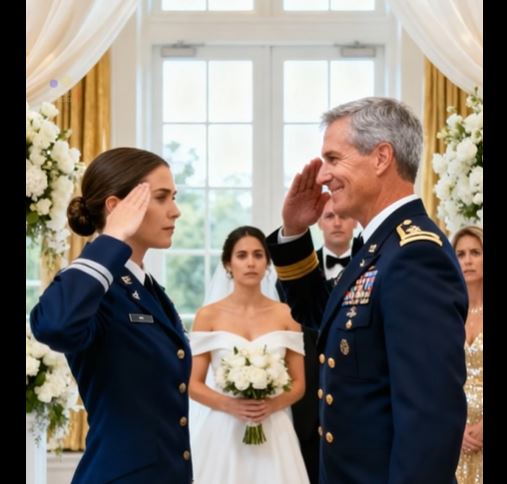
The hall was breathtaking. Crystal chandeliers hung from the ceiling, casting prisms of light over the polished marble floors. Rows of gold-trimmed chairs lined the space, filled with the city’s elite, distant relatives, and friends who had flown in from across the country.
My brother, Jonathan, looked radiant in his tailored tuxedo, his bride glowing in white lace, and everyone seemed to be caught in a perfect moment of celebration.
And then my father looked at me.
“You were always the family’s mistake,” he said, his voice sharp enough to cut through the music, the laughter, and the clinking of glasses.
The words hit me like a punch to the stomach. For a moment, I froze, unable to comprehend how he could publicly humiliate me in front of everyone—my relatives, my brother’s friends, even his colleagues. My face burned, a mixture of shame, anger, and disbelief. Some guests looked around awkwardly, unsure if they had heard correctly. Others shifted uncomfortably in their seats. My mother, seated beside my father, lowered her gaze, silent and tense.
I had always known my father could be cruel, but this… this was different. This was a betrayal in the most public way imaginable. My brother glanced at me briefly, confusion in his eyes, before returning to his new bride, seemingly unsure of what to do.
I wanted to retreat, to disappear, but something inside me snapped. I couldn’t let his words define me tonight, not here, not in front of everyone I had known my entire life. I straightened my back and forced myself to meet his gaze, my jaw tight with determination.
Then, a hush fell over the room. A tall, imposing figure in full uniform approached from the side of the hall. The chatter subsided as people recognized him: General Marcus Harland, a decorated officer with decades of service and a reputation for strict discipline and unwavering honor. He was one of my father’s closest friends—or at least, that’s what everyone thought.
General Harland stopped beside me. He was silent for a moment, his piercing eyes scanning the room, then settling on my father. Everyone held their breath. The general raised his hand, not in a salute, not in aggression, but in a slow, deliberate gesture that no one expected. He pointed—not at me, but at my father.
“You,” he said, his voice steady, carrying the weight of authority, “have failed to honor what is right. Humiliation is not leadership. Shame is not guidance. And cruelty is not a family tradition.”
The room went utterly silent. Conversations froze mid-sentence. Glasses stopped clinking. My father’s face went pale, a mixture of shock and anger flashing across his features. He opened his mouth to speak, but no words came.
The general turned his gaze to me, and for the first time that evening, I felt seen. Not as a “mistake,” not as the family embarrassment, but as a person who had endured years of judgment and disrespect—and who had survived it with dignity.
“Your achievements,” the general continued, his voice echoing through the hall, “are no accident. Your courage, your resilience, and your integrity are a testament to what true character looks like. Not every child follows the path their family expects. Some carve their own, and in doing so, they become extraordinary.”
Tears welled in my eyes, but I blinked them away. I couldn’t let my father’s anger or the astonished murmurs from the crowd distract me from the moment. Every harsh word, every slight, every snide remark I had endured over the years—everything led to this affirmation.
The general then raised a small, folded document in his hand. “This,” he said, “is a recognition of bravery and service to the community. It has been awarded in secret because those who act with honor rarely seek attention. But tonight, it belongs to someone who has earned it, regardless of their family’s judgment.”
He handed the certificate to me. I unfolded it, my hands trembling. It was an award from a local veterans’ charity, acknowledging my efforts in organizing community service events, mentoring troubled youth, and supporting families of soldiers.
All of it had been done quietly, without fanfare, but someone had noticed. Someone had respected the person I had become.
A murmur of admiration rippled through the room. Even my brother’s bride looked at me with newfound respect, her eyes softening. My father, however, stood frozen, rage and humiliation warring across his features. I realized he had underestimated me—and that his cruel words had only amplified the truth of my accomplishments.