I remember the night clearly — not because I was proud of what I did, but because of the shame that followed me afterward like a shadow I could never outrun.
It was a cold evening when he walked into the diner.
The place was small, modest, and usually filled with regulars who came for hot coffee and simple comfort after long days. The smell of grilled onions and fresh bread lingered in the air, mixing with the soft hum of quiet conversations and clinking dishes. I sat at my usual booth near the window, watching the rain slide down the glass in thin, restless streams.
That was when the door creaked open.
A man stepped inside — thin, unshaven, and dressed in worn clothes that hung loosely from his frame. His coat was frayed at the edges, his shoes muddy and cracked. His face looked weathered by hardship, and exhaustion weighed heavily in his eyes. He moved slowly, almost hesitantly, as if unsure whether he was welcome.
The entire diner noticed.
Conversations faded into whispers. Some customers looked away in discomfort, while others stared openly. The man approached the counter and spoke in a low voice to Sarah, the waitress who had worked there for years.
Sarah was known for her gentle nature. She treated every customer with the same warmth, whether they were wealthy professionals or tired laborers seeking a late-night meal.
“I’m sorry,” the man said quietly. “I haven’t eaten in two days. Could I have some water?”
His voice carried a quiet dignity despite his condition.
Sarah didn’t hesitate. She poured him a glass of water and listened as he spoke, his hands trembling slightly. After a moment, she turned, prepared a full plate of hot food — soup, bread, and a generous portion of meat — and placed it before him.
“It’s on the house,” she said with a gentle smile.
I laughed.
I didn’t mean to laugh loudly, but the sound escaped before I could stop it. To me, it seemed foolish — naive, even irresponsible. I leaned toward my friend and whispered, loud enough for others to hear, “Give one free meal and ten more will follow. People like that just take advantage.”
Several customers nodded in agreement.
Sarah ignored us completely. She simply watched as the man ate slowly, carefully, as though savoring every bite. When he finished, he thanked her quietly, placed his hand over his heart, and left without another word.
I thought nothing more of it.
Until the next morning.
I returned to the diner early, expecting nothing more than coffee and the comfort of routine. But as I turned the corner onto the street, I froze.
Military vehicles lined both sides of the road.
Uniformed soldiers stood in formation, their presence disciplined and imposing. The air buzzed with tension, and curious bystanders had gathered behind barriers. At least two hundred soldiers surrounded the diner, their boots striking the pavement in precise rhythm.
My heart pounded as confusion swept through the crowd.
Had there been a threat? A crime?
No one seemed to know.
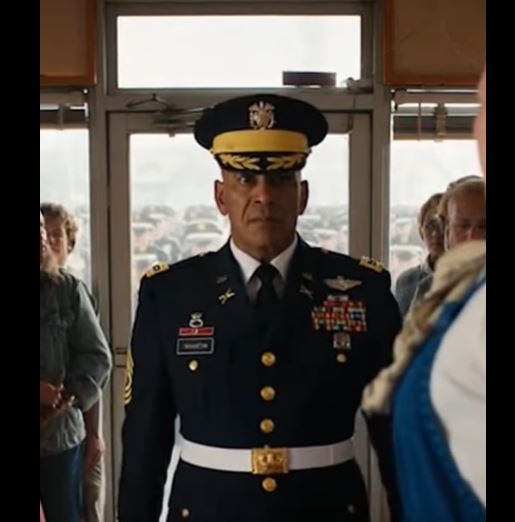
Then a black government vehicle arrived, escorted by armed personnel. The door opened, and a high-ranking officer stepped out, his uniform decorated with rows of medals that glinted in the morning sun. His posture radiated authority, his expression solemn.
He walked toward the diner’s entrance with deliberate steps. The soldiers stood at attention, saluting as he passed.
Inside, the small restaurant was filled with silence. Sarah stood behind the counter, visibly stunned by the sudden presence of so many officials. The officer removed his cap, his movements respectful, almost reverent.
“What is happening?” she asked softly.
The officer’s voice was steady but emotional. “We are searching for the woman who fed a man here last night.”
Sarah hesitated before raising her hand. “That was me.”
What happened next shattered every assumption I had ever made.
The officer stepped forward — and then, before the stunned eyes of everyone present, he dropped to one knee.
Gasps filled the room.
His voice trembled as he spoke. “Ma’am, the man you fed was my father.”
The words hung in the air like thunder.
He explained that his father was a decorated war hero who had once commanded thousands of troops. After years of service, trauma and personal loss had led him into a life of isolation. He often wandered alone, refusing assistance, choosing to live quietly among ordinary people without revealing his identity.
“He never accepts help,” the officer continued. “He believes he must face life without privilege. But last night, he called me for the first time in years. He told me that a kind woman had shown him compassion without judgment. He said it restored his faith in humanity.”