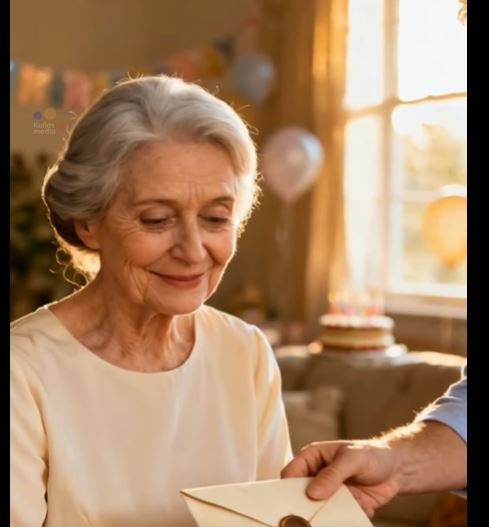
The diner still smelled the same as it always had — a comforting mix of coffee, butter, and something sweet baking in the oven. Even after my husband Thomas died, the scent alone was enough to make me feel as though he might walk through the door at any moment, smiling that familiar gentle smile.

Every Friday at six o’clock, I sat in our booth by the window.
The waitress, Carla, never asked what I wanted. She simply brought two menus, two glasses of water, and eventually a single cup of coffee. She understood. Everyone there did.
Thomas and I had begun our tradition the year we married. We were young then — poor, hopeful, and completely certain that love was enough to carry us through life. We couldn’t afford fancy restaurants, so this little diner became our place. Over time, it became more than a routine. It became a promise.
We celebrated promotions there, mourned losses, planned vacations, and dreamed about the future. Even on difficult days, we would sit across from one another, holding hands across the table, reminding ourselves that we were never alone.
When Thomas grew ill, our visits became quieter. His voice softened, his movements slowed, but he never missed a Friday. Even in his final months, when walking caused him pain, he insisted on keeping our ritual alive.
“This place,” he once whispered, squeezing my hand, “is where time pauses for us.”
After he died, the silence in our home became unbearable. The empty chair at the kitchen table, the untouched side of the bed, the absence of his laughter — it all pressed against my chest like a weight I could never lift.
So I kept going to the diner.
At first, it felt like reopening a wound each week. But gradually, the ritual became a thread connecting me to him. I would sit in our booth, order his favorite lemon pie, and talk to him quietly as though he were still listening.
Years passed this way.
Then, on a rainy evening nearly two years after his passing, something changed.
I was stirring my coffee absentmindedly when a man approached my table. He was perhaps in his early forties, dressed in a simple coat, his expression hesitant but warm.
“Excuse me,” he said gently. “Are you Mrs. Eleanor Whitmore?”
I nodded, slightly uneasy.
He swallowed, then extended a folded envelope toward me. “This is for you. From your husband.”
My breath caught in my throat.
“My husband… passed away,” I managed to say.
The man’s eyes softened. “I know. He asked me to give this to you one day. He said you would understand when the time was right.”
My hands trembled as I accepted the envelope. Before I could ask another question, the man offered a small, respectful nod and quietly left the diner.
For several minutes, I simply stared at the envelope. My name was written on the front in Thomas’s unmistakable handwriting.
With shaking fingers, I opened it.
Inside was a single sheet of paper.
My dearest Ellie,
If you are reading this, it means I am no longer beside you on our Friday evenings. Forgive me for the secret I kept, but I feared you would try to stop me if you knew.
My heart pounded as I continued.
For the past twenty-five years, every Friday after our dinner, I remained behind at the diner for an extra hour. During that time, I paid for meals for those who could not afford them — the elderly man who always sat near the door, the young mother who counted every coin, the lonely student with nowhere else to go.
Tears blurred my vision.
I never told you because I did not want praise. But more importantly, I wanted to show you that love should not end at our table. It should reach others, quietly, without recognition.
My hands pressed against my mouth as I read the final lines.
If you wish, continue this tradition. But only if it brings you peace. Know that every act of kindness we give the world keeps our love alive.
Forever yours, Thomas.
I lowered the letter, overwhelmed by a mixture of shock, pride, and a strange, radiant warmth.
All those years — the times he lingered after I left early, the occasions he insisted I go home to rest — he had been helping strangers, quietly changing lives while never speaking a word of it.
Suddenly, the diner looked different to me. I noticed the elderly man near the counter, the tired waitress rubbing her aching wrist, the young couple sharing a single plate.
Had Thomas touched all of their lives?
The next Friday, I returned as usual. But this time, after finishing my meal, I remained seated.