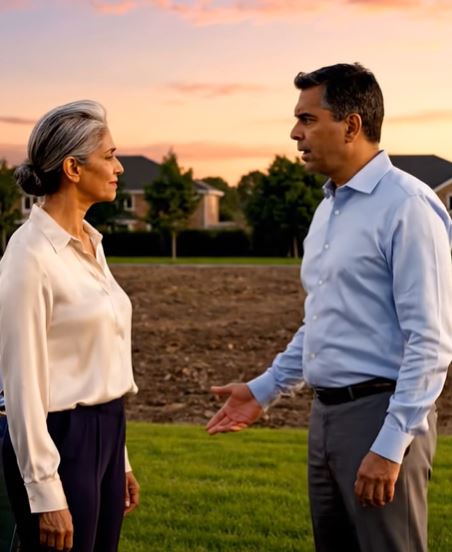
When Helen Carter read the message, she didn’t react at first. She simply stared at the screen, reading the sentence again and again until every word settled into something sharp and undeniable.

The message was short, almost casual, but the meaning behind it carried years of arrogance and unfinished conflict: “When I get back, the house will be mine again.” Helen placed the phone slowly on the kitchen table, letting the silence of the room wrap around her.
Outside, the late afternoon light stretched across the backyard she had spent years caring for. For a moment she said nothing, did nothing, and simply allowed herself to breathe.
The house had not always been a place of tension. When Helen and her ex-husband Daniel first bought it fifteen years earlier, it had felt like the beginning of everything they had dreamed about.
It was a modest two-story home in a quiet neighborhood with a wide front porch and a yard large enough for a garden. Helen had planted roses along the walkway and spent weekends repainting the old wooden fence.
Daniel had talked about renovating the garage and building a small workshop. In those early years, they had imagined growing old there together.
But time has a way of revealing things people don’t see at the beginning. Daniel’s ambitions grew larger than the quiet life they had started. He began chasing business ventures that promised quick success, often disappearing for weeks while Helen kept the house running and handled the bills. At first she supported him, believing the long absences were temporary sacrifices for a better future.
But gradually the sacrifices became permanent. The promises stopped sounding sincere, and the man she had once trusted began to feel like a stranger who occasionally returned home.
Eventually the marriage collapsed under the weight of those years. When the divorce finally happened, it was not dramatic or explosive; it was quiet, tired, and inevitable. Daniel left the house claiming he needed to “start fresh somewhere else.”
Helen stayed, partly because she had nowhere else to go and partly because the house had become more than just a building. It was where she had rebuilt herself after everything had fallen apart.
In the legal settlement, the house had technically remained under both their names while financial matters were sorted out. Daniel had promised to return and resolve the paperwork later, but months turned into years, and he rarely contacted her except for occasional brief messages.
Helen learned to live without expecting anything from him. She repaired the roof after a winter storm, replaced broken appliances, repainted the walls, and slowly transformed the house into a place that felt like her own again.
So when that message appeared on her phone that evening—“When I get back, the house will be mine again”—it stirred memories she had already buried. The tone of the message carried the same entitlement that had defined the last years of their marriage.
It suggested that nothing had changed, that the home she had maintained and protected all those years was simply waiting for him to reclaim.
But Helen did not feel fear. What she felt was clarity.
Over the years she had quietly taken steps that Daniel had never bothered to notice. She had consulted lawyers when the divorce paperwork stalled. She had documented every repair, every tax payment, every mortgage installment she had made alone.
She had followed every legal requirement necessary to resolve ownership issues that Daniel had ignored. The process had taken time, patience, and careful planning, but eventually the house had legally become hers.
Daniel, however, had never asked.
He had simply assumed.
Helen stood up from the kitchen table and walked slowly through the house that evening, looking around each room. The living room still held the same large window that faced the street, where sunlight poured in every morning.
The hallway walls displayed framed photographs from the last few years—pictures of trips she had taken, friends she had made, and quiet moments of a life she had built without him. The house was no longer tied to the past. It had become a symbol of everything she had learned to survive.
That night she made a phone call.
The following weeks were busy. Contractors visited the property to discuss plans, city officials reviewed permits, and real estate agents handled paperwork. Helen worked carefully and calmly, making decisions that would have seemed impossible during the years when she had still been waiting for Daniel to return.
The structure had been professionally demolished, the materials cleared, and the land legally transferred to a development company that planned to build several smaller modern homes on the lot.