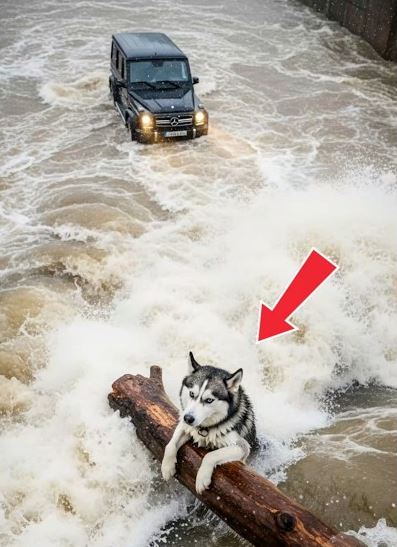
The sky over Willow Creek had been dark and heavy all week, the clouds swollen with rain that seemed to fall without end. Streams that were normally gentle trickles had grown into roaring rivers, and the once-quiet town was slowly transforming into a place of urgency and worry.
The local news warned of possible flooding, and neighbors scrambled to secure their homes, sandbags lining driveways and furniture pushed to higher ground.
Among the concerned residents was Henry Thompson, a grandfather in his seventies, known for his calm demeanor, gentle smile, and unwavering sense of responsibility.
His grandchildren adored him, the townsfolk respected him, and anyone who needed help knew Henry could be counted on. He had lived in Willow Creek his entire life, witnessed storms, fires, and all manners of emergencies, but this one felt different. There was a heaviness in the air, a sense that nature itself was warning them.
On that fateful afternoon, as the rain pounded against the roof of his modest home, Henry noticed something moving in the rapidly rising waters of a nearby creek.
At first, he thought it might be debris—branches, leaves, the usual aftermath of a storm—but as he squinted, he realized it was a small figure struggling against the current. A dog. A medium-sized brown dog, caught in the floodwaters, its fur soaked, eyes wide with fear, and legs paddling frantically to stay afloat.
Without a second thought, Henry grabbed his waterproof coat and a sturdy rope from the garage. His boots sunk slightly into the muddy ground as he ran toward the water, every step fueled by instinct rather than calculation.
The creek, swollen with rain, rumbled angrily, its current stronger than anything he had seen in years. But there was no hesitation in Henry’s mind. A life was at stake, and he could not stand idly by.
“Hold on, boy!” he called out, his voice steady despite the roar of the water. The dog paddled desperately, drifting closer to a tree branch jutting from the bank. Henry’s heart raced as he evaluated the scene. The dog was terrified, and the turbulent water was unpredictable. One wrong step could send him tumbling into the strong current.
He tied one end of the rope securely around his waist and tossed the other toward the struggling dog. The animal lunged instinctively, catching the rope with its teeth.
Henry gritted his teeth, leaning back to maintain balance as the rope strained against the force of the water. With slow, deliberate movements, he pulled the dog closer, all the while keeping his feet planted on the slippery bank.
The dog whimpered, thrashing as it realized its rescue was underway. Henry’s hands were raw from the cold, wet rope, but he refused to let go. Inch by inch, he brought the dog toward safety. Finally, with a surge of effort and a deep breath, he managed to lift the frightened animal onto the bank.
For a moment, they both simply lay there, catching their breath. The dog shook itself, spraying mud and water in every direction, and then turned its wet, grateful eyes on Henry. There was a silent understanding between them—a bond formed in the face of danger.
“Good boy,” Henry whispered, gently rubbing the dog’s head. “You’re safe now.”
As he carried the dog back to the safety of his home, the storm’s fury continued unabated. But inside his small living room, wrapped in a warm blanket with a cup of tea and the soft fire crackling in the hearth, the dog finally calmed. It was as if it knew, instinctively, that Henry was more than just a rescuer—he was a protector, a guardian, and a friend.
The news of Henry’s bravery spread quickly through Willow Creek. Neighbors shared the story of the kind grandfather who had risked his own safety to save a helpless animal, braving the storm and the floodwaters without hesitation.
Children who had once played with Henry on sunny days now looked at him with awe, and adults nodded in respect, realizing that courage is not measured by strength alone, but by the willingness to act when it matters most.
Over the following days, as the floodwaters slowly receded and the town began to recover, Henry continued to care for the dog. He gave it food, a warm bed, and a place in his home.
It wasn’t long before the dog, once frightened and exhausted, became a cheerful and loyal companion, following Henry on morning walks and keeping watch from the porch.
The town, inspired by Henry’s actions, began to pay closer attention to the welfare of animals and people alike during emergencies, ensuring that compassion became as natural as caution.