The last time I saw my son, Raymond, I didn’t hug him. I didn’t tell him I loved him. I stood in the driveway of my small suburban home, watching him stumble toward his beat-up car, and I let a decade of disappointment turn my heart into stone.
“Raymond, as far as I’m concerned, you’re dead,” I had shouted, my voice cold and final. “Don’t call me. Don’t come back. I’m done being the ghost of a mother to a son who doesn’t want to be saved.”
I drove away that afternoon, believing I had finally cut the anchor that was dragging me down. I thought I was free. I didn’t know that three weeks later, a midnight phone call from St. Jude’s Hospital would bring me to my knees.
“Mrs. Thorne? This is the ICU. Your son was involved in a multi-car accident. You need to get here. Now.”
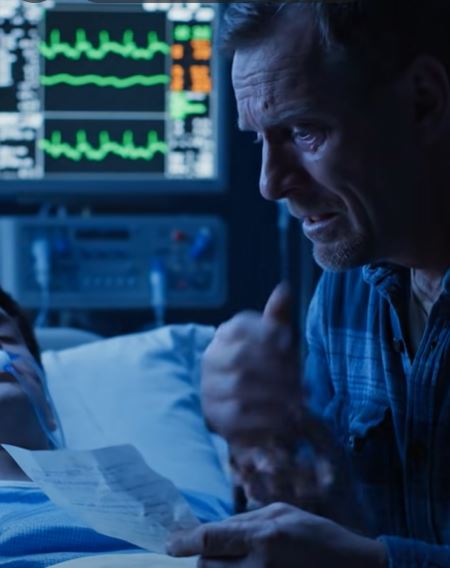
The walk down the hospital corridor felt like a mile-long gauntlet of white light and the smell of antiseptic. When I reached Room 412, I barely recognized the man in the bed. Raymond was covered in tubes and bandages, the rhythmic hiss of the ventilator the only sign that he was still with us.
For two days, I sat in the plastic chair by his side, the weight of my last words to him crushing my chest. Every time the machines beeped, I felt the sting of that “dead to me” sentence. I had wished for his absence, and now that it was staring me in the face, it was unbearable.
On the third night, a nurse came in to adjust his positioning. As she lifted his head to change the linen, a small, battered metal tin slid from beneath his pillow and clattered onto the floor.
“What’s that?” I asked, my voice a dry rasp.
“He was clutching it when they brought him in,” the nurse said softly, handing me the box. “The paramedics said he wouldn’t let go of it, even when he was drifting out. We tucked it there so he’d feel it near him.”
My hands shook as I pried the lid open. I expected to find the remnants of the life I had judged him for—pawn tickets or old debts. Instead, the first thing I saw was a photograph.
It was an old Polaroid of me, taken twenty years ago at the local park. I was laughing, holding a toddler-aged Raymond on my hip. The edges were frayed and yellowed, worn down by years of being touched and held.
Beneath the photo was a stack of unsent postcards. They were addressed to me, spanning the last five years.
“Mom, I saw these flowers today and thought of your garden. I’m trying to get clean. I want to come home, but I don’t know how to look you in the eye yet. Love, Ray.”
“Mom, happy birthday. I bought you a gift, but I’m too ashamed to mail it. I’m working two jobs now. I’m going to make you proud one day. I promise.”
And at the very bottom, a small, handwritten note on a scrap of paper, dated the morning of the accident:
“Today is the day. I’m driving over to see her. I don’t care if she screams. I just need to tell her I never stopped carrying her with me.”
I collapsed back into the chair, the postcards fluttering to the floor like autumn leaves. He hadn’t been running away from me for ten years; he had been trying to find a version of himself that was worthy of coming back. Every harsh word I had thrown at him, he had absorbed, yet he had kept this small box of love as his only shield.
I reached out and took his hand—the hand that had clutched this box through the wreckage of a car and the fog of pain.
“I’m so sorry, Ray,” I sobbed, pressing his cold palm to my cheek. “You aren’t dead. You were never dead to me. Please… just wake up so I can tell you.”
The monitors continued their steady, indifferent beep. But as I sat there in the quiet of the ICU, holding that battered metal tin, the silence between us finally broke. The betrayal wasn’t his struggle; the betrayal was my lack of faith.
Raymond didn’t wake up that night, or the next. But two weeks later, his eyes flickered open. He couldn’t speak through the tubes, but he saw the metal box sitting on his bedside table, right next to a fresh photo of us that I had brought from home.
He squeezed my hand. A weak, trembling pressure that said more than any postcard ever could.