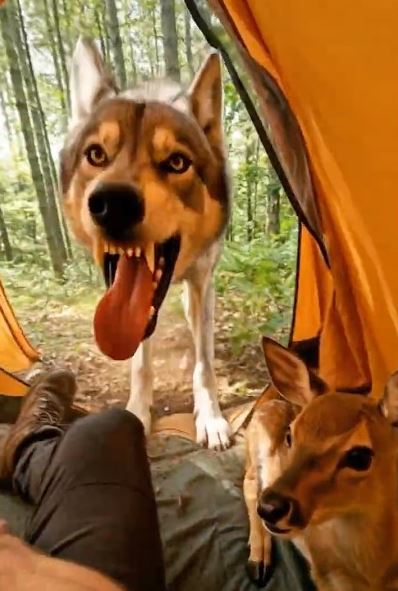
The air in the high timberline was crisp, smelling of damp pine needles and ancient stone. I was on a solo trek, my heavy boots making a rhythmic thud-crunch on the frozen moss. Everything was peaceful until a sound pierced the air—a high-pitched, harmonic bleat that sounded uncannily like a human infant in distress.
I dropped my pack and sprinted toward a clearing near the Blackwood Creek.
Through the thicket, I saw the drama unfolding. A newborn fawn, its white spots still vivid against its chestnut coat, was backed into a hollow under a fallen cedar tree. Its legs were spindly and unstable, shaking with a primal terror. Five feet away, a large timber wolf—a shadow of grey fur and yellow eyes—was circling slowly. The wolf wasn’t rushing; it was calculating, its low growl vibrating through the very ground I stood on.
I knew the rules of the wild: don’t interfere with nature. But as the wolf coiled its haunches for the killing leap, the “natural order” felt secondary to the pure, vibrating life of that small creature.
“HEY!” I bellowed, my voice tearing through the silence like a gunshot.
The wolf froze. It turned its massive head, baring teeth that glinted like wet ivory. It didn’t run. It sized me up, evaluating if I was a threat or a larger meal.
I didn’t have a weapon, but I had my survival gear. I reached into my jacket and pulled out my emergency flare. With a sharp crack-hiss, a brilliant, blinding crimson light erupted, casting long, demonic shadows across the snow. I stepped forward, waving the sputtering fire and screaming with a primal fury I didn’t know I possessed.
The wolf, startled by the unnatural heat and the chemical roar of the flare, let out a sharp yelp. It retreated two steps, its tail tucked low. It gave one final, lingering look at the fawn, then vanished into the dark curtains of the pine forest like a wisp of smoke.
I didn’t move for a long minute, my heart hammering against my ribs. The crimson light of the flare flickered out, leaving us in a heavy, blue twilight.
I approached the fallen cedar. The fawn was paralyzed with shock, its large, liquid eyes staring at me. I knew I couldn’t touch it—human scent could cause the mother to abandon it—but I could see it was physically unharmed, just exhausted.
I retreated thirty yards and climbed a large granite boulder, keeping a silent watch.
Ten minutes passed. Then twenty. The forest began to breathe again. From the opposite side of the clearing, a large doe emerged. She moved with a cautious, elegant tension, her ears swiveling constantly. She reached the cedar and let out a soft, low grunt.
The fawn scrambled out of the hollow, its legs finding a sudden, desperate strength. It buried its nose in its mother’s flank, and together, they vanished into the safety of the deep brush.
The “rescue” hadn’t involved a cage or a vet. It had been a moment of standing in the gap—a temporary disruption of the cycle of the wild to give a small life one more day.
As I walked back to my pack, the forest felt different. I wasn’t just a visitor anymore; I was part of the story. I realized that courage isn’t about being stronger than the wolf; it’s about being louder than the fear. The $150,000 “infrastructure” of my high-tech camping gear hadn’t saved that deer—a five-dollar flare and a human scream did.
I didn’t tell many people the story. Some would say I shouldn’t have interfered. But every time I see a deer grazing near the timberline, I like to imagine it’s that same fawn, grown strong and swift, living a life that almost ended in a rusted hollow.
The wolf had to eat, yes, but not today. Not on my watch. Because in the vast, indifferent expanse of the wilderness, sometimes a single act of empathy is the only thing that keeps the light on.
I left the clearing as the first stars appeared, a “silent guardian” retreating into the night, leaving the pines to keep their secrets. The fawn was safe, the mother was found, and the forest remained as beautiful and brutal as ever—but for one small soul, the world was still wide and full of possibilities.