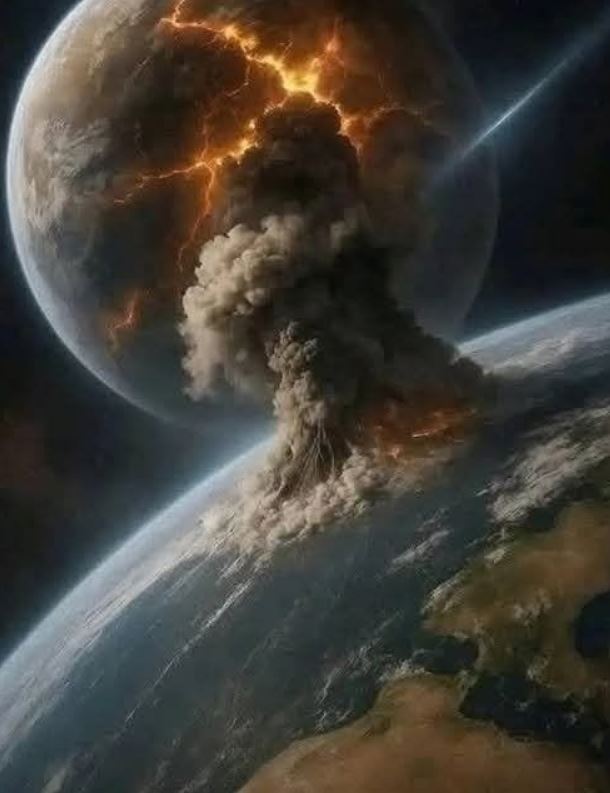
A routine scientific update, written in calm and technical language, mentioned a large object moving through space near Earth’s orbit. Events like this happen more often than most people realize, and they rarely attract widespread attention.
But then one detail stood out.
The size.
Estimates revealed that the object — known as 52768 (1998 OR2) — could measure between 1.5 and 4 kilometers across. That’s large enough to place it in a category scientists monitor very closely. Objects of this scale, while rare, are powerful enough to cause global consequences if they were ever to impact Earth.
Naturally, this sparked curiosity and concern.
However, experts from NASA and other research institutions have been clear and consistent: this asteroid does not pose a threat. Its trajectory has been carefully tracked for years, and all current data confirms that it will pass safely by Earth.
Traveling at roughly 8.7 kilometers per second, the asteroid will move through our cosmic neighborhood and continue on its path without incident. There is no collision course, no emergency scenario, and no reason for alarm.
So why does it matter?
Because moments like this highlight something bigger than a single asteroid.
They remind us how much of our safety depends on observation, preparation, and science. Near-Earth objects are constantly being monitored using advanced telescopes and global tracking systems. These efforts allow scientists to detect potential risks early and calculate their paths with impressive accuracy.
At the same time, planetary defense is still an evolving field. While detection capabilities have improved significantly, strategies for dealing with a real threat are still being developed and tested. International cooperation, funding, and long-term planning all play a role in how prepared humanity truly is.
In this case, everything is under control. The asteroid will pass at a safe distance, exactly as predicted.
But its presence serves as a quiet reminder:
Space is active, dynamic, and full of objects moving at incredible speeds. Most will pass unnoticed. A few will capture attention. And all of them reinforce the importance of staying informed and prepared.
The real takeaway isn’t fear — it’s awareness.
Because while this asteroid will miss, the question scientists continue to study is simple:
What happens if one doesn’t?