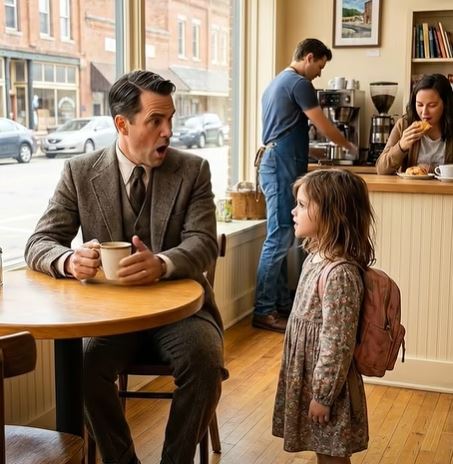
The restaurant was buzzing with the low hum of conversation, the clinking of glasses, and the faint scent of garlic and herbs that filled the warm, dimly lit room. Tables were dressed with crisp white linens, candles flickering softly in the center of each one. It was the kind of place where deals were made, celebrations were held, and lives could change in a single evening. But no one that night expected the change to come in the form of a small, quiet girl with big, curious eyes.

Henry Langford, a billionaire known for his sharp business acumen and even sharper public image, sat nervously at a corner table. His assistant had assured him this “blind date” was arranged perfectly—someone who matched his tastes, shared his interests, and could navigate the unique pressures of his world. He glanced at his watch, adjusting his cufflinks, rehearsing polite conversation in his head. He had been on countless dinners, meetings, and formal events, but somehow the idea of this date made him more anxious than usual.
Minutes passed. He watched the door, expecting a sophisticated woman to glide gracefully into the room. Instead, a small figure appeared, holding the hand of a tired-looking woman who looked apologetic and frail. The little girl looked no more than eight or nine, her hair tied neatly in a bow, her dress simple but clean, and her eyes wide as they scanned the restaurant.
Henry frowned. “Is she…?” he asked, unsure whether to call over a waiter.
The woman smiled weakly. “I’m so sorry,” she said. her voice shaking. “I was supposed to come tonight, but I’ve been too sick to make it. So… my daughter is here instead. She’s… she’ll keep you company for a little while, I promise.”
Henry blinked, taken aback. He had expected elegance, charm, and conversation about art or business—not this. But there was something about the child’s earnest expression that made him nod politely. “Of course,” he said, motioning for her to sit.
The little girl, whose name was Sophie, climbed into the chair across from him, her small hands folded neatly on the table. She was quiet at first, observing Henry with a level of attentiveness that made him slightly uncomfortable. His usual confidence in conversation faltered under the weight of her gaze.
“I like your tie,” she said suddenly.
Henry was startled. “Oh… thank you,” he replied, unsure how to respond. Most adults would have ignored her. Most adults would have assumed the awkwardness of the situation meant no conversation was possible. But Sophie didn’t flinch. She smiled shyly, and then asked a question that would forever change the course of that evening.
“Do you like stories?” she asked, her eyes wide with genuine curiosity.
Henry felt a small laugh escape him—a sound he hadn’t made in months. “I suppose I do,” he said.
“Good,” Sophie said. “Because I know lots.”
And so, over the next hour, the little girl talked. She told stories of her school, of the games she played, of her mother’s favorite jokes, and of adventures in the park. She didn’t ask for anything from him—no gifts, no favors, no approval—just his attention. Henry found himself leaning forward, listening intently, laughing more freely than he had in years.
Other diners glanced curiously, some smiling at the unusual sight of a billionaire captivated by a child’s storytelling. But Henry didn’t notice. For the first time in a long time, he wasn’t calculating stock moves, investment plans, or press statements. He was simply present, completely absorbed in the moment.
As the evening progressed, Sophie’s innocent observations offered insights that even Henry’s seasoned advisors had never considered. She asked questions that made him reflect on his life choices, on the people he had pushed away in pursuit of wealth, and on the ways he had forgotten what really mattered.
When the dessert plates were cleared, Sophie leaned back in her chair, tired but happy. “I think my mom would like you,” she said quietly. “She thinks good people should meet each other.”
Henry nodded, his heart full. Something had shifted inside him—subtly at first, but undeniably. In the span of a few hours, a little girl had reminded him of something he had long forgotten: the value of kindness, honesty, and genuine human connection.
Before leaving, Sophie tugged gently at his sleeve. “Promise me something,” she said. “When you meet my mom… be nice. And listen. Really listen.”
“I promise,” Henry replied, feeling an unfamiliar warmth in his chest.
The next day, Henry arranged to meet Sophie’s mother under much different circumstances. But the memory of that evening lingered—the way a child’s innocence could penetrate even the hardest walls, the way a simple act of stepping in for her mother had shifted his perspective.