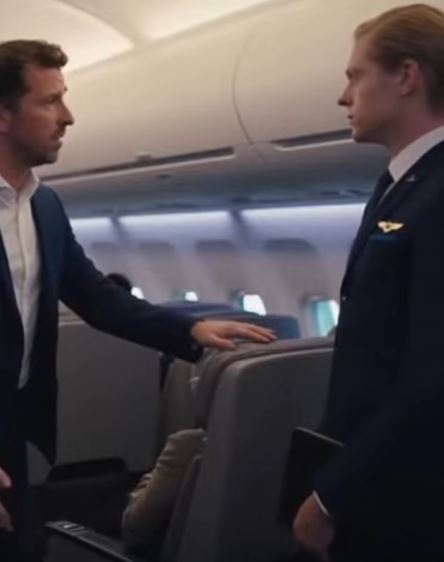
The cabin lights were dimmed for the overnight flight from Pristina to Istanbul. Turkish Airlines flight TK 1027 had just reached cruising altitude, and the usual murmur of passengers settling in filled the economy section.
As senior flight attendant, I had walked the aisles twice already, offering water and checking seatbelts. Everything seemed routine until I reached row 1 in business class.
There, in seat 1A—the window seat usually reserved for high-paying passengers or those with special needs—sat a large, golden-colored dog. He was a Labrador Retriever, maybe eighty pounds, wearing a bright red service vest that read “Emotional Support Animal – Do Not Pet.”
His owner, or rather the person listed on the manifest, was a quiet older gentleman in seat 1B. The man looked exhausted, his face pale and drawn, eyes red-rimmed as if he hadn’t slept in days.
I approached with my professional smile. “Good evening, sir. I see we have a special passenger tonight. Is everything all right with your dog? He seems a bit… restless.”
The man nodded slowly. “He’s fine. His name is Bruno. We’re traveling together. He has all the paperwork.” His voice was flat, almost mechanical.
Bruno sat upright in the wide leather seat, paws neatly placed on the cushion, staring straight ahead through the window into the dark sky. His ears were slightly drooped, and every few minutes a soft, almost inaudible whine escaped his throat. He wasn’t barking or causing trouble, but something about his posture struck me as deeply wrong. He looked… heartbroken.
I had seen emotional support animals before—mostly small dogs or cats that curled up quietly. A large Labrador in business class was unusual, but the documents checked out.
Still, my instincts as a flight attendant with twelve years of experience told me something was off. The man barely interacted with the dog. No petting, no comforting words. He just stared at his phone, occasionally wiping his eyes.
As the flight progressed, Bruno’s behavior grew more noticeable. He refused the small bowl of water I offered. Instead, he kept turning his head toward the empty seat beside him, as if expecting someone to be there. Once, he laid his big head on the armrest between 1A and 1B and let out a long, sorrowful sigh that made the passenger in 2A glance over with concern.
My shift partner, a younger attendant named Liridona, whispered to me in the galley. “That dog looks like he’s mourning. Maybe the man lost his wife or something. Should we offer them extra blankets?”
I agreed it was sad, but something still nagged at me. On long flights, especially red-eyes, passengers sometimes brought animals after personal tragedies. I decided to keep an eye on them.
Halfway through the flight, during the quiet hours when most passengers were sleeping, I noticed Bruno becoming agitated. He stood up in his seat, circling once before lying down again with his head facing the aisle. His eyes—those deep, intelligent brown eyes—were wet. Not from the dry cabin air, but with real tears. Dogs can cry, and this one was.
That was when I nearly made the biggest mistake of my career.
I pulled out my tablet to check the special assistance notes again. The booking had been made under the name “Arben Hoxha + Emotional Support Animal.” No further details.
I began to suspect the dog might be improperly documented or that the man was using the service animal loophole for comfort rather than necessity. Bruno was large, taking up significant space, and if he became disruptive it could affect safety.
I considered approaching the captain about possibly relocating them or, in the worst case, having ground staff meet us in Istanbul to verify the paperwork more thoroughly. I even typed a quick note to the purser: “Large ESA in 1A showing signs of distress—possible improper use?”
Before sending it, I decided to speak with the passenger one more time.
I knelt beside seat 1B, keeping my voice low. “Sir, is there anything we can do for Bruno? He seems very sad tonight. Has he eaten recently?”
The man looked at me for the first time with real focus. His eyes were filled with fresh pain. “He hasn’t been the same since… since we lost her.”
“Lost who?” I asked gently.
“My wife. Bruno’s mother—his handler. She passed away ten days ago. Cancer. She trained him herself as her service dog for her mobility issues. They were inseparable for eight years. This is his first flight without her. I’m taking him to my sister in Istanbul because I… I can’t take care of him right now. The grief is too much for both of us.”