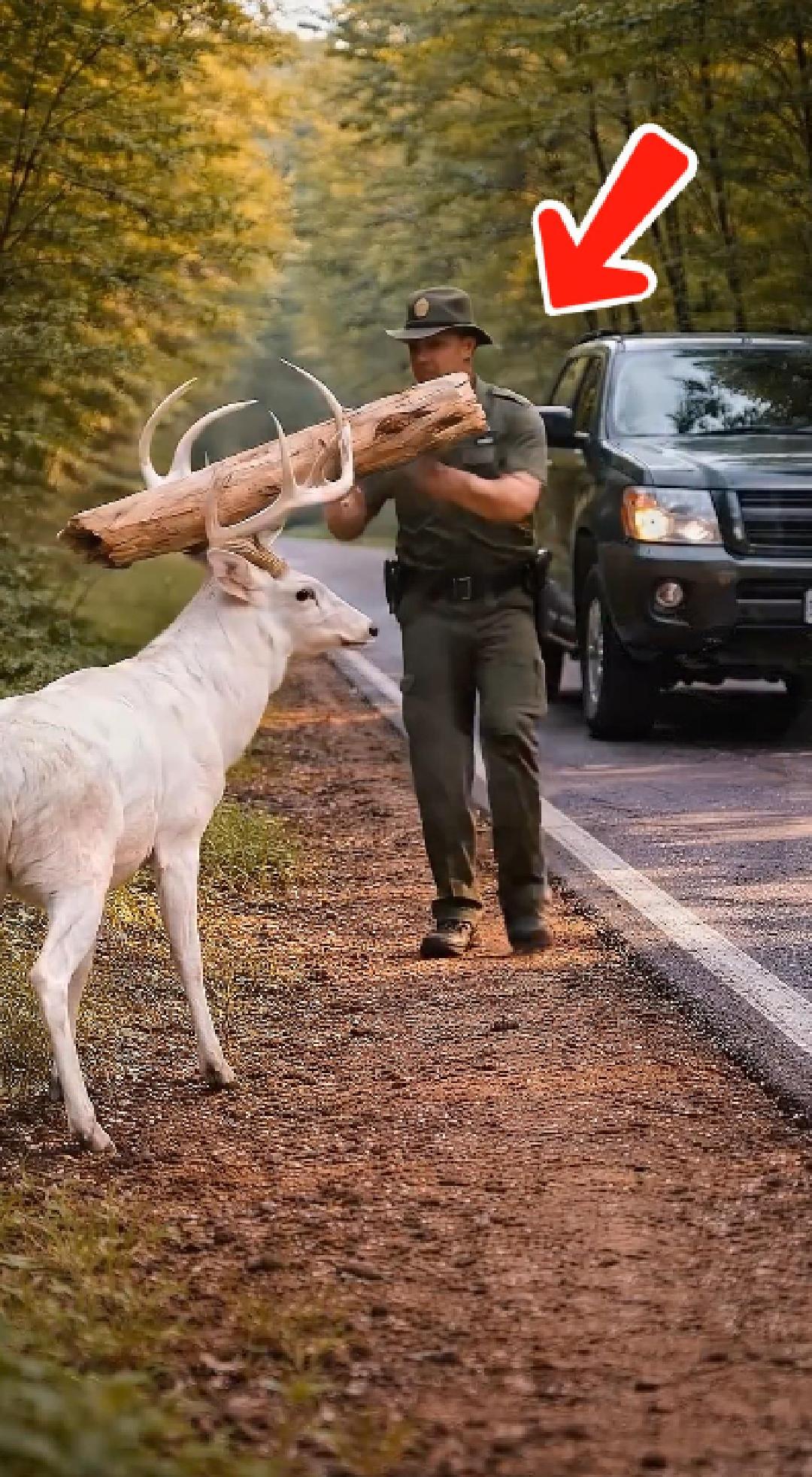
The forest was unusually still that morning, with a soft layer of mist hanging between the trees and muting the usual sounds of wildlife. Sunlight struggled to break through the dense canopy, scattering in pale beams that touched the forest floor in uneven patches.
The air was cool, damp, and quiet in a way that often signaled something out of place. In this kind of silence, even the smallest disturbance could carry meaning.
A forest ranger was moving along one of the less-traveled paths, checking the area as part of a routine patrol. These inspections were meant to ensure the safety of both the wildlife and the environment, especially after recent weather changes that had left fallen branches and unstable debris scattered across parts of the forest. Most days passed without incident, with only tracks in the soil or distant animal calls marking any sign of life.
But on this day, something interrupted the routine.
As the ranger approached a bend in the trail, he noticed movement near a cluster of trees slightly off the main path. At first, it looked like a shadow shifting in the undergrowth. Then it became clearer. A deer was there, partially hidden among fallen branches and dense vegetation, struggling in a way that immediately drew attention.
The ranger slowed his steps.
Something was wrong.
As he got closer, the full situation revealed itself. A large fallen log had rolled or shifted during a recent storm and come to rest in a position that trapped the deer’s hind leg. The animal was caught between the heavy wood and uneven ground, unable to free itself. Each attempt to pull away only increased its struggle, causing exhaustion and visible distress.
The deer was alive, but clearly stuck.
Its breathing was uneven, its body tense, and its movements increasingly limited. The log was heavy enough that natural force alone would not be enough for the animal to escape. The longer it remained trapped, the higher the risk of injury or worsening exhaustion.
The ranger immediately recognized the urgency of the situation.
He approached slowly, careful not to startle the deer further. In situations like this, sudden movement could cause panic, making the animal injure itself while attempting to break free. The ranger kept his posture low and steady, speaking softly in a calm tone, even though there was no expectation that the deer would understand his words.
The deer reacted at first with tension, trying once more to pull its leg free. The effort was weak, and the log did not move. It only confirmed what was already clear: without assistance, it would not be able to escape.
The ranger assessed the situation carefully.
The log was thick and partially wedged into the ground, likely made heavier by moisture from the recent weather. Moving it directly by hand would not be possible. He scanned the area quickly, looking for tools or natural leverage points that could help reduce the pressure on the animal’s leg.
Fortunately, as part of his patrol gear, he carried basic equipment designed for field emergencies. He retrieved a sturdy tool used for shifting heavy natural debris and began working carefully at the base of the log. The goal was not to lift it entirely, but to create just enough space to relieve the pressure on the trapped leg.
Every movement had to be controlled.
Too much force could cause the log to shift suddenly, potentially injuring the deer further. Too little would make no difference at all. The ranger worked steadily, adjusting his position several times to find the right angle of leverage.
The deer remained tense throughout the process, occasionally attempting small movements, but the ranger continued speaking calmly, maintaining a steady presence beside it. Over time, the animal began to settle slightly, as if recognizing that something was changing.
Slowly, the log began to shift.
At first it was barely noticeable—a slight movement, a reduction in pressure. Then gradually, as the ranger continued applying controlled force, the gap widened just enough to allow room for adjustment.
The ranger paused for a moment, checking the position carefully. He knew that rushing the final step could undo the progress or cause harm. Once he was certain the pressure had been reduced enough, he gently guided the deer’s leg free.
For a brief moment, the animal remained still.
It did not run immediately. Instead, it stood in place, adjusting to the sudden absence of pressure and regaining balance. Its breathing remained heavy, but it was no longer trapped.
The ranger slowly stepped back, giving it space.
The deer took a cautious step forward.