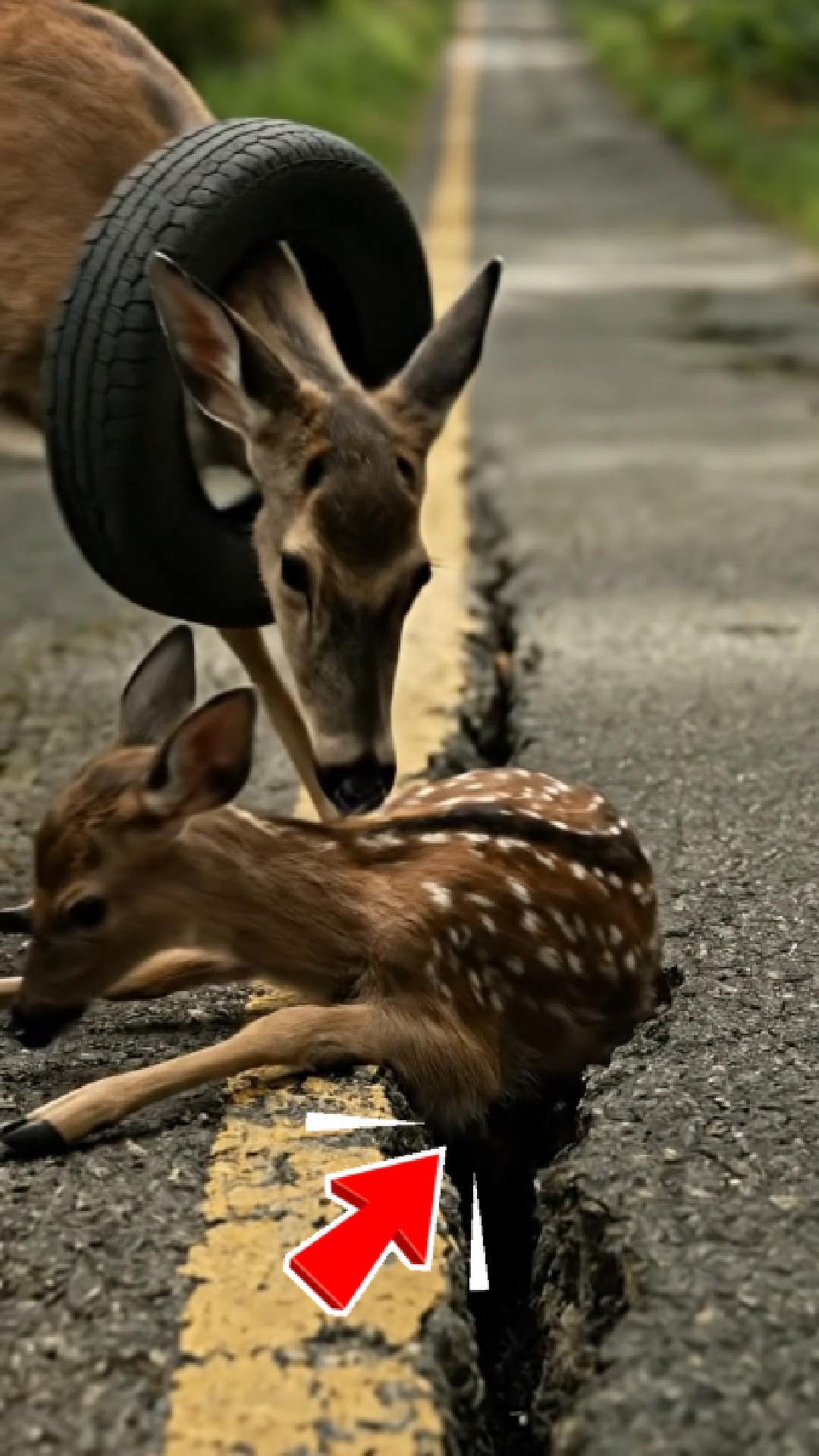
The deer had been carrying the tire for far longer than anyone could tell. At first glance, it almost looked unreal—a dark, heavy ring wrapped tightly around its neck as it moved cautiously through the edge of a wooded area.
But there was nothing unnatural about the exhaustion in its posture or the strain in its movements. The tire was real, and so was the burden it had become.
It had likely happened when the deer was younger, small enough for its head to slip through the opening while searching for food or investigating discarded objects left behind by people. Back then, the tire may not have seemed like an immediate problem. But as the deer grew, the weight remained. What had once been loose became restrictive. What had once been manageable became dangerous.
Now the tire pressed constantly against its neck and shoulders, limiting movement and wearing away its strength day after day.
The deer moved carefully through the brush, lowering its head with visible effort whenever it tried to feed. The thick rubber shifted awkwardly with every step, catching against branches and undergrowth. Even simple movement required more energy than it should have. Yet despite everything, the deer had survived this long, adapting in the only way it could.
Its ears twitched constantly, alert to every sound. Survival instincts had not faded, even under the weight of the tire. If anything, they had sharpened. The animal knew vulnerability, even if it could not understand the source of it.
One afternoon, the deer emerged near the edge of an open field where scattered trees gave way to rough grassland. It paused there briefly, breathing heavily after moving through dense terrain. The tire hung unevenly now, tilting slightly to one side as the deer adjusted its balance.
That was when someone noticed it.
A man driving along a nearby dirt road slowed almost immediately after catching sight of the unusual shape around the animal’s neck. At first, he thought he was mistaken. But as he looked closer, the reality became painfully clear. The deer wasn’t just wandering—it was trapped in something it could not remove on its own.
The man stopped his vehicle.
For a few moments, he simply watched from a distance, trying to understand the situation fully. The deer was alert but tired, its movements slower than they should have been. The tire looked heavy enough to interfere with feeding, movement, and even breathing over time. Leaving it there was not an option.
But approaching a wild deer was never simple.
The moment the man stepped out of the vehicle, the deer reacted instantly. Its body stiffened, ears turning sharply toward the sound. Fear surged through it immediately. Wild animals survive by avoiding humans, not trusting them. The deer stepped backward, the tire shifting awkwardly as it moved.
The man stopped.
Rushing forward would only push the animal deeper into panic. A frightened deer could injure itself trying to escape, especially with the tire limiting its movement. The rescue would require patience, timing, and careful decisions.
Slowly, the man lowered his posture slightly, avoiding direct aggressive movement. He spoke softly, though the words themselves meant nothing to the deer. It was the calmness that mattered. Still, the deer remained tense, ready to flee at the slightest sudden motion.
For several minutes, neither moved much.
The deer watched carefully, breathing fast but holding position. The man observed the tire more closely now, realizing how deeply it had settled around the animal’s neck. It was not something that could simply be lifted away. The deer had grown around it.
This was going to be difficult.
The man knew he would need to get close enough to secure the deer safely without causing panic. But gaining that opportunity would depend entirely on timing. The animal’s exhaustion was visible, yet its survival instincts remained strong.
The deer shifted slightly, turning sideways for a brief moment. The tire scraped against its shoulder awkwardly. That small movement revealed something important: although tight, the tire still had minimal space around the neck. Enough, perhaps, for removal if handled carefully.
The man made a decision.
He moved slowly toward the side rather than directly forward, avoiding eye contact that could feel threatening. The deer immediately took a few steps back, but the uneven weight of the tire slowed its movement slightly. The man paused again, giving it time to settle rather than forcing pursuit.
Step by step, the distance shortened.
The deer’s breathing remained fast. It lowered its head slightly, uncertain whether to run or hold position. The tire made sudden movement harder, and exhaustion was beginning to compete with fear.