The marble steps of the county courthouse gleamed in the morning sun, polished by decades of footsteps and the steady rhythm of justice.
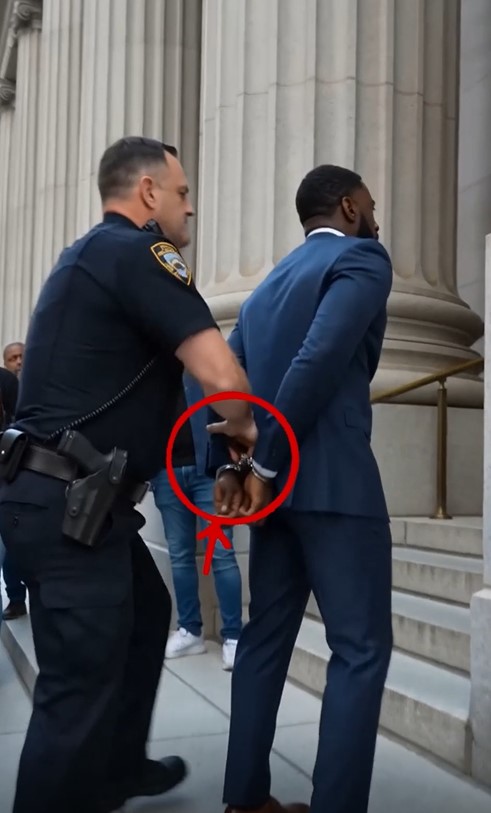
Lawyers in tailored suits moved briskly through the entrance, balancing briefcases and cups of coffee. Defendants stood nervously near the doors, checking paperwork and whispering to family members. Clerks, deputies, and judges prepared for another day in a building where appearances often shaped first impressions.
At precisely 8:15 a.m., a black sedan pulled up to the curb.
A tall man stepped out.
He wore a charcoal-gray suit that fit perfectly, a crisp white shirt, and a dark blue tie. His shoes were polished, his posture was confident, and his expression was calm. He looked like someone accustomed to important meetings and high-level conversations. In one hand, he carried a leather portfolio. In the other, he held a sealed envelope.
His name was Daniel Whitmore.
To anyone passing by, Daniel looked like a successful businessman or senior attorney. He moved with quiet assurance as he climbed the courthouse steps and approached the security checkpoint.
Standing near the entrance was Bailiff Raymond Collins.
Collins had worked in the courthouse for nearly fifteen years. He was known for his strict attitude and sharp tongue. Some people appreciated his no-nonsense approach, but others found him unnecessarily rude. He had developed a habit of judging people quickly, often deciding within seconds who deserved respect and who did not.
When Daniel stepped forward, Collins looked him up and down.
“State your business,” the bailiff said, his tone clipped.

Daniel handed over a visitor badge request form. “I’m here to meet with Judge Harrison.”
Collins glanced at the form, then smirked.
“Judge Harrison doesn’t just meet with anyone who walks in off the street.”
Daniel remained composed. “I have a scheduled appointment.”
Collins raised an eyebrow. “Do you now?”
The people waiting in line began to pay attention. There was something in the bailiff’s voice that suggested he had already made up his mind.
Daniel offered a polite smile. “Yes, I do.”
Collins leaned back in his chair and crossed his arms. “I don’t see your name on the list.”
Daniel looked at the clipboard briefly. “Perhaps you’re looking at the wrong page.”
The remark, though respectful, irritated Collins.
“You telling me how to do my job?”
“No,” Daniel said evenly. “Only that there may be a misunderstanding.”
Collins stood up.
His chair scraped loudly against the floor, drawing even more attention.
“Listen,” he said, stepping closer. “I don’t care how expensive your suit is. If your name isn’t on the list, you’re not getting in.”
A few attorneys standing nearby exchanged uncomfortable glances. The tension was unmistakable.
Daniel did not raise his voice.
“I understand your responsibility, and I respect it. But I assure you, Judge Harrison is expecting me.”
Collins laughed under his breath.
“Everyone says that.”
He slid the visitor form back across the desk.
“You can step aside and stop holding up the line.”
For the first time, Daniel’s expression changed slightly. Not to anger, but to disappointment.
He looked around the busy lobby, then returned his gaze to the bailiff.
“All right,” he said quietly. “Would you mind calling Judge Harrison’s chambers?”
Collins folded his arms.
“No.”
The answer came so quickly and so bluntly that several people nearby fell silent.
Daniel nodded slowly.

“In that case,” he said, reaching into his jacket pocket, “perhaps this will help.”
He removed a small card and placed it on the counter.
Collins glanced down.
At first, he seemed unimpressed.
Then he read the name.
His expression changed instantly.
The color drained from his face.
His posture stiffened, and his eyes widened.
Printed on the card were the words:
Daniel Whitmore
Chief Investigator
State Judicial Conduct Commission
The effect was immediate.
The Judicial Conduct Commission was the independent body responsible for investigating complaints against judges, court personnel, and officers of the court. Their authority extended to everyone in the building—including bailiffs.
Collins stared at the card for a long moment.
The chatter in the lobby stopped almost completely.
Daniel spoke in the same calm tone he had used from the beginning.
“I’m here for a confidential meeting with Judge Harrison regarding a formal review.”
Collins swallowed hard.
“I… I wasn’t aware.”
Daniel nodded. “That much is clear.”
The bailiff scrambled to open the security gate.
“Mr. Whitmore, my apologies. Please, go right through.”
Daniel did not move.

Instead, he looked at the bailiff steadily.
“Do you know why our office exists, Mr. Collins?”
“The nervous teenager coming to traffic court. The single mother filing paperwork. The elderly man trying to understand a summons. They deserve the same respect whether they wear a tailored suit or work clothes.”