Travelers pushed luggage carts toward the exit, families reunited after long flights, and customs officers moved steadily through the line, checking passports and asking routine questions. Most inspections lasted less than a minute.
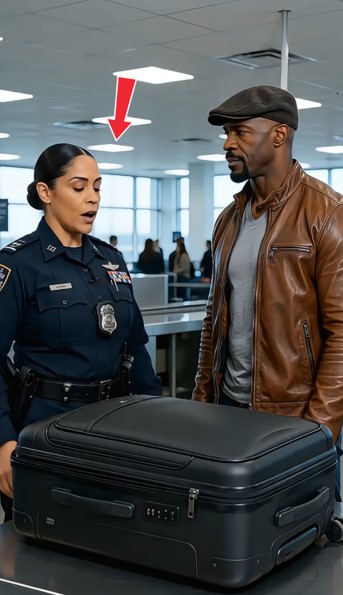
For Daniel Carter, however, the process was about to take much longer.
Daniel had just returned from a two-week business trip overseas. He wore a dark blazer, carried a leather briefcase, and looked like many of the other professionals passing through the terminal.
When he reached the customs desk, the officer reviewed his passport and glanced at the declaration form.
“Please step over to secondary inspection,” she said.
Daniel nodded politely.
“Of course.”
He collected his luggage and followed another officer into a nearby inspection room.
Inside, several travelers were waiting while officers examined suitcases and reviewed documents.
Daniel placed his bags on the stainless-steel inspection table.
The customs officer introduced herself and began asking routine questions.
“What was the purpose of your trip?”
“Business meetings,” Daniel replied.
“Did you purchase anything overseas?”
“A few personal items and some documents related to work.”
The officer opened his suitcase and began looking through neatly folded clothing, folders, and electronic equipment.
Everything appeared organized.
Still, she continued checking each item carefully.
Daniel remained calm.
He answered every question directly and made no attempt to rush the process.
As the inspection continued, another officer joined them.
The first officer reviewed Daniel’s travel history and noticed that he had entered and exited the country frequently over the past several years.
“That’s a lot of international travel,” she said.
Daniel smiled slightly.
“My work requires it.”
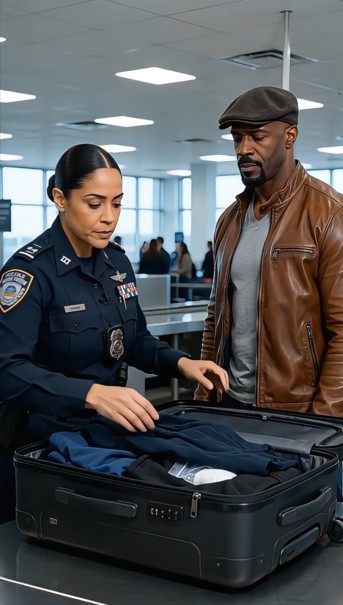
The officer examined his briefcase and found a credential holder tucked inside one of the compartments.
“May I see this?” she asked.
Daniel nodded.
“Certainly.”
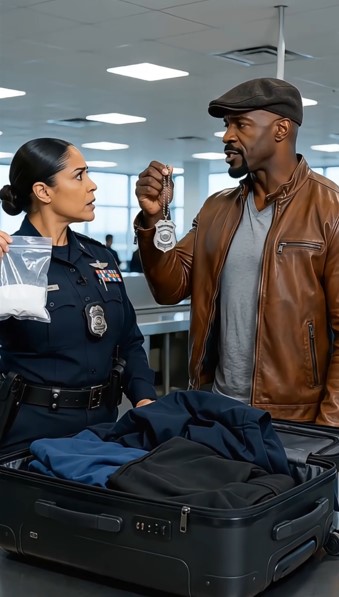
He handed over the credential.
The officer studied it for a moment.
Her expression changed.
She looked at Daniel, then back at the identification.
The credential indicated that Daniel worked with a federal agency in a role that involved international investigations and security cooperation.
The second officer leaned closer and quietly read the identification.
Both officers exchanged a brief glance.
The tone in the room shifted immediately.
The first officer returned the credential and straightened her posture.
“Mr. Carter,” she said, “thank you for your patience.”
Daniel accepted the credential and placed it back in his briefcase.
“Not a problem,” he said. “I understand you’re doing your job.”
The officer closed the suitcase and zipped it carefully.
“Your inspection is complete.”
Daniel nodded and began organizing his belongings.
Before he left, the officer added, “We appreciate your cooperation.”
Daniel smiled.
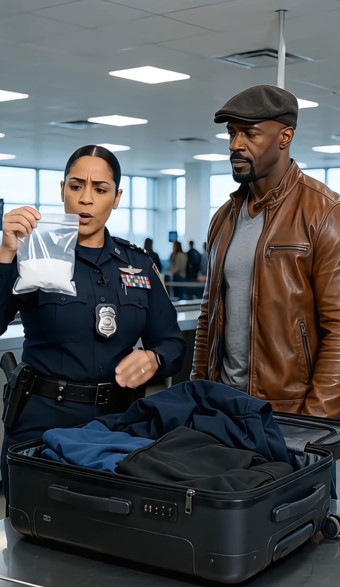
“I know how important your work is.”
He gathered his bags and walked toward the exit.
Several travelers in the inspection room watched him leave, curious about what had changed.
But Daniel offered no explanation.
He simply continued on his way.
Outside the terminal, a driver was waiting to take him home.
As the car pulled away from the airport, Daniel reflected on the experience.
He was not upset by the inspection.
In his line of work, he understood the importance of thorough procedures and professional caution.
What mattered most to him was how people responded when new information became available.
The officers had remained professional throughout the process and adjusted immediately once they understood who he was.
That, Daniel believed, was exactly how such situations should be handled.
The next week, he shared the story with a colleague.
“It was a routine inspection,” Daniel said. “The interesting part was how quickly assumptions changed once they had all the facts.”
His colleague smiled.
“That happens more often than people realize.”
Daniel nodded.
“Which is why it’s always better to stay calm.”
The experience became another reminder of a lesson Daniel had learned over many years of travel.
Titles and credentials may open doors, but character determines how a person carries themselves when those doors are temporarily closed.
At customs, in business, and in everyday life, patience and respect often make the strongest impression.
For the officers, the inspection was simply part of their daily responsibilities.
For Daniel, it was a small but meaningful example of why professionalism matters.
And for anyone who heard the story, the lesson was clear.
We rarely know the full story of the person standing in front of us.
That is why every interaction deserves courtesy, fairness, and an open mind.