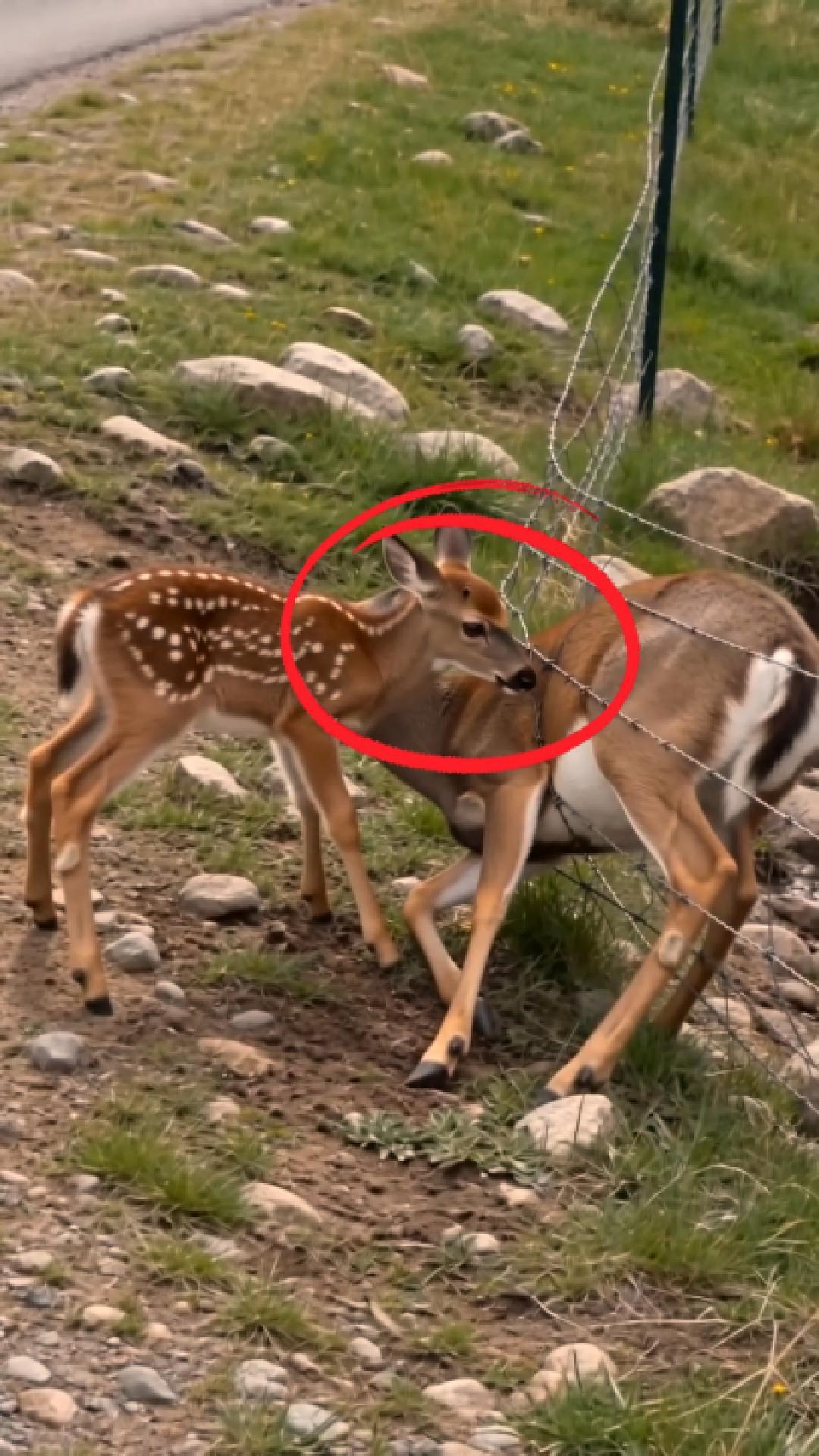
The afternoon heat shimmered above the roadside fields, bending the air into wavering waves of light.
Cars passed steadily along the rural highway, their tires kicking up dust that drifted slowly back into the dry grass. From a distance, the landscape looked calm—wide open land, scattered trees, and a quiet fence line stretching into the horizon.
But just beyond that fence, hidden where most drivers never looked closely, something was trapped.
A young deer.
It had likely been startled earlier—maybe by a passing vehicle, maybe by a predator in the distance—and in its panic, it had attempted to leap away from danger. Instead, it had landed wrong, crashing into a stretch of old barbed wire fencing that lined the roadside boundary.
Now it was stuck.
One of its hind legs was caught tightly between twisted strands of rusted wire. Every movement pulled the metal deeper, and every attempt to break free only tightened the grip. The deer’s breathing was fast and uneven, its body trembling with exhaustion and fear.
It was alive—but barely holding onto calm.
Barbed wire is designed to keep animals in or out, not to release them easily. Over time, sections of fencing along rural roads can weaken, sag, or break, creating dangerous loops that become silent traps for wildlife. For a deer, even a small entanglement can become life-threatening within minutes or hours.
And here, there was no one around.
At least, not yet.
A single vehicle slowed on the road.
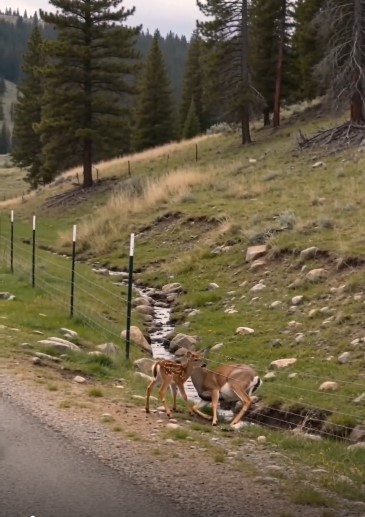
The driver wasn’t sure why at first. Something had caught their attention—an unusual movement near the fence line, a flicker of motion that didn’t belong to wind or grass. They reduced speed instinctively, scanning the roadside.
Then they saw it.
A shape struggling against the wire.
The car stopped.
For a few seconds, the driver simply watched, trying to understand what they were seeing. The deer lifted its head slightly, eyes wide, body tense. It tried to pull free again, but the wire held firm, biting into its leg.
That moment changed everything.
The driver stepped out carefully, closing the door quietly so as not to startle the animal further. As they approached the fence, the deer reacted immediately, pulling harder, panic rising. The barbed wire tightened again, and a small sound of distress escaped it.
The driver froze.
Approaching too quickly would only make things worse. Wild animals interpret movement and noise as threats, especially when already injured or trapped.
So the driver backed off slightly, lowering their stance and giving space.
The deer’s breathing gradually slowed—but only slightly. It was still trapped, still frightened, still fighting an invisible battle against metal and pain.
The situation required caution.
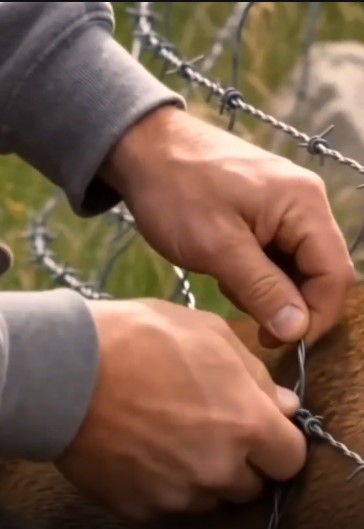
The driver scanned the fence line. The wire was old but strong. Cutting it without the right approach could cause it to snap suddenly, potentially injuring the deer further. But leaving it was not an option. The animal was losing strength.
After a moment, the driver returned to their vehicle and retrieved a small set of tools—nothing specialized, just enough to carefully cut or loosen wire if handled correctly. They also grabbed a cloth from the car, not to restrain the deer, but to reduce visual stress if needed.
When they returned, the deer was still struggling—but weaker now. The initial panic had begun to fade into exhaustion.
That shift mattered.
The driver moved slowly along the fence, not approaching the deer head-on, but from the side. Less direct eye contact. Less pressure. More patience.
Step by step, they closed the distance.
The deer tensed again, but did not fully thrash. It was running out of energy.
Now was the moment.
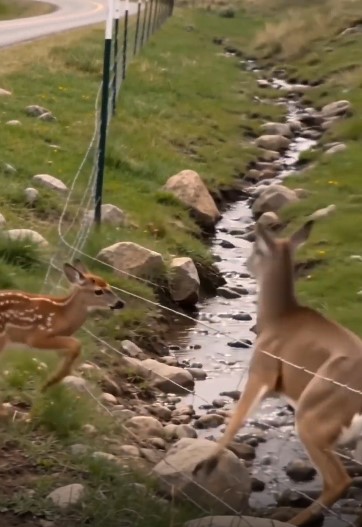
The driver carefully reached toward the wire. It was wrapped tightly around the deer’s leg, embedded between two barbs that had locked it in place. One wrong movement could make it worse.
The first attempt failed—the wire resisted.
The deer jolted, panic returning briefly.
The driver paused immediately.
Silence returned.
Minutes passed again.
Wind moved through the grass. A distant car passed. The world continued as if nothing was happening at the edge of the road.
Then, slowly, the deer settled once more.
The driver tried again.
This time, with more precision. Less force. More understanding of how the wire was holding.
A small shift.
Then another.
The metal began to loosen slightly, just enough to change the angle of pressure on the deer’s leg.
Deer Near Roadside Fence with Barbed Wire as Help Arrives pic.twitter.com/FSjgbhZH37
— Animal Rescue Stories (@AnimalStory5) May 30, 2026
The animal reacted—but less violently this time. It was beginning to understand, in its own instinctive way, that something different was happening.
The driver continued.
Carefully, patiently, working the wire back against its own tension. Bit by bit, the grip weakened.