The river was quiet that morning.
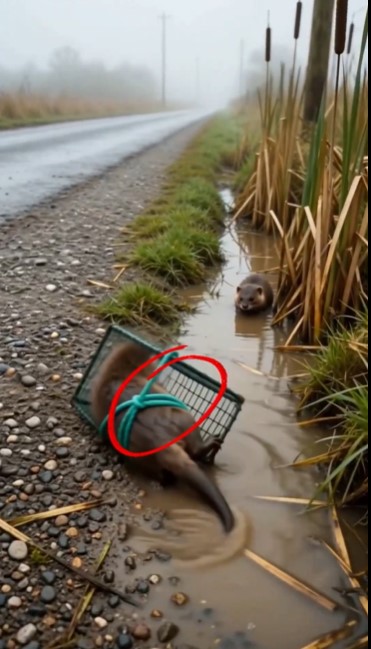
The water moved slowly beneath the early sunlight, birds flew above the trees, and everything appeared peaceful. But hidden near the riverbank was a scene that nobody expected to find.
A small otter was trapped.
The animal sat motionless inside an old wire basket that had been left near the water. Its body was pressed against the metal bars, and every attempt to escape had failed. The more it pushed and twisted, the more exhausted it became.
Eventually, the otter stopped fighting.
It simply waited.
Hours passed as the frightened animal remained trapped beside the river. The wire basket, once harmless-looking, had become a dangerous obstacle that prevented the otter from returning to the water.
Then a fisherman walking along the riverbank noticed something unusual.
At first, he thought the movement near the reeds was just debris floating near the shore. But as he looked closer, he saw the small animal trapped inside the metal container.
He immediately understood that the otter needed help.
The fisherman did not rush forward.
He knew that frightened wildlife can react unpredictably, especially when trapped and unable to escape. Instead, he stepped back, kept a safe distance, and contacted a local wildlife rescue team.
This decision followed important wildlife rescue safety tips. When animals are injured, trapped, or frightened, the safest way to help is often to avoid causing additional stress while waiting for trained professionals.
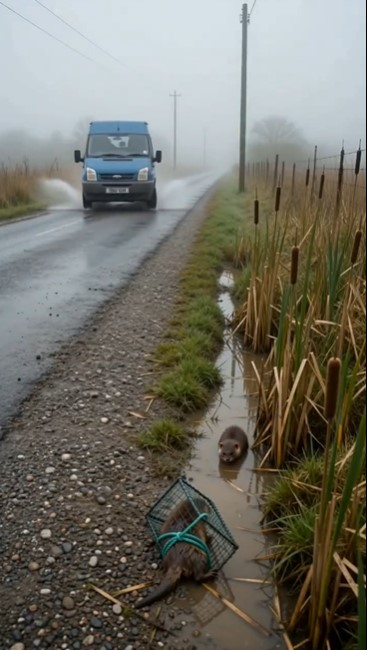
While waiting for rescuers, the fisherman stayed nearby to prevent people from approaching the otter. He also kept the area quiet, giving the animal a better chance to remain calm.
The otter watched carefully from inside the basket.
Its small movements showed that it was tired but still alert.
Soon, the wildlife rescue team arrived.
They carefully examined the situation and discovered that the wire basket had trapped the otter without causing major visible injuries. However, the animal was clearly exhausted after spending so much time unable to move freely.
The rescuers prepared their equipment and approached slowly.
They avoided loud sounds and sudden movements because the otter was already under stress.
Every step required patience.
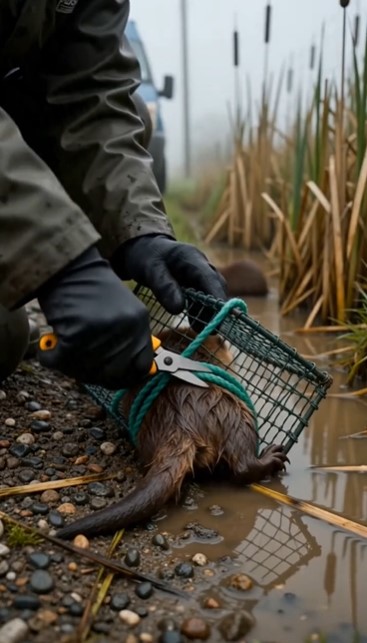
The team carefully secured the basket before beginning the process of opening it. Their goal was to free the animal without causing panic or injury.
For several minutes, everyone watched silently.
Then, with careful work, the rescuers managed to separate the wire and create enough space for the otter to escape.
The animal hesitated.
It looked around, almost unsure if it was truly free.
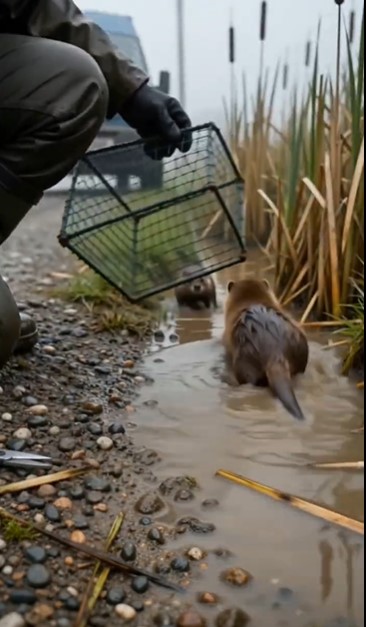
Then it quickly moved toward the water.
Within seconds, the otter disappeared beneath the surface of the river.
Everyone felt relieved.
The rescue was successful.
What should you do if you find a trapped otter?
If you discover an otter trapped in a basket, net, fence, or another object, avoid trying to grab the animal or pull it free yourself.
Otters are wild animals, and a frightened animal may bite or injure itself while trying to escape.
The safest action is to keep a safe distance, remove unnecessary distractions from the area, and contact wildlife rescue professionals.
Knowing how to help injured wild animals means understanding that the first priority is reducing stress and preventing the situation from becoming worse.
Many people have good intentions but may accidentally harm an animal by handling it incorrectly. Professional rescuers have the experience and equipment needed to safely remove dangerous objects and check the animal’s condition.
The rescue team in this case continued monitoring the river after releasing the otter. They wanted to make sure the animal was moving normally and had successfully returned to its natural environment.
Fortunately, the otter appeared healthy.
The fisherman who discovered it watched the river for a few more minutes before leaving.
He knew that a simple walk along the water had turned into something meaningful.
One moment of attention had saved a life.
Can you rescue a wild otter yourself?
Attempting to rescue a wild otter alone is generally not recommended. Even smaller animals can become defensive when they feel trapped, and improper handling can cause additional injuries.
Professional wildlife rescuers understand animal behavior and know how to safely manage difficult situations.
The same principles apply when learning what to do if you find a trapped deer or another animal in danger. Staying calm, maintaining distance, and contacting experts are often the most helpful actions.
After the rescue, the river returned to its peaceful rhythm.
The wire basket was removed, the water flowed freely, and the otter was back where it belonged.
The fisherman continued his day knowing that he had made an important difference.
He didn’t need special equipment or years of rescue experience.
He only needed to notice.
Every day, animals encounter unexpected dangers caused by human objects left behind in nature. Nets, wires, and containers can become serious threats for wildlife searching for food or shelter.
But sometimes, someone comes along at exactly the right moment.
Someone who stops.
Someone who cares.
The otter that once sat trapped and helpless beside the river was given another chance to swim freely.
Otter trapped in a wire basket waited pic.twitter.com/n2Ck20hxRY
— Animal Rescue Stories (@AnimalStory5) July 20, 2026
And all because one person decided not to walk past.