The cat refused to come inside.
Instead, it stood by the back door, meowing over and over while staring toward the garden. At first, the woman thought it wanted food or simply wanted attention.
But something felt different.
Each time she opened the door, the cat took a few steps forward, then looked back as if asking her to follow.
Curious, she did.
The cat led her across the yard toward a patch of bushes near the fence.
There, beneath a low branch, sat a tiny yellow canary.
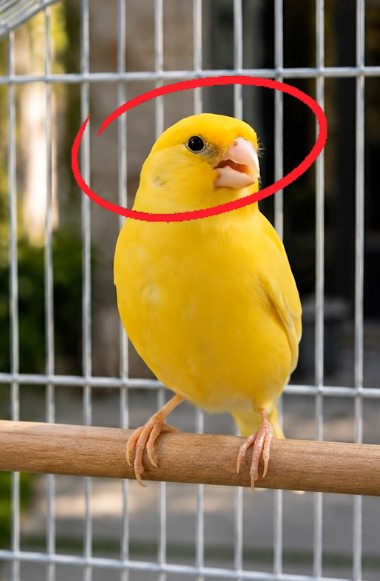
The little bird barely moved.
Its feathers were ruffled, its wings drooped at its sides, and it appeared too frightened to fly away.
The canary wasn’t trapped, but it looked exhausted and vulnerable after what may have been a long struggle outdoors.
The woman immediately realized the bird needed gentle care.
She slowly approached, speaking softly so she wouldn’t frighten it any further.
The cat remained a respectful distance away, quietly watching without making any sudden movements.
The woman carefully placed a light towel around the canary, lifting it just enough to move it into a small ventilated box lined with a soft cloth.
She carried the bird indoors, away from the wind and the curious neighborhood animals.
The canary remained calm.
It seemed relieved simply to be somewhere quiet and warm.
Not wanting to guess what the bird needed, the woman contacted a local bird rescue organization for advice.
They recommended keeping the canary in a peaceful environment while arranging for a proper examination.
Following their guidance, she placed a shallow dish of fresh water nearby and avoided unnecessary handling.
Sometimes the greatest kindness is giving a frightened animal time to recover without adding more stress.
Later that afternoon, a wildlife rehabilitation volunteer arrived to examine the little bird.
Fortunately, the canary showed no obvious broken bones.

It appeared tired, mildly dehydrated, and likely overwhelmed after spending time exposed to the outdoors.
With warmth, rest, and proper care, the bird was expected to recover well.
Over the next several days, the transformation was remarkable.
The canary slowly became more active.
Its feathers looked smoother.
Its bright eyes returned.
Before long, the tiny bird began singing again, filling the quiet room with cheerful notes that had been missing since the day it was found.
The woman smiled every time she heard the song.
She often thought about the unusual chain of events.
Had the cat not insisted on leading her outside, she might never have discovered the little bird hidden beneath the bushes.
The rescue reminded her that paying attention to small moments can sometimes make an enormous difference.
Working with the rescue organization, efforts were made to determine whether the canary belonged to someone nearby.
Notices were shared with the local community, but no owner came forward.
Once the bird had fully recovered, it was placed in the care of experienced bird specialists who could ensure it remained healthy and safe.
The woman visited from time to time.
The canary always greeted visitors with its bright song, a beautiful reminder of how far it had come.
The cat, meanwhile, returned to its normal routine, completely unaware that its unusual behavior had helped save a tiny life.
Sometimes compassion arrives in unexpected ways.
A persistent meow.
A quiet walk into the garden.
One small bird waiting to be noticed.
As spring sunshine warmed the backyard once again, the bushes where the canary had been found swayed gently in the breeze.
The danger had passed.
The fear had faded.
And because one woman chose to follow her curious cat instead of ignoring it, a tiny yellow canary was given another chance to sing.
Woman Helps a Yellow Canary After a Cat Leads Her Outside pic.twitter.com/LOMwJQY7kN
— Animal Rescue Stories (@AnimalStory5) July 24, 2026
What should you do if you find an exhausted canary?
If you find a canary that appears weak or unable to fly, place it in a quiet, well-ventilated container and contact a local bird rescue organization or veterinarian for guidance. Keep handling to a minimum to reduce stress.
Can you care for a canary yourself?
You can provide temporary warmth and a safe, quiet place while seeking professional advice. If the bird appears injured or severely weak, it should be examined by a veterinarian or licensed wildlife rehabilitator as soon as possible to give it the best chance of recovery.