A quiet day in the countryside took an unexpected turn when a rescuer noticed a young emu chick moving near a fence while an unfamiliar dog was nearby.
The small bird appeared separated from the area where it had been traveling, and the unusual situation immediately caught the rescuer’s attention.
Rather than simply passing by, the rescuer stopped to observe what was happening.
The emu chick was close to the fence, while the dog’s presence was making the young bird increasingly unsettled.
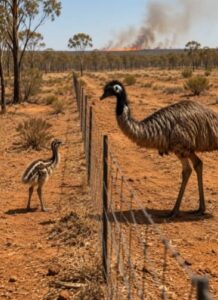
The rescuer understood that the situation needed to be handled calmly and carefully, especially because both animals were reacting to each other.
The first step was creating some distance between the dog and the emu chick.
Instead of rushing toward either animal, the rescuer remained observant and looked for a safe way to change the situation.
The goal was to give the young emu enough space to move while preventing the dog from getting too close.
Emu chicks are young birds that rely heavily on their surroundings and adult emus for protection and guidance.
When a young bird becomes separated by a fence or other obstacle, remaining calm and allowing it time to respond naturally can be important.
The rescuer carefully approached the area while keeping the dog at a distance.
The presence of the fence made the situation more complicated, as the chick could not simply move in the direction it wanted.
The rescuer therefore focused on creating a calmer environment before attempting any further assistance.
At one point, the rescuer used an air horn to encourage the dog to move away from the area.
The sound provided a quick way to create additional distance without the rescuer having to approach the dog directly.
Once the dog moved farther away, the environment became noticeably calmer.
With the immediate distraction reduced, the rescuer could focus on the emu chick. The young bird remained close to the fence while the rescuer examined the surroundings and considered how it could safely reconnect with a more suitable area.
The process required patience. Wildlife does not always respond immediately to human assistance, and young animals can become nervous when unfamiliar people approach. The rescuer avoided unnecessary movements and gave the chick time to settle.
The emu chick eventually began moving along the fence line. Its natural curiosity and instincts appeared to guide it as it searched for a better route.
The rescuer remained nearby without trying to force the bird in a particular direction.
This was an important part of the encounter. Helping wildlife is not always about physically moving an animal. Sometimes the best assistance is simply creating a safe environment where the animal can make its own way forward.
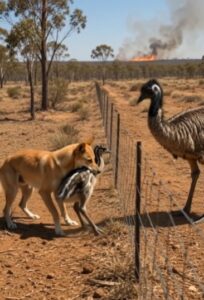
The fence remained the main obstacle, but the rescuer continued looking for a suitable opening or safe route. Once a clear path became available, the chick was able to move farther away from the immediate area.
The dog was no longer close to the young bird, and the atmosphere became much quieter. The emu chick could finally explore without the same level of disturbance.
For the rescuer, seeing the young bird move toward a safer area was a rewarding moment. What had started as an unexpected roadside or countryside encounter had become a meaningful example of patience and compassion.
The story also highlights why people should be careful when dogs and wildlife share outdoor spaces.
Dogs are naturally curious, and their instincts can sometimes lead them toward birds and other animals.
Keeping pets under control around wildlife can help prevent stressful encounters and protect both animals.
The use of an air horn in this situation was intended to create distance without physical contact.
However, wildlife encounters should always be approached responsibly, and people should avoid actions that could unnecessarily frighten or disturb animals.
When a wild animal appears to need help, contacting local wildlife professionals is often the best option.
Trained rescuers can assess the situation and determine whether intervention is actually necessary.
In the case of young birds, it is also important to remember that being alone does not always mean they have been abandoned.
Adult animals may be nearby or temporarily out of sight. Observing from a safe distance can sometimes be more helpful than immediately picking up or moving the animal.
Emu Chick Found Away From the Fence as a Dog Comes Close and Someone Steps In pic.twitter.com/eP7bsIHdQZ
— Animal Rescue Stories (@AnimalStory5) August 8, 2026
What should you do if you find an animal/person in this situation?
Keep a safe distance, separate domestic animals from wildlife when it can be done safely, and contact local wildlife professionals if the animal appears to need assistance. Avoid chasing or unnecessarily handling young wildlife.
Should you try to help the animal/person yourself?
Only intervene directly when it is safe and appropriate. With wild birds and other wildlife, professional guidance is usually the safest choice. If a dog is involved, prioritize creating distance without putting yourself between the animals.