A quiet outdoor journey can sometimes lead to an unexpected moment of compassion.
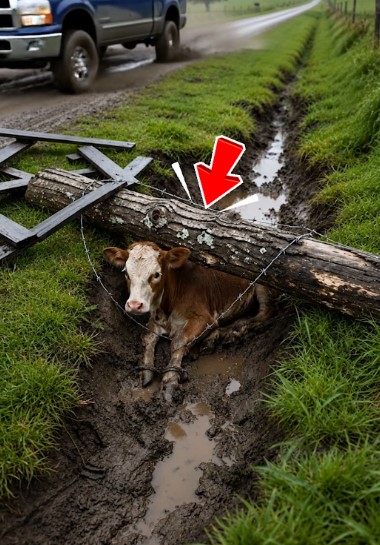
That happened when several passersby noticed a young calf beneath a fallen tree, unable to move comfortably through the space.
What first looked like a simple scene in the countryside soon became an opportunity for a few people to stop, observe, and carefully consider how they could help.
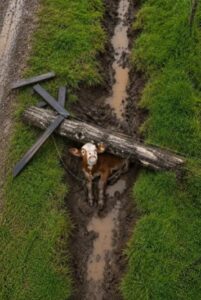
The calf was positioned beneath a heavy tree that had fallen across the area.
Its small size allowed it to fit underneath part of the trunk, but the surrounding branches and uneven ground made it difficult for the young animal to find a clear route out. The people nearby quickly realized that simply walking past would leave the calf in the same difficult position.
The fallen tree had created an unexpected obstacle in what otherwise appeared to be a peaceful rural setting.
The calf remained close to the ground, looking around as the passersby approached from a safe distance. Rather than rushing toward it, they first examined the tree and the surrounding area to understand how the animal could be assisted without creating another problem.
Young calves can become nervous when unfamiliar people approach them, especially when they are already in an unusual environment.
The passersby therefore moved slowly and kept their voices and movements calm. Their goal was to create a safer opening rather than frighten the animal into moving suddenly.
The group soon recognized that the fallen tree needed to be handled carefully.
A large log can be extremely heavy and unstable, and attempting to move it without considering the surroundings could be risky.
They looked for a practical way to give the calf more room while keeping everyone at a safe distance from the branches and trunk.
For several moments, the calf remained beneath the tree while the people prepared. It watched their movements closely, occasionally adjusting its position. T
he quiet approach appeared to keep the animal calmer, giving everyone more time to work out the safest solution.
The passersby then began creating space around the calf.
Rather than trying to pull the young animal directly from beneath the tree, they focused on clearing smaller obstacles and opening a suitable route.
This gradual process reduced the need for unnecessary handling and allowed the calf to participate in its own movement toward safety.
As the space became wider, the calf began to respond. It shifted carefully beneath the remaining branches, testing the available opening before moving farther.
The people remained nearby, ready to assist if necessary, but they avoided rushing the animal.
Eventually, the calf found a clearer route from beneath the fallen tree. It moved slowly into the open area, where it had considerably more room to stand and walk.
The passersby continued watching for a while to make sure the young animal was steady and able to move normally.
The moment is a reminder that fallen trees and branches can sometimes create unexpected obstacles for livestock and wildlife.
After storms, strong winds, or natural changes in rural areas, trees may fall across paths, fields, and grazing spaces.
Regularly checking areas where animals move can help identify potential hazards before they become more difficult to manage.
The passersby also demonstrated an important part of responsible animal care: knowing when patience is more useful than force.
A frightened calf may react suddenly if people attempt to grab or pull it. Allowing the animal to move gradually, while creating enough space around it, can provide a calmer and safer solution.
If a similar situation involves a much larger tree or an unstable structure, professional assistance should always be considered.
Farmers, animal services, or trained responders may have the appropriate equipment to safely clear heavy obstacles. People should never place themselves underneath an unstable tree simply because they want to help an animal quickly.
For the calf, the most important change was having a clear path into the open.
Once it was free from the narrow space beneath the tree, it could move more naturally and regain its surroundings. The people did not need to carry it or force it away; creating a safe route was enough.
Passersby Notice a Calf Beneath a Fallen Tree pic.twitter.com/RK4gdMTF4b
— Animal Rescue Stories (@AnimalStory5) August 15, 2026
What should you do if you find an animal/person in this situation?
Keep a safe distance, assess the fallen tree carefully, and avoid moving heavy or unstable objects yourself. Contact the owner, farmer, or trained animal professionals when necessary.
Should you try to help the animal/person yourself?
Only provide assistance that can be done safely. Do not climb beneath an unstable tree or attempt to move a heavy log without proper equipment and experience.