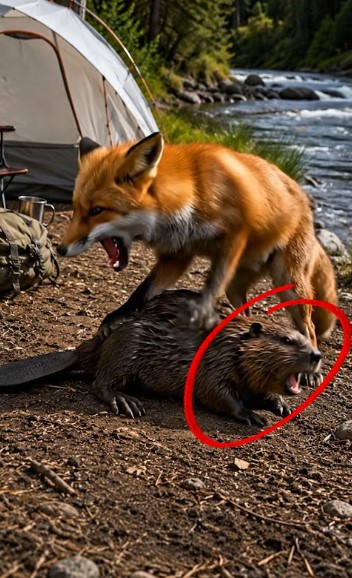
The red fox suddenly appeared near the campsite, moving carefully along the riverbank before turning its attention toward a nearby beaver.
The beaver remained close to the water while the fox watched from the surrounding vegetation.
Campers nearby quickly noticed the unusual encounter unfolding beside the river.
The two animals stayed within a short distance of each other as the fox moved cautiously along the shoreline.
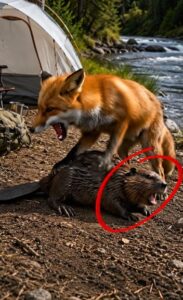
The beaver appeared alert, occasionally shifting its position while keeping the water nearby.
The campsite, normally a place for people to relax, had unexpectedly become part of a natural wildlife scene.
Rivers provide important habitats for both foxes and beavers, although the two species use these environments in very different ways.
Beavers spend much of their time in and around water, building shelters and searching for food along the shoreline.
Red foxes are adaptable animals that can travel through forests, fields, and riverside areas while searching for food.
The fox continued observing the beaver while remaining close to the vegetation.
The beaver stayed focused on the shoreline and the nearby water, where it had more freedom to move.
Every small movement seemed to change the distance between the two animals.
A camper noticed what was happening and chose to watch from a safe location rather than approaching.
This was important because wild animals can react unpredictably when people get too close.
Keeping a respectful distance allowed the fox and beaver to continue their natural behavior without unnecessary interference.
The beaver eventually moved closer to the water while the fox followed along the riverbank.
The shoreline provided several routes, including vegetation and shallow sections where the beaver could change direction.
The fox continued watching carefully as the encounter developed.
The campsite added another consideration. Food, rubbish, and human activity can sometimes attract wildlife closer to areas where people are staying.
Campers should keep food stored securely, clean up after meals, and avoid feeding wild animals.
The fox remained focused on the beaver while moving through the vegetation.
The beaver appeared increasingly aware of the fox’s position and stayed close to the river. Its familiarity with the water gave it a natural route away from the campsite.
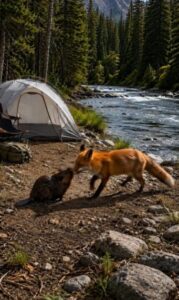
The campers kept their distance and avoided making loud noises.
This allowed the animals to respond according to their own instincts rather than reacting to people.
The situation remained entirely in the natural environment, with the river separating the wildlife from the campsite.
The beaver eventually reached the edge of the water and paused briefly. The fox remained on land, watching from the nearby bank.
The difference between their environments became clear as the beaver had more freedom to move once it reached deeper water.
The encounter demonstrates why riverside campsites can require extra awareness.
Wildlife may travel through these areas at any time, especially during early morning, evening, or other quiet periods.
People should always be prepared to observe animals without approaching them.
The fox shifted its position several times while the beaver remained near the water. Neither animal appeared interested in the campers themselves.
The people nearby continued observing quietly, giving the wildlife enough room to decide where to move next.
The beaver eventually entered the water and began moving along the river. Its body became less visible as it traveled away from the shoreline.
The fox remained on land, watching for a moment before turning its attention toward the surrounding area.
The increasing distance between the animals brought the encounter to a calmer point.
The beaver had reached a familiar environment where it could move naturally, while the fox had more open ground to explore. The campsite was no longer directly involved in the interaction.
This moment also highlights the importance of protecting riverside habitats.
Healthy waterways provide shelter, food, and travel routes for countless animals.
Keeping shorelines clean and avoiding unnecessary disturbance helps preserve these environments for species such as beavers, foxes, birds, and fish.
For campers who encounter wildlife, the safest response is simple: observe from a distance.
Never attempt to feed, touch, chase, or corner wild animals. If an animal appears injured or genuinely restricted, contact local wildlife professionals rather than attempting to handle it yourself.
Red Fox and Beaver Encounter Near a Riverside Campsite pic.twitter.com/WwGKXshC5i
— Animal Rescue Stories (@AnimalStory5) August 23, 2026
What should you do if you find an animal/person in this situation?
Stay inside a safe area and keep your distance from both animals. Do not approach, feed, or disturb them, and contact wildlife professionals if either animal appears injured or unable to move normally.
Should you try to help the animal/person yourself?
No. Avoid approaching wild foxes or beavers, especially when their behavior is uncertain. Allow them to move naturally and seek professional wildlife assistance if there is a genuine need.