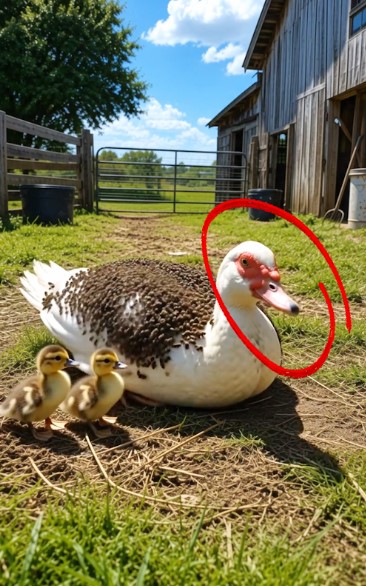
The warm summer afternoon air hummed softly over the green farm pasture.
A white duck sat quietly on the damp grass near the bank of a small pond.
A traveling swarm of honeybees glided across the open lawn in search of a new hive location.
The cloud of insects settled gently over the nearby patch of clover near the duck’s resting spot.
The duck remained completely still, keeping its wings folded close to its body.
Thousands of tiny golden wings created a low vibration that filled the quiet garden space.
The bird turned its head slowly, observing the dense cluster moving across the blades of grass.
A calm tension held the yard in place while the rest of the farm animals stayed at a distance.
The bees were focused entirely on protecting their queen as they formed a temporary resting cluster.
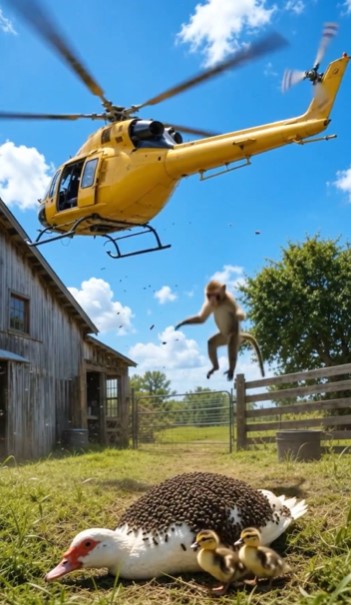
The duck took measured breaths while staying low against the soft ground.
Sunlight reflected off the water surface, casting bright patterns over the calm scene.
A gentle breeze shifted through the orchard, carrying the scent of wild flowers.
The bird showed remarkable composure while waiting for the cloud of insects to disperse naturally.
No sudden movements disturbed the delicate balance between the waterfowl and the swarm.
The surrounding trees remained peaceful as the afternoon sun moved slowly across the sky.
Farther up the hill, the farm owner noticed the large gathering of insects near the pond.
The farmer walked carefully down the dirt path holding a protective wooden transport box.
The duck kept its eyes fixed on the approaching human while maintaining its steady posture.
Every step across the lawn was deliberate to avoid startling the clustered honeybees.
The quiet atmosphere ensured that the insects remained docile and clustered together.
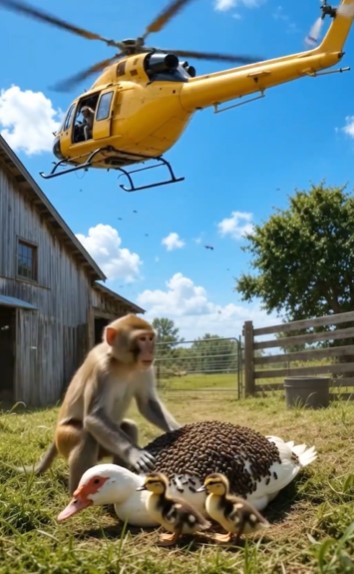
The farmer set the wooden box down gently beside the patch of clover on the grass.
With a smooth motion, the keeper guided the central swarm into the safe wooden structure.
The remaining bees followed the scent of their queen directly into the dark box interior.
The duck stayed seated until the pathway between the grass and the pond was completely clear.
The farmer closed the box lid securely to transport the colony to a new hive setup.
The area around the pond returned to its peaceful state as the hum faded away.
The duck stood up smoothly, shook its feathers, and waddled toward the cool water.
Restoring Balance to the Farmyard
The duck slid gracefully into the pond, splashing water over its back in the afternoon light.
Other farm birds gathered along the bank to enjoy the quiet surroundings once again.
The farmer carried the hive box toward the orchard to establish a permanent home for the bees.
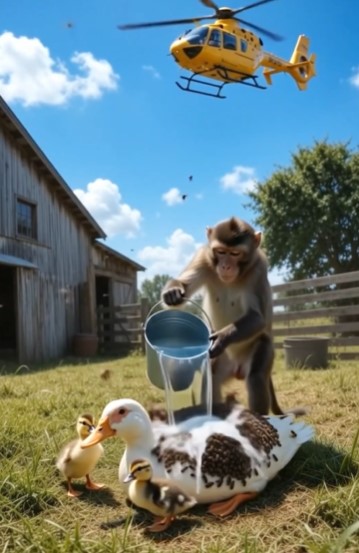
Natural encounters on the farm highlight the importance of remaining calm around swarming insects.
Honeybees in search of a new home are generally focused on resting rather than defending territory.
Observing animal instincts during unusual meetings provides valuable lessons in peaceful coexistence.
The farm ecosystem thrives when domestic animals and beneficial insects share the same land.
The clear pond water offered a refreshing retreat for the duck after a quiet wait.
Soft afternoon breezes rustled the tall reeds along the water’s edge.
The orchard trees provided shade for the new hive location at the edge of the property.
Every creature on the farm adapted smoothly to the temporary movement of the swarm.
The rest of the day passed without further interruption across the sunny countryside.
The duck swam contented circles near the center of the calm farm pond.
The new beehive stood securely among the blooming apple trees in the garden.
The harmony of the farmyard remained fully intact as the sun began to set.
Careful stewardship ensured that both the poultry and the beneficial insects remained completely safe.
The peaceful landscape reflected the successful resolution of an unexpected afternoon event.
Understanding Bee Swarms and Farm Safety
Swarming is a natural process where honeybees divide their colony to establish a new home.
During this migration stage, the insects are focused on protecting their queen and resting.
Providing a calm environment ensures that animals and humans remain safe during the transition.
Local beekeepers play a vital role in relocating swarms safely to managed hive environments.
Maintaining clear farm boundaries protects domestic poultry while supporting local pollinators.
Swarm Lands Near the Duck pic.twitter.com/gAyaXJJ5ml
— Animal Rescue Stories (@AnimalStory5) September 27, 2026
How should farm owners manage transient bee swarms near livestock?
Farm owners should keep livestock at a safe distance and allow the swarm to rest undisturbed until a local beekeeper arrives.
Avoiding loud machinery or sudden water sprays prevents unnecessary disruption to the resting colony.
Calling a professional ensures the bees are collected safely without harm to farm animals or the insects.
What measures protect domestic poultry from unexpected insect clusters?
Ensuring that poultry coops have sheltered indoor areas allows birds to retreat safely if insects settle nearby.
Keeping feeding areas clean reduces scent attractants that might draw traveling insect clusters toward poultry yards.
Regular inspection of farm perimeters helps identify resting swarms early so they can be relocated promptly.