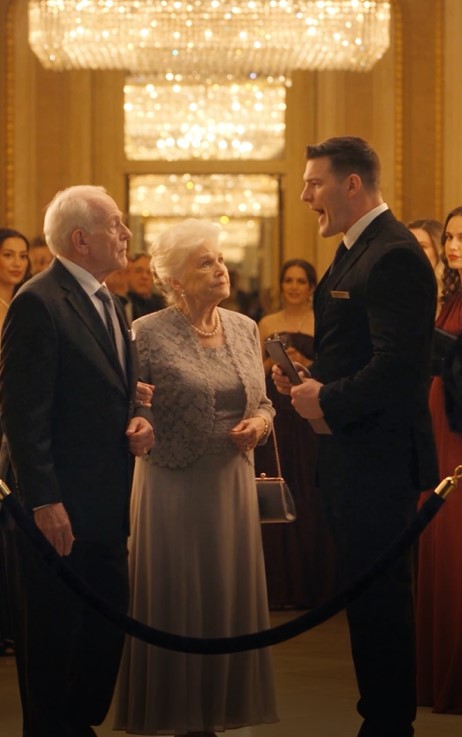
The elegant restaurant was already crowded when an elderly couple quietly entered through the main doors.
Soft music played in the background, crystal glasses sparkled beneath the chandeliers, and neatly dressed guests enjoyed their expensive meals.
The couple looked around for a moment before approaching the reception desk, holding hands as they walked.
The elderly man wore a simple dark suit that had clearly been used for many years. His wife wore a modest dress and carried a small handbag.
They looked calm and polite, with no desire to attract attention. After a long journey, they had come to the restaurant hoping to enjoy a quiet dinner together.
A young manager noticed them from across the room. He immediately approached the reception desk,
looking displeased as he examined their appearance. He was accustomed to serving wealthy customers, business executives,
and people who arrived wearing designer clothes. To him, the elderly couple did not look like the kind of guests he wanted sitting in the middle of his restaurant.
“Good evening,” the elderly man said politely. “We would like a table for two, please.”
The receptionist was about to check the available tables when the manager interrupted.
“Do you have a reservation?” he asked in a cold tone.
“No, we don’t,” the man replied. “But if you have a table available, we would be happy to wait.”
The manager glanced toward the dining area before looking back at the couple.
“I’m afraid we’re fully booked,” he said, even though several tables remained empty.
The elderly woman looked past him and noticed an empty table near the window. She gently touched her husband’s arm.
“It seems there are still a few places available,” she said quietly.
The manager followed her gaze and quickly stepped between them and the dining room.
“Those tables are reserved for our regular guests,” he replied.
The elderly man remained respectful. “We understand. Perhaps you could tell us how long we would need to wait.”
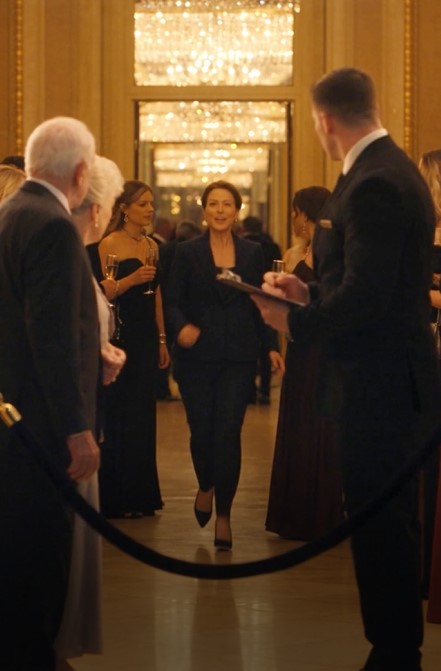
The manager sighed impatiently, making no effort to hide his irritation.
“Look, this restaurant may not be what you’re looking for. There are other places nearby that might suit you better.”
A few guests at the nearest table stopped talking. One woman exchanged an uncomfortable glance with her husband, while a waiter carrying a tray slowed down to observe what was happening.
The elderly couple looked at each other, clearly surprised by the way they were being treated.
“We came here to have dinner, not to cause any trouble,” the elderly man explained.
“Then I suggest you leave,” the manager replied.
The words fell heavily between them. The elderly woman lowered her eyes, trying to hide her embarrassment, while her husband gently squeezed her hand.
For a moment, he seemed ready to say something more. Instead, he took a slow breath and looked directly at the manager.
“Are you certain this is how you want to handle this situation?” he asked.
The manager gave a dismissive laugh.
“I know how to run my restaurant, sir. I don’t need advice from someone who walks in without a reservation.”
The elderly man nodded slowly, as though he had just received an answer to a question that mattered far more than the manager could understand.
“Very well,” he said.
He helped his wife turn toward the entrance. Neither of them raised their voices, argued, or demanded special treatment.
They simply began walking toward the doors, while the manager watched with a satisfied expression.
But just before they reached the exit, the receptionist’s telephone rang.
She answered it, listened for several seconds, and suddenly straightened in her chair.
Her eyes moved toward the elderly couple, then toward the manager, who was already turning back toward the dining room.
“Excuse me,” she called nervously. “Sir, I think you need to hear this.”
The manager stopped.
“What is it? I’m busy.”
The receptionist covered the telephone microphone with her hand.
“The person calling is asking about the elderly couple who just arrived.”
The manager frowned.
“Why would anyone be calling about them?”
“I don’t know,” she whispered. “But they specifically asked whether the couple had arrived safely.”
The manager glanced toward the entrance. The elderly man had paused beside the door, speaking quietly to his wife.
“Who is calling?” he demanded.
The receptionist listened again before answering.
“It’s someone from the company’s main office. They say it’s extremely important.”
The manager’s expression changed slightly. He had heard that the company’s senior leadership was expecting a special visit that evening,
but he had assumed the visitors would arrive with assistants, expensive cars, and advance security arrangements.
He had not imagined that the people he had just ordered to leave could have anything to do with it.
The receptionist spoke into the telephone again, then slowly turned toward him.
“They want to speak directly to the owner or the manager in charge,” she said. “They also asked me to confirm the names of the guests.”