
A family dog suddenly stopped beside an old wooden crate near the garden shed.
He lowered his nose to a narrow gap between two weathered boards and began sniffing insistently.
Every few seconds, he lifted his head and listened.
Then came a faint scratching sound from inside the crate.
The dog stepped backward, tilted his head, and sniffed the opening again.
His owner, Daniel, had walked past the discarded container countless times without noticing anything unusual.
Now, the dog refused to leave it alone.
A small pile of dry leaves had collected around the crate’s base.
Several thin twigs protruded through a crack in the wood.
Daniel initially suspected a mouse had found shelter inside.
But when the dog suddenly turned toward a nearby tree, Daniel noticed a reddish squirrel watching them from a low branch.
The squirrel darted behind the trunk, then returned to the same branch.
Something inside the wooden crate had captured the dog’s attention, and the squirrel’s behavior raised another question.
The Dog Detects Something Moving Inside the Crate
Max, a curious golden retriever, continued investigating the wooden crate.
Daniel called him away, but Max returned to the same narrow opening.
His nose moved along the bottom boards as he searched for the source of the unfamiliar scent.
A faint rustling came from inside.
Max immediately lifted his ears and stood perfectly still.
Daniel crouched beside him and examined the gaps between the boards.
The crate had once held gardening supplies and had been left near the shed after a spring cleanup.
Its lid sat unevenly across the top.
One corner had separated slightly from the frame, leaving a narrow opening.
Daniel wondered whether a small animal had entered through that gap.
He tapped the outside gently with one finger.
A soft scratching sound followed from within.
Max stepped closer but did not bark.
Instead, he sniffed along the wooden edge and paused beside a small knot in the timber.
Daniel realized that opening the crate without checking its contents could frighten whatever was inside.
He guided Max several steps away and watched the container from a distance.
The squirrel remained on the low branch.
Its tail flicked repeatedly as it looked toward the crate.
Daniel had seen squirrels around the garden before, but he had never noticed one behaving this way.
He decided to inspect the area more carefully before moving anything.

A Squirrel’s Movements Reveal a Hidden Nest
Daniel returned with a flashlight and approached the crate without disturbing the surrounding leaves.
Max stayed beside him, watching the container intently.
Daniel directed the light through the narrow gap.
Inside, he could see dry grass, shredded leaves, and several small twigs.
The materials formed a loose nest against the far wall.
Then something tiny shifted beneath the leaves.
Daniel stepped back and lowered the flashlight.
A small squirrel’s face appeared briefly between the nesting materials.
He immediately understood why Max had been so persistent.
The crate was sheltering a squirrel nest.
Daniel remembered seeing an adult squirrel carrying leaves across the garden several days earlier.
At the time, he had assumed it was building a nest somewhere in the trees.
Now, the animal on the branch appeared to be watching the wooden container.
Daniel could not know whether it was the nest’s parent, but its repeated visits suggested a connection.
He called his neighbor Laura, who regularly helped care for injured wildlife.
Laura arrived with a pair of gloves and a small carrier.
She asked Daniel to keep Max away from the crate while she assessed the situation.
She explained that moving a nest without understanding its condition could separate young animals from their parent.
Laura examined the opening without touching the nesting materials.
She spotted several tiny movements beneath the leaves.
The young squirrels were alive and appeared to be huddled together.
However, the crate’s uneven lid had left the nest partially exposed.
Laura needed to determine whether the young animals could remain safely where they were.
The Crate’s Damaged Lid Creates Another Concern
Laura inspected the wooden crate from several sides.
One corner of the lid had begun to sag under its own weight.
A loose board rested close to the nesting materials.
If the lid shifted, it could disturb the young squirrels inside.
Laura asked Daniel whether the crate had been moved recently.
He explained that it had remained beside the shed for several weeks.
No one had realized that an animal had made a nest inside.
Max watched from behind the garden fence.
He remained interested in the crate but responded when Daniel called him.
Laura examined the surrounding ground for signs of regular movement.
Small tracks crossed the dry soil near the opening.
Several fresh leaves had been carried toward the crate.
These details supported the possibility that an adult squirrel had been visiting the nest.
Laura advised them not to handle the young squirrels unnecessarily.
She also warned that the adult might stay away while people stood too close.
Daniel and Laura moved farther from the shed.
From a quiet spot near the garden gate, they watched the branch above the crate.
After several minutes, the adult squirrel climbed down the tree trunk.
It paused near the ground, then hurried along the fence.
The squirrel stopped several feet from the crate.
Its head turned toward the opening before it moved closer.
Daniel remained still while Laura observed its behavior.
The squirrel approached the wooden container but quickly climbed back onto the fence.
Laura suspected that the nearby activity was making it cautious.
They decided to give the animal more space before considering any further action.
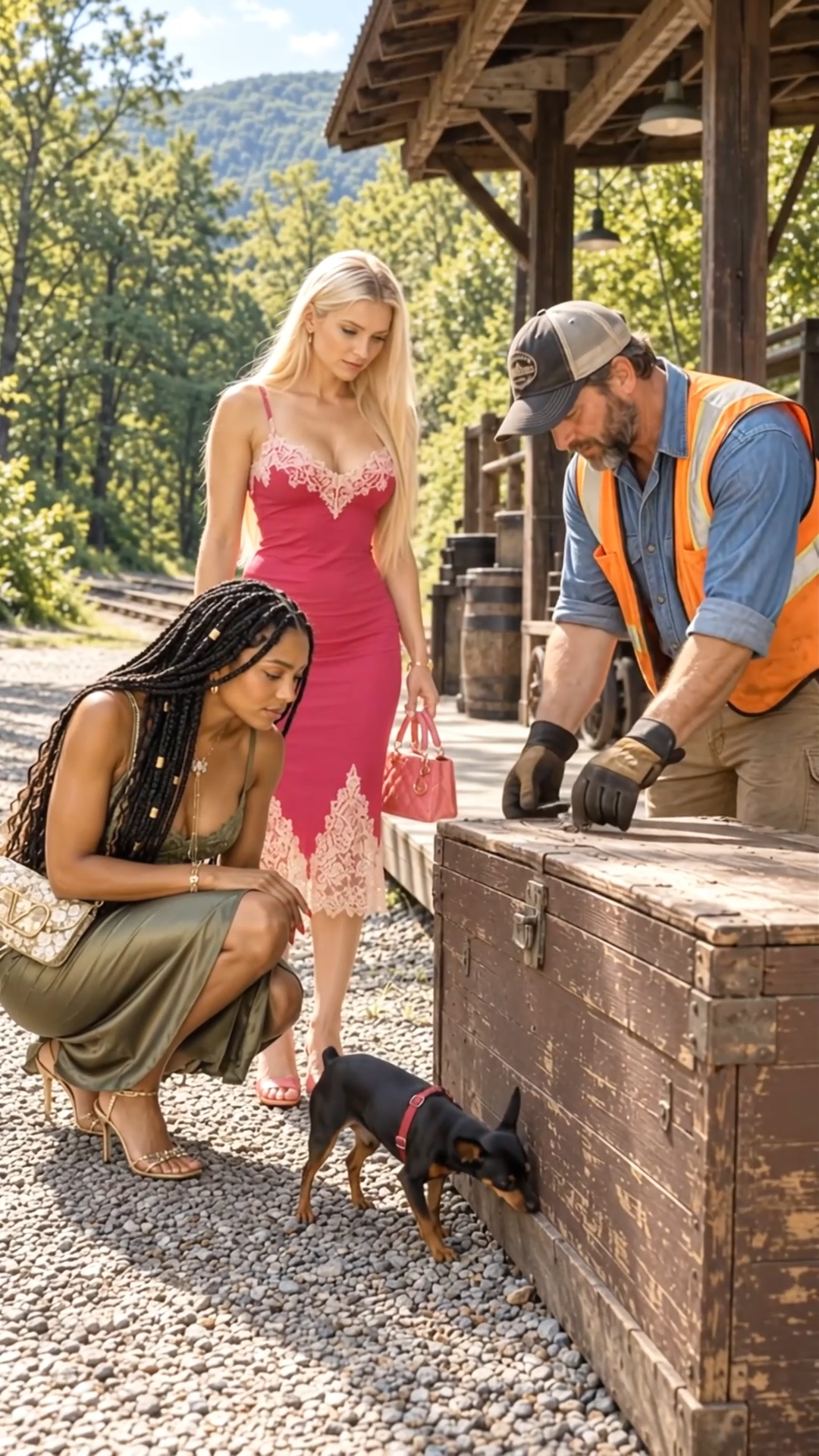
A Careful Inspection Reveals the Safest Approach
Daniel brought Max inside the house while Laura continued watching the garden.
With the dog out of sight, the area became noticeably quieter.
The adult squirrel returned to the fence after several minutes.
It moved along the boards, paused beside the crate, and disappeared through a gap near the lid.
Laura watched from a distance without approaching.
The squirrel remained inside for a short time before emerging again.
That visit suggested the nest was still being used.
Laura explained that the safest approach depended on whether the young squirrels were secure and whether the nest could remain undisturbed.
She contacted a local wildlife rehabilitator for advice.
After discussing the situation, they agreed that the crate should not be opened or moved unnecessarily.
Instead, Daniel would make the surrounding area safer and monitor the damaged lid.
Laura showed him how to place a temporary support against the outside of the crate.
The support would prevent the loose corner from dropping without pressing against the nest.
Daniel positioned it carefully while Laura watched from the side.
Once the support was secure, they stepped away.
The crate remained in its original position.
The adult squirrel returned again later that afternoon.
It approached the opening and disappeared inside for several moments.
Daniel felt relieved that the animal was still visiting the nest.
Max watched through the kitchen window but stayed indoors.
For the first time since discovering the crate, Daniel understood that helping wildlife sometimes meant resisting the urge to intervene.
The best immediate action was to reduce the danger without disturbing the animals.
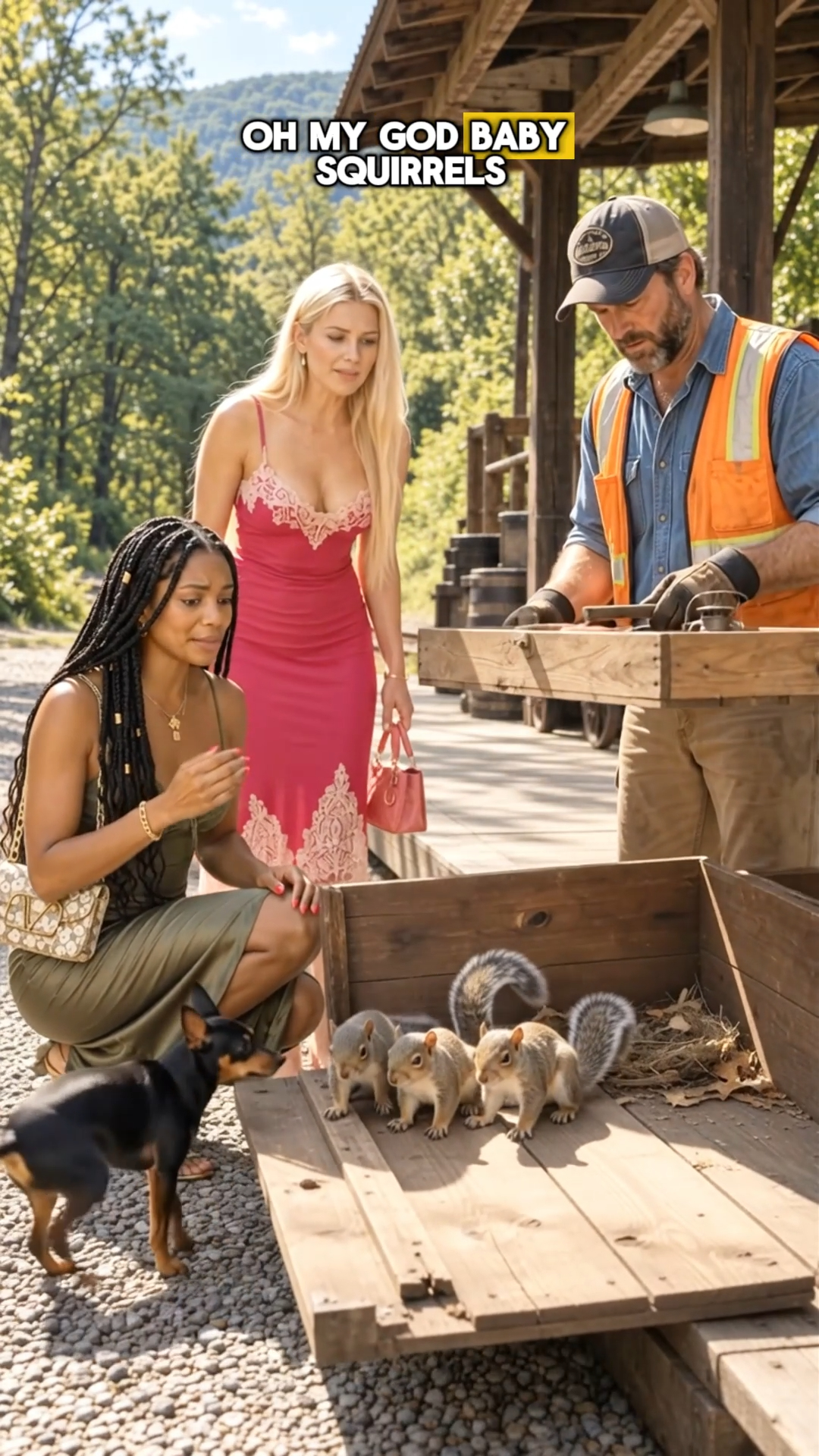
The Hidden Nest Remains Safe in Its Wooden Shelter
Over the following days, Daniel checked the crate from a distance.
He avoided lifting the lid or reaching inside.
The temporary support kept the damaged corner stable.
Laura returned the next morning to observe the squirrel’s activity.
She noticed the adult visiting the crate several times.
Small movements occasionally stirred the nesting materials near the opening.
The young squirrels remained hidden beneath the leaves and grass.
Laura explained that young squirrels needed a suitable environment and continued care from their parent.
She advised Daniel to contact the wildlife rehabilitator again if the adult stopped visiting or any animal appeared injured.
For now, the nest seemed undisturbed.
Daniel also cleared away nearby gardening tools that could accidentally strike the crate.
He left the surrounding vegetation in place, preserving the animals’ shelter.
Max was allowed into the garden again, but Daniel kept him away from the shed.
The dog occasionally sniffed the ground near the fence.
However, he no longer approached the crate directly.
One afternoon, Daniel spotted the adult squirrel climbing the tree with a mouthful of nesting material.
It paused on a branch before disappearing among the leaves.
He watched quietly from the porch.
The wooden crate looked ordinary again, resting beside the old shed.
Yet Daniel now understood why Max had repeatedly stopped there.
His dog’s sensitive nose had detected signs of life that a casual glance would have missed.
The discovery had encouraged Daniel to investigate before moving the container.
By leaving the nest undisturbed and securing the damaged lid, he had helped reduce the immediate risks.
The garden returned to its usual rhythm, with birds calling from the fence and leaves moving in the afternoon breeze.
Dog Sniffs Out a Squirrel Nest Hidden Inside a Wooden Crate https://t.co/fnwCxCNqCD
— Animal Rescue Stories (@AnimalStory5) October 12, 2026
How Max Discovered the Squirrel Nest Inside the Crate
This fictional story began when Max stopped beside an old wooden crate near Daniel’s garden shed.
The dog repeatedly sniffed a narrow opening and reacted to faint sounds inside.
His behavior prompted Daniel to investigate the discarded container.
A flashlight revealed dry leaves, grass, twigs, and tiny movements beneath the nesting materials.
Daniel soon realized that a squirrel nest had formed inside the crate.
A squirrel watching from a nearby branch suggested that an adult might still be visiting.
Daniel contacted Laura, a neighbor familiar with wildlife care.
She examined the nest and discovered that the crate’s damaged lid could create a risk.
After observing the adult squirrel return, Laura advised against opening or moving the container unnecessarily.
Daniel secured the loose corner from the outside and kept Max away from the nesting area.
The adult continued visiting the crate, while the young squirrels remained hidden inside.
The discovery reminded Daniel that abandoned objects could become important shelters for small animals.
It also showed why careful observation matters before disturbing an unfamiliar nest.
This account is fictional, but its central message is practical: when young wildlife may be present, avoid unnecessary handling and seek advice from a qualified wildlife rehabilitator.
As Max rested beside the garden door, Daniel felt grateful that his dog’s remarkable nose had revealed a tiny family hidden in an ordinary wooden crate.