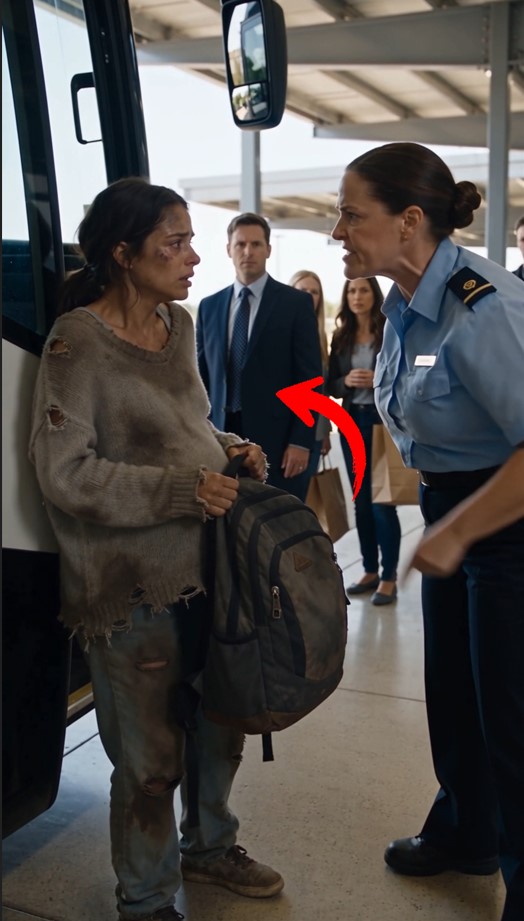
The central bus station was crowded that rainy afternoon, with passengers hurrying between platforms and announcements echoing through the terminal.
Among them stood an elderly woman named Helen Carter, wearing a faded coat, a stained sweater, and shoes worn thin from years of use.
She held a small canvas bag against her side and carefully unfolded a bus ticket.
Helen had spent the morning traveling across town to visit her younger sister, who had recently been discharged from the hospital. She had little money left, but she had promised to arrive before evening.
As she approached the boarding gate, a ticket inspector named Richard Miller looked at her suspiciously.
“Where do you think you’re going?” he asked.
Helen held out her ticket.
“To Fairview, please. My bus leaves in a few minutes.”
Richard barely glanced at the paper before looking at her clothes.
“This isn’t a place to sleep or hang around,” he said loudly. “If you’re trying to get on without paying, you’ll have to leave.”
Several passengers turned toward them.
Helen’s cheeks reddened.
“I bought my ticket this morning,” she explained. “Here it is.”
Richard took the ticket and examined it impatiently.
“People show up with all kinds of excuses,” he replied. “You need to prove you belong on this bus.”
Helen tightened her fingers around the strap of her bag.
“I only want to visit my sister.”
Richard shook his head and stepped in front of the gate.
“Then you should have dressed appropriately and learned how to follow the rules.”
A man standing nearby lowered his newspaper.
He had heard every word.
And he was about to intervene.
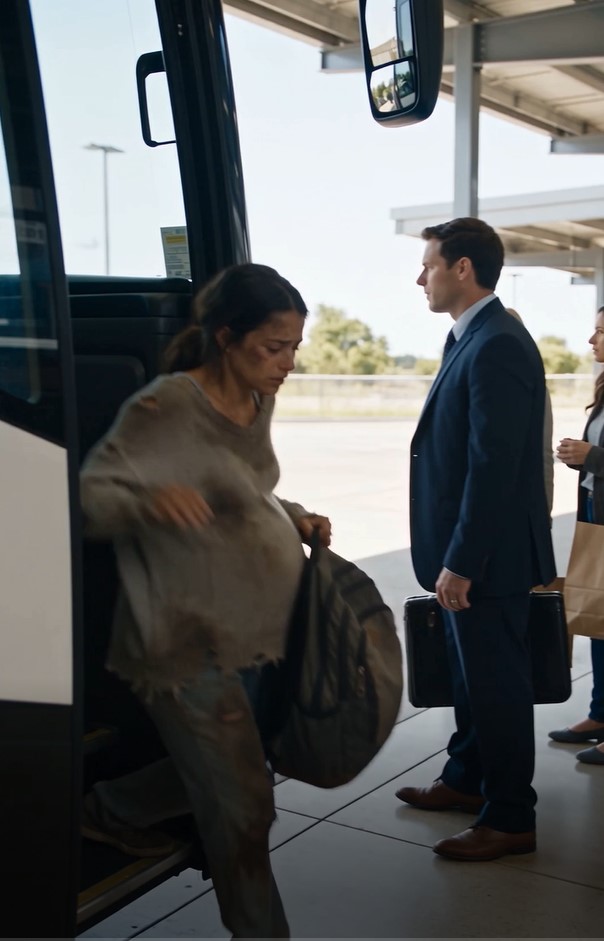
The Ticket Inspector Makes an Unfair Assumption
The man approached the gate, carrying a dark leather briefcase.
His name was Daniel Foster, a forty-five-year-old accountant who traveled by bus every Thursday to visit his elderly father.
He had been waiting for the same Fairview service when Richard began speaking to Helen.
“Excuse me,” Daniel said. “Why are you refusing to let her board?”
Richard turned sharply.
“This is company business. Please stay out of it.”
Daniel glanced at the ticket in Richard’s hand.
“She appears to have a ticket. Have you checked the date and destination?”
Richard frowned.
“I know how to check a ticket.”
“Then what’s the problem?”
Richard gestured toward Helen’s coat.
“Look at her. I can’t allow people to board if they’re going to make other passengers uncomfortable.”
Daniel’s expression hardened.
“Her clothes don’t tell you whether she paid for her journey.”
A few people standing in the queue nodded quietly.
Helen looked down, wishing the conversation would end.
“I don’t want any trouble,” she said. “If there’s something wrong with the ticket, I’ll explain.”
Daniel turned toward her.
“You don’t need to apologize for asking to use a service you’ve paid for.”
Richard gave an irritated sigh.
“Sir, if you want to help her, you can buy her another ticket. Otherwise, move along.”
Daniel shook his head.
“Why should she pay twice if her ticket is valid?”
Richard didn’t answer.
Instead, he held the ticket up and announced that he needed to verify it with the station supervisor.
Helen’s eyes moved toward the bus waiting beyond the gate.
The driver had already closed the luggage compartment, and passengers were beginning to take their seats.
She feared she would miss the journey entirely.
Daniel noticed her distress.
“Let’s check the ticket properly,” he said. “There’s no reason to turn this into a public humiliation.”
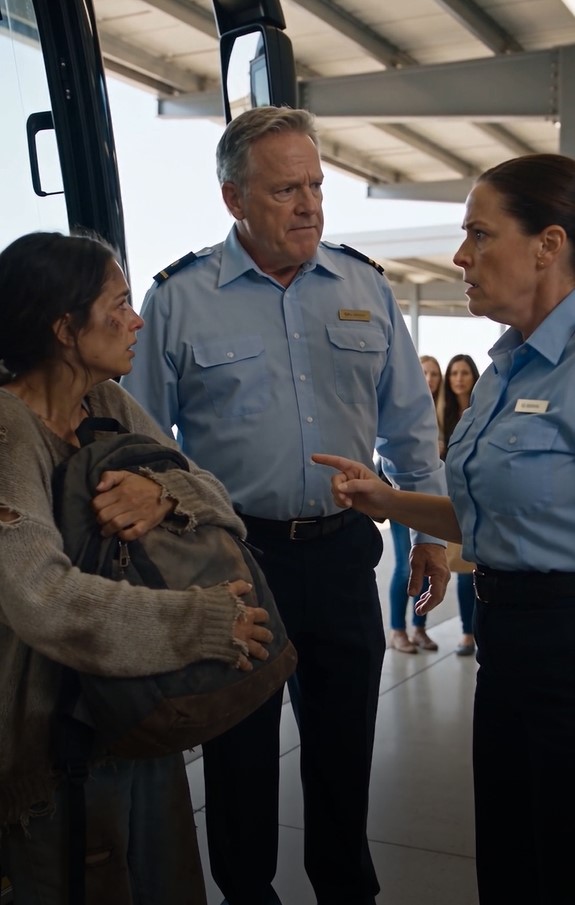
A Journey Helen Couldn’t Afford to Miss
While Richard walked toward the supervisor’s booth, Daniel asked Helen whether she had another copy of her ticket or a receipt.
Helen opened her canvas bag.
Inside were a small purse, a bottle of water, a folded cardigan, and several documents held together with a rubber band.
She carefully removed a receipt.
“I paid at the ticket counter this morning,” she explained. “I saved the receipt because I didn’t have enough money to buy another ticket if I lost this one.”
Daniel examined the receipt without taking it from her.
The printed destination matched the ticket, and the departure time was correct.
“Everything looks consistent,” he said.
Helen nodded.
“My sister, Margaret, lives in Fairview. She had been ill for some time, and I promised I’d visit as soon as she came home.”
She paused, then added, “I used to have a little apartment near her, but after my husband died, I fell behind on the rent. I’ve been staying with different people while I try to find somewhere permanent.”
Daniel listened without interrupting.
Helen didn’t ask for money or sympathy. She simply explained why the journey mattered.
“I haven’t seen Margaret in months,” she continued. “She doesn’t have many people nearby, and I don’t want her thinking I’ve forgotten her.”
Daniel glanced toward the bus.
“How far is the station from your sister’s home?”
“About twenty minutes by taxi,” Helen replied. “I can walk if I need to.”
He noticed that her shoes were cracked near the soles.
The thought of her walking through the evening rain troubled him, but he didn’t want to make assumptions about what she needed.
“Let’s get you onto the bus first,” he said.
Helen offered a small, grateful smile.
“Thank you for speaking to him. Most people just walk away.”
Daniel looked toward the supervisor’s booth.
“Someone should ask questions when a person is being treated unfairly.”
At that moment, Richard returned with a woman wearing a station supervisor’s badge.
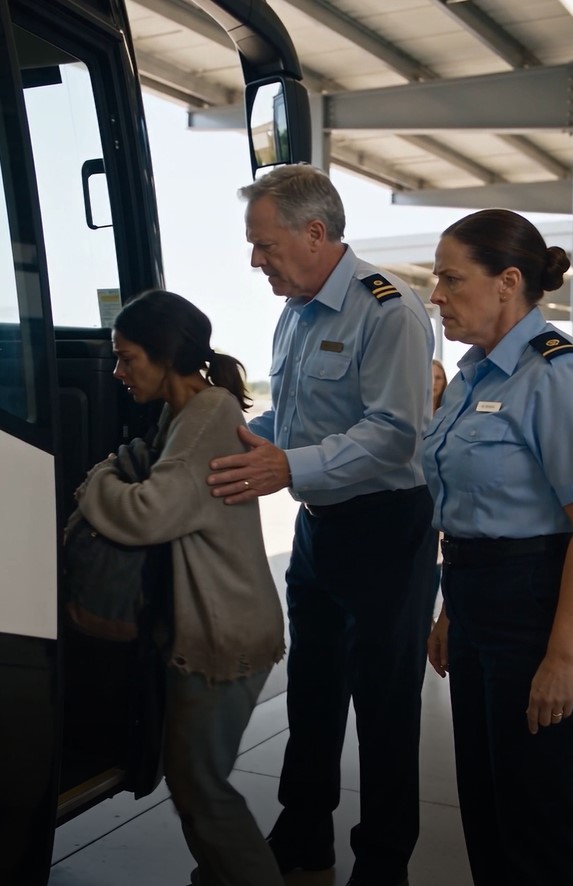
The Supervisor Checks the Records
The supervisor introduced herself as Susan Miller and asked to see Helen’s ticket and receipt.
Richard explained that he had delayed boarding because he suspected the woman might be attempting to travel without a valid fare.
Susan looked at the documents.
Then she checked the ticket number against the departure list on her handheld device.
After a few seconds, she looked up.
“The ticket is valid,” she said. “It was purchased this morning, and it’s assigned to this service.”
Richard shifted his weight.
“I was only trying to maintain order.”
“Maintaining order requires checking the facts,” Susan replied. “It doesn’t require making assumptions about a passenger’s appearance.”
She handed the ticket back to Helen.
“I’m sorry you’ve had to deal with this. You are entitled to board.”
Ticket Inspector Questions a Woman in Worn Clothes at a Bus Station, Until a Man Steps In https://t.co/3mOihsE3OV
— Animal Rescue Stories (@AnimalStory5) October 18, 2026
A Small Act of Kindness Reaches Fairview
The bus reached Fairview shortly before sunset.
Helen stepped down carefully, holding her canvas bag while Peter helped her retrieve it from the luggage compartment.
Rain had eased, leaving the pavement shining beneath the station lights.
She checked her phone and found a message from her sister.
I’m waiting by the main entrance. I can’t wait to see you.
Helen smiled.
Margaret stood beneath the shelter near the station doors, wrapped in a blue cardigan. When she saw Helen, she raised both arms.
The sisters embraced tightly.
For several moments, neither spoke.
Then Margaret pulled back and studied Helen’s face.
“You made it.”
“I did,” Helen replied. “I almost missed the bus, but someone helped me.”
As they walked toward the exit, Helen told her sister what had happened at the station.
She explained how the inspector had judged her by her clothes, how a stranger had challenged him, and how the supervisor had finally confirmed her ticket was valid.
Margaret listened with a troubled expression.
“People shouldn’t have to defend their right to be treated decently,” she said.
Helen nodded.
“No. But I’m grateful that someone did.”
Outside, Daniel was already traveling home on a later service. He would never know exactly how Helen’s visit went, but he hoped she reached her sister safely.
Helen and Margaret shared a simple meal that evening and talked late into the night.
The next morning, Helen sent a short message to the station supervisor thanking her for resolving the problem. She also thanked Daniel, whose name she had learned before boarding.
She didn’t ask for special treatment or a reward.
Because sometimes helping someone board a bus means more than getting them to their destination—it means reminding them that they still deserve dignity along the way.