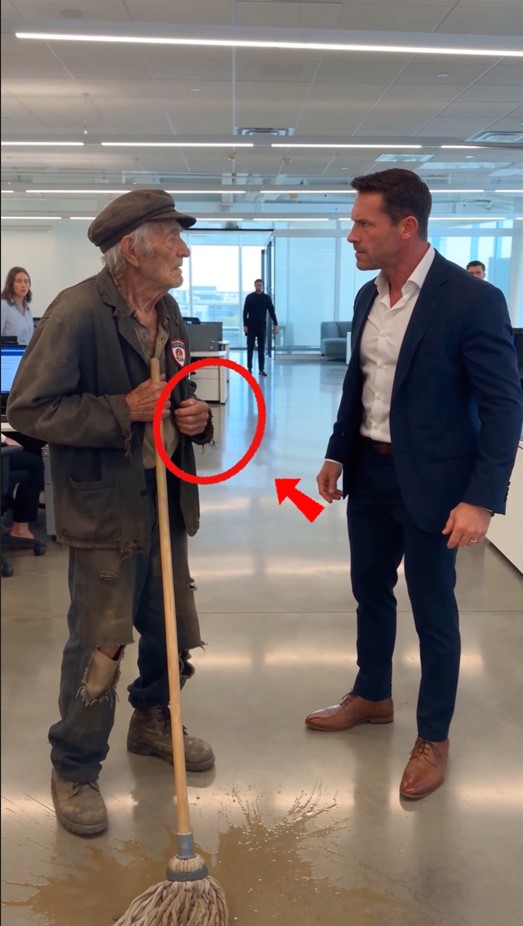
The sound of a metal cleaning bucket striking the office floor made several employees look up from their desks.
An elderly cleaner named Samuel was kneeling beside a conference room doorway when a man in an expensive gray suit stepped directly into his path.
The man, Richard Collins, was a senior department manager known for his demanding personality and impatience with delays.
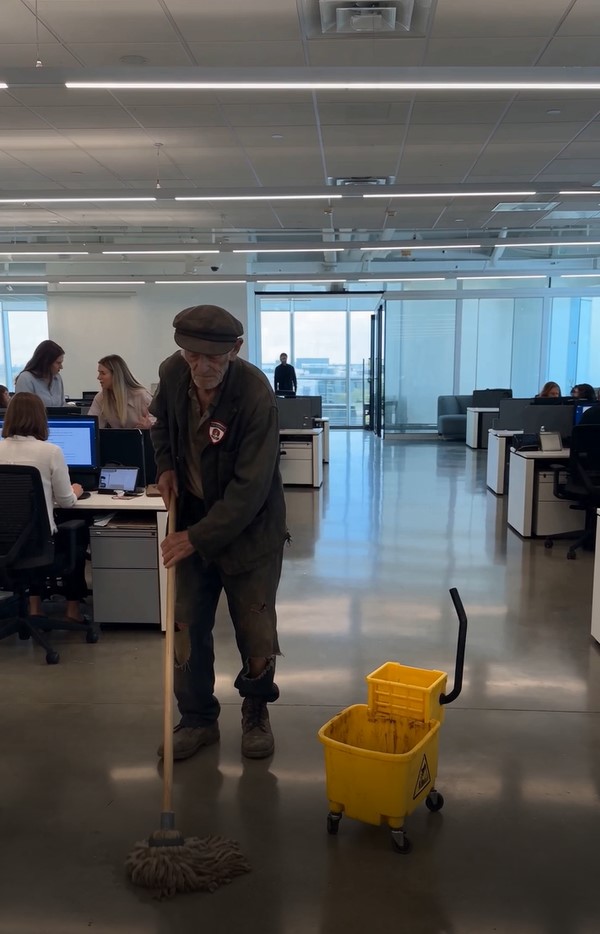
Samuel had been wiping spilled coffee from the polished floor when Richard complained that the cleaning equipment was blocking his way.
The elderly man apologized and began moving the bucket toward the wall.
Richard suddenly kicked the bucket aside, sending dirty water across the freshly cleaned tiles.
Several employees watched in silence as Samuel reached for his cloth.
Richard looked down at him and made a remark about people who should know their place.
Near the elevators, another man had just arrived and witnessed the exchange.
The Manager’s Behavior Drew Attention Across the Office
Samuel carefully moved the bucket away from the spreading water and placed a warning sign beside the wet floor.
Richard stood over him, complaining that the hallway should have been cleaned before employees arrived.
Samuel explained that someone had spilled coffee near the conference room and that he had been asked to remove it immediately.
Richard dismissed the explanation and accused him of making excuses.
A young administrative assistant named Emily approached and offered to help.
Richard told her to return to her desk and stop interfering.
Samuel thanked her quietly before continuing to wipe the floor.
Richard then pointed toward the elderly man’s worn uniform and questioned why the company employed someone who worked so slowly.
Several employees exchanged uncomfortable glances.
Samuel had worked in the building for years and was known for arriving early and helping whenever someone needed assistance.
He rarely complained, even when unexpected cleaning tasks interrupted his regular schedule.
When Richard demanded that Samuel finish immediately, the elderly man attempted to stand.
A Stranger Asked Why the Cleaner Was Being Treated That Way
The man approaching the hallway was Daniel Foster, a company executive who had recently returned from overseeing another regional office.
He wore a simple dark jacket and carried a laptop bag, making him look like an ordinary employee arriving for work.
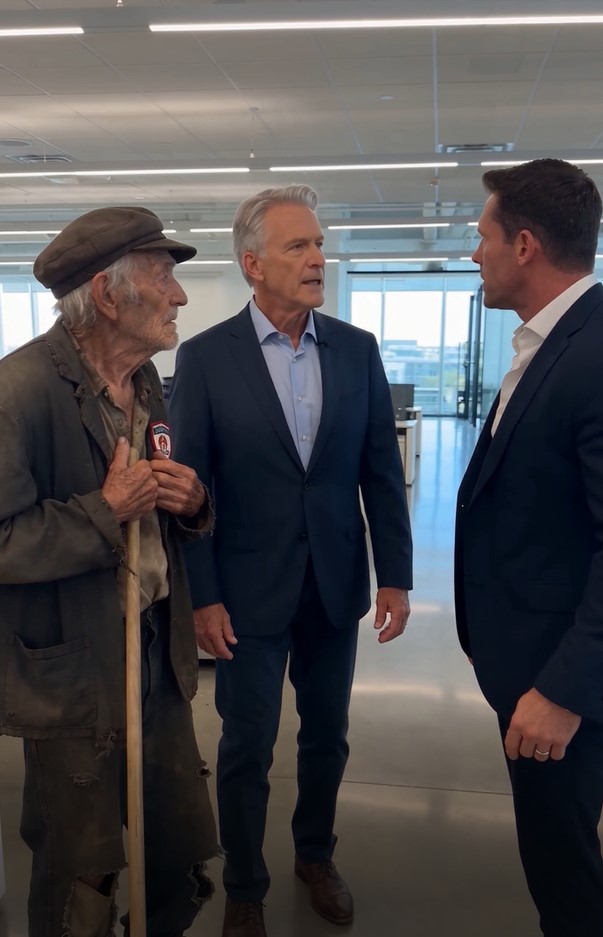
Daniel stopped beside the wet floor and asked Richard what had happened.
Richard explained that the cleaner had created an unnecessary obstruction and was delaying an important meeting.
Daniel looked toward the overturned bucket and asked whether Richard had moved it himself.
Richard hesitated before admitting that he had pushed it aside.
Emily, who had remained nearby, explained that Samuel had been cleaning an earlier spill when the manager became angry.
Daniel thanked her and asked Samuel whether he was hurt.
Samuel said he was fine, although his knee had become painful when he tried to stand too quickly.
Daniel offered him a chair and asked another employee to help secure the wet area.
The Executive’s Identity Changed the Conversation
Daniel introduced himself as the company’s newly appointed chief operating officer.
Richard’s expression changed immediately.
He had heard about the appointment but had not met Daniel in person.
Daniel explained that he had arrived early to observe daily operations before attending a leadership meeting.
He had not expected his first concern to involve the treatment of an elderly employee.
Richard attempted to justify his behavior by claiming that Samuel had repeatedly failed to maintain the hallway properly.
Daniel asked whether any formal performance concerns had been documented.
Richard admitted that he had not submitted a complaint.
Emily explained that Samuel had been responding to a fresh coffee spill rather than neglecting his regular duties.
Daniel then asked why the cleaning bucket had been kicked across the floor.
Richard struggled to provide an answer.
Daniel made it clear that the issue was not Samuel’s job title or Richard’s seniority.
The problem was the manager’s decision to humiliate another worker and create an additional safety hazard.
An Unexpected Discovery Revealed Samuel’s Quiet Contribution
After speaking with Richard, Daniel requested a review of the incident through the company’s human resources department.
He also met with Samuel’s cleaning supervisor, a woman named Laura.
Laura explained that Samuel had worked at the building for nearly fifteen years through an outside facilities contractor.
During that time, he had become one of the most dependable members of the maintenance team.
She described how he regularly reported loose carpeting, damaged electrical outlets, and blocked emergency exits before they caused accidents.
Daniel remembered seeing several maintenance reports from the previous year that had helped the company improve building safety.
When he examined the records, he discovered that Samuel had submitted many of the original observations.
One report had identified a leaking pipe above an electrical equipment room, allowing repairs before serious damage occurred.
Samuel had never received formal recognition because the reports were submitted under the facilities department.
Daniel invited him into the meeting room and thanked him for his attention to safety.
Samuel appeared surprised.
He explained that he simply tried to leave the building safer than he found it.
The Office Learned a Different Meaning of Leadership
Later that morning, Daniel met with Richard and a human resources representative.
Richard acknowledged that his behavior had been inappropriate and agreed to cooperate with the formal review.
Daniel explained that any disciplinary decision would follow company policy and a fair investigation.
Samuel was offered the opportunity to describe the incident without Richard present.
The cleaning supervisor arranged for him to rest briefly and confirmed that his knee discomfort did not require immediate medical attention.
Daniel also requested a review of how contracted cleaning staff could report workplace mistreatment.
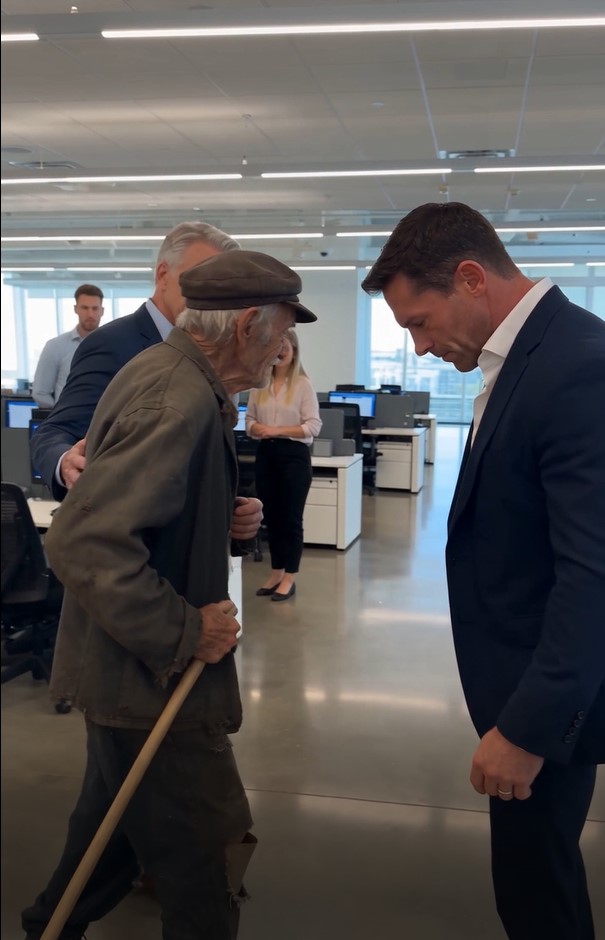
Before lunch, Richard approached Samuel with Laura present and offered an apology.
He admitted that he had allowed frustration to become disrespectful behavior.
Samuel accepted the apology but explained that being spoken to that way in front of younger employees had been deeply embarrassing.
Richard listened without interrupting.
Over the following weeks, the company introduced clearer reporting procedures and included contracted workers in its workplace respect training.
Samuel continued his regular duties, although his supervisor adjusted some physically demanding tasks to reduce strain on his knee.
How One Office Confrontation Became a Lesson in Respect
The incident began when Samuel, an elderly cleaner, was removing spilled coffee from a busy office hallway.
Richard, a senior manager wearing an expensive suit, became angry about the temporary obstruction and kicked Samuel’s cleaning bucket across the floor.
His remarks humiliated the cleaner in front of several employees.
Daniel Foster, the company’s newly appointed chief operating officer, witnessed the confrontation and intervened.
After hearing accounts from Samuel and another employee, Daniel challenged Richard’s behavior and arranged a formal workplace review.
Further investigation revealed that Samuel had spent years helping maintain the building and had reported numerous safety concerns that prevented larger problems.
His contributions had largely gone unnoticed because he worked through an outside facilities contractor.
Samuel had spent years quietly cleaning the floors beneath everyone else’s feet, but one man’s decision to defend him finally reminded the office that no honest job ever makes a person less deserving of dignity.