An Unusual Movement Beside the Wetland Road
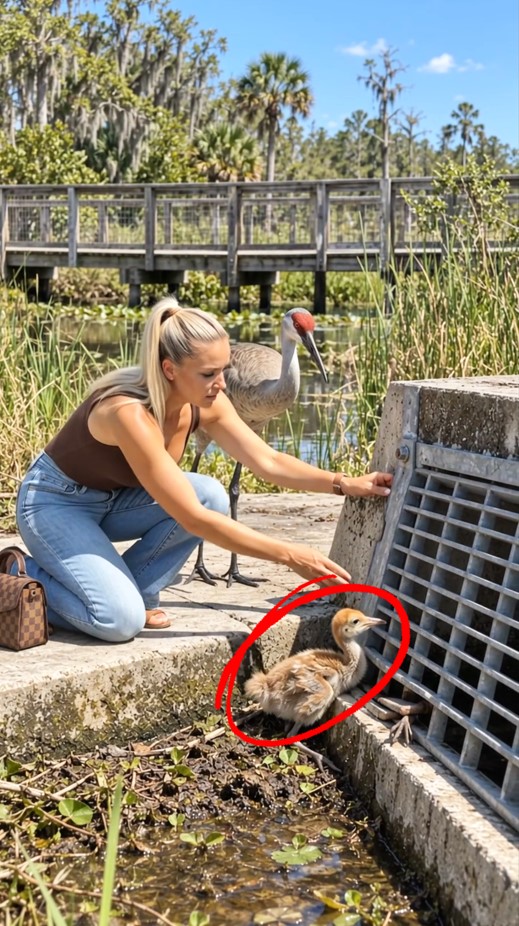
A young crane stood beside a roadside drain, repeatedly lifting one wing without taking flight.
Its long legs shifted awkwardly across the muddy grass near a shallow wetland.
A woman named Claire noticed the bird while driving toward a nearby nature reserve.
At first, she thought the crane was searching for insects along the drainage channel.
Then the bird stepped backward, revealing a thin black cord stretched toward the concrete opening.
Something beneath the drain appeared to be holding the young crane in place.
Claire stopped her car at a safe distance and watched the bird attempt another step.
The crane lowered its head, tugged once, and suddenly lost its balance.
Claire realized the problem was more complicated than an ordinary injured bird.
The Crane Could Move, but Something Held It Back
Claire approached slowly, keeping several yards between herself and the frightened young crane.
The bird stood upright again, spreading its wings whenever she moved closer.
Its gray feathers were damp around the lower body, but no obvious wound appeared.
Claire noticed a narrow strip of plastic wrapped around one of its legs.
The strip disappeared beneath a metal drainage grate surrounded by tangled grass.
Each movement tightened the material, preventing the crane from reaching the open wetland.
Claire considered moving closer but stopped when the bird began striking its beak downward.
She understood that handling a frightened wild bird could injure both of them.
Instead, she photographed the trapped leg from a distance and contacted the reserve office.
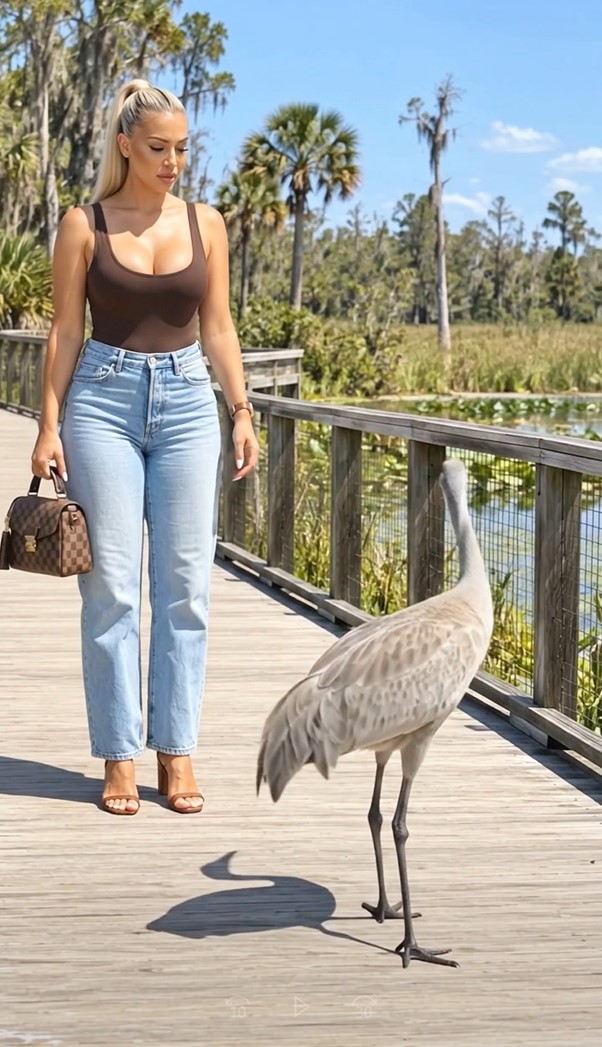
While waiting for instructions, she noticed another crane standing beyond the reeds.
The larger bird remained nearby, occasionally calling toward the drainage channel.
A Wildlife Worker Notices a Second Problem
Wildlife worker Daniel arrived in a reserve vehicle carrying protective equipment and a transport crate.
Claire showed him the photographs before they approached the drainage channel together.
Daniel immediately recognized the plastic as discarded agricultural binding material.
He explained that struggling against the strip could tighten it around the crane’s leg.
The young bird watched them carefully, shifting its weight onto its unrestrained foot.
Daniel examined the drainage grate without approaching close enough to frighten the crane.
He noticed that the binding material had become caught beneath a rusted metal bracket.
Simply cutting the visible strip might leave another section wrapped tightly around the leg.
Daniel contacted a maintenance worker responsible for the drainage structures along the reserve road.
Claire helped by keeping approaching pedestrians away from the narrow roadside.
Meanwhile, the larger crane moved between two patches of reeds without leaving the area.
Daniel suspected the adult might be guarding the young bird from a distance.
He prepared a soft restraint cloth and checked the safest approach from the grassy side.
Before attempting anything, however, he needed to understand how the material entered the drain.
The First Attempt Reveals a Hidden Tangle
Daniel approached with the cloth while Claire remained behind the temporary roadside barrier.
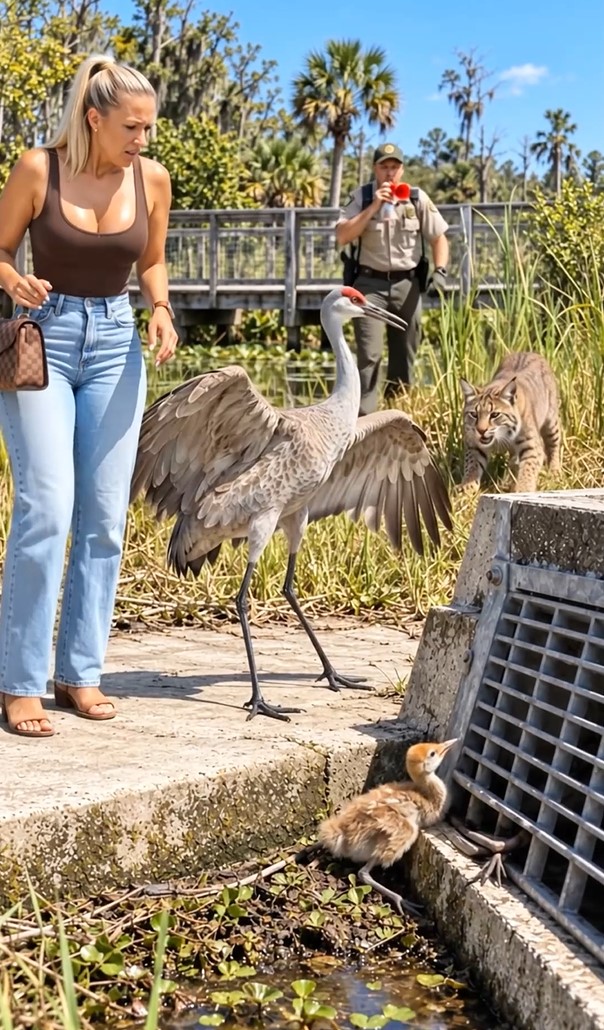
The young crane opened its wings and tried moving toward the wetland.
Its trapped leg pulled sharply backward, forcing Daniel to stop immediately.
He retreated several steps and allowed the bird to settle again.
The movement revealed something that had been hidden beneath the muddy drainage opening.
Several loops of plastic binding were twisted around a branch inside the channel.
One loop remained attached to the crane, while the others disappeared beneath the grate.
Daniel realized that pulling the visible strip could tighten the entire tangle.
The maintenance worker arrived and inspected the metal bracket securing the grate.
He explained that the grate could be lifted after the surrounding area was secured.
However, the crane needed gentle restraint before anyone moved the heavy metal cover.
The Drain Opens and the Crane Is Finally Freed
The second wildlife worker, Maya, arrived carrying additional protective cloths and a padded transport crate.
Daniel explained the tangled binding while the maintenance worker prepared to open the grate.
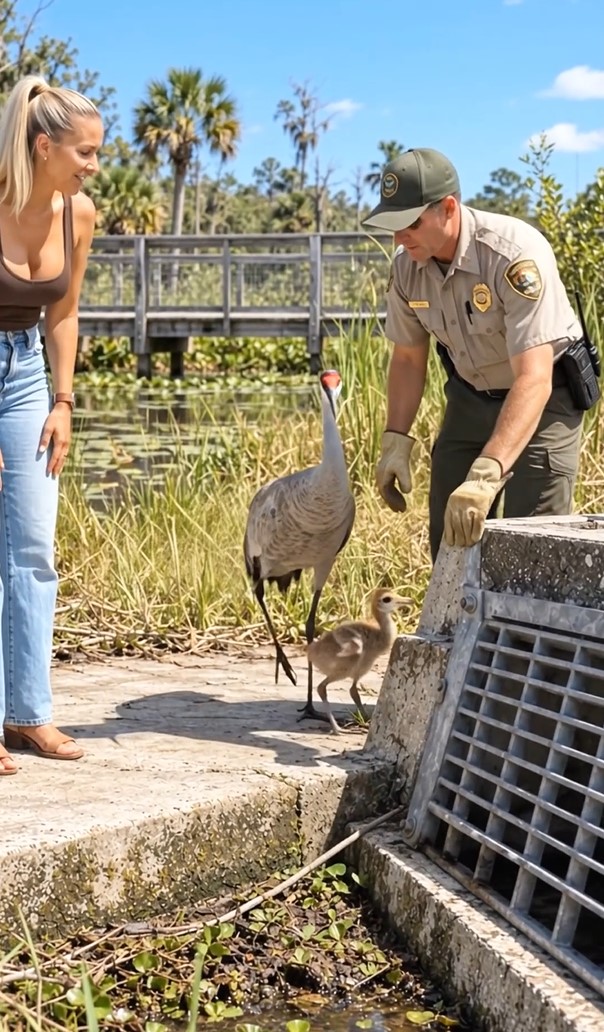
Maya approached from the grassy side, carefully keeping the crane away from the roadway.
With controlled movements, the trained workers gently covered and supported the young bird.
The crane briefly spread its wings before settling beneath the protective cloth.
Daniel supported its body while Maya stabilized the trapped leg without pulling it.
The maintenance worker loosened the grate and lifted it clear of the drainage opening.
Beneath the metal cover lay a branch wrapped in several lengths of discarded plastic.
One narrow loop extended upward and circled the crane’s lower leg.
Daniel carefully separated the loose material while Maya maintained the bird’s position.
The final loop was tight enough to leave a visible indentation around the skin.
Using appropriate rescue cutters, Daniel removed the binding without pulling against the leg.
The crane’s foot was finally free, but the workers did not release it immediately.
They checked its movement and discovered mild swelling around the affected area.
Daniel decided the young bird needed a professional examination before returning to the wetland.
A Quiet Examination Brings Encouraging News
The wildlife team placed the crane inside a padded transport crate with adequate ventilation.
Claire watched as Daniel secured the crate inside the reserve vehicle.
The larger crane remained near the reeds, occasionally calling across the drainage channel.
Daniel explained that the young bird’s condition would determine when release became appropriate.
At the rehabilitation station, a wildlife veterinarian examined the leg for deeper injuries.
The examination found swelling and superficial pressure marks, but no obvious fracture.
The crane could move its toes and place weight on the affected foot.
Staff provided supportive care and monitored the bird inside a quiet recovery enclosure.
By the following morning, the young crane was standing comfortably on both legs.
A further examination confirmed that the swelling had decreased and movement remained normal.
Daniel contacted Claire to explain that the bird was responding well to care.
The Young Crane Returns to the Wetland
Two days later, Daniel and Maya returned to the wetland with the recovered young crane.
Claire had been invited to observe from a designated area beside the reserve road.
The drainage grate was secure, and the surrounding grass had been cleared of debris.
Daniel placed the transport crate on level ground away from passing vehicles.
When he opened the door, the young crane remained inside for several moments.
Then it stepped onto the grass, placing weight confidently on both legs.
The bird paused beside the reeds before walking toward the shallow wetland.
A distant crane called from beyond the water, drawing the youngster’s attention.
The young bird answered and continued toward the sound without stumbling.
Claire watched until its gray feathers disappeared behind the taller vegetation.
The team could not confirm whether the calling bird was its parent.
Still, the crane had returned safely to suitable habitat near its original location.
In this fictional rescue story, an ordinary roadside observation led to an important intervention.
A small act of attention had given a young crane another chance to walk freely through the wetland.