An Unexpected Photograph at a Bridge Dedication Ceremony
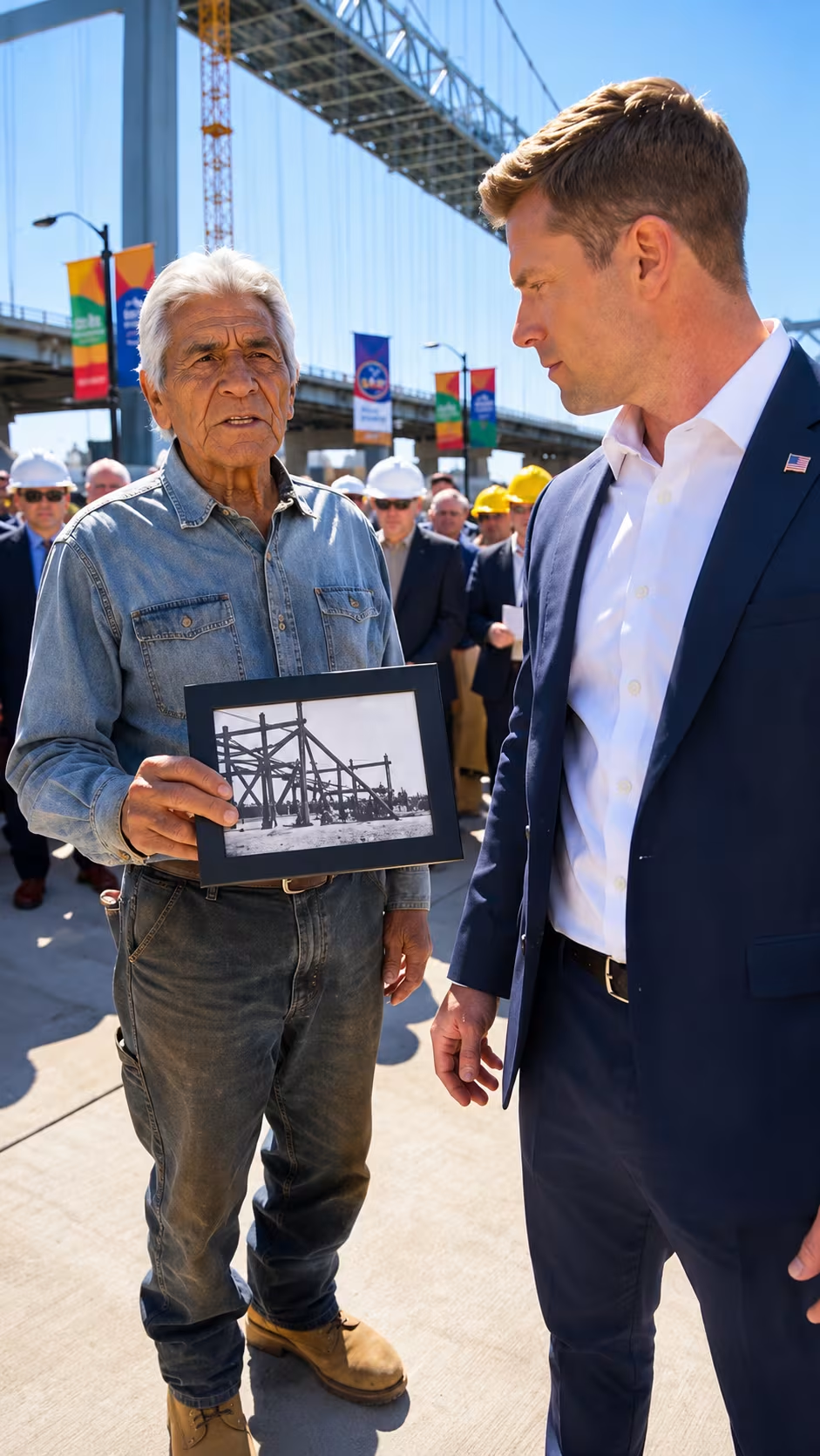
The elderly man reached into his jacket and removed a faded photograph just as the ceremony was about to begin.
Arthur Bennett, eighty-two, stood near the front row overlooking the newly restored Riverside Bridge.
Two people beside him, city engineer Emily Carter and event coordinator Daniel Brooks, noticed his trembling hands.
“Would you mind looking at something before the speeches?” Arthur asked.
He carefully unfolded the photograph, revealing a younger man standing beside the same bridge decades earlier.
Emily recognized the original steel railings and stone supports.
Daniel noticed a handwritten date beneath the picture.
Arthur explained that the photograph had been taken during the bridge’s original construction.
Then he pointed toward a figure standing near the center.
“That was my father,” he said.
A Ceremony That Brought Back Old Memories
The town had spent nearly two years restoring Riverside Bridge.
Originally constructed in the 1950s, the crossing connected two neighborhoods separated by a narrow river.
For decades, residents used it to reach schools, shops, and nearby workplaces.
Recent inspections had identified structural deterioration requiring extensive repairs.
The municipality approved a restoration project that preserved several historical features.
Emily supervised part of the engineering work, including repairs to the original stone supports.
Daniel organized the reopening ceremony with representatives from the local historical society.
Arthur received an invitation because he had lived in the neighborhood for most of his life.
He remembered watching construction workers assemble the bridge when he was a child.
His father, Thomas Bennett, had worked as a carpenter on the original project.
Arthur often visited the construction site after school, accompanied by his mother.
Those visits became some of his clearest childhood memories.
When he learned about the restoration, he searched through his family’s old photographs.
One picture showed his father standing proudly beside the unfinished bridge.
Arthur decided to bring it to the ceremony, hoping someone might appreciate its history.
Two People Discover a Personal Connection
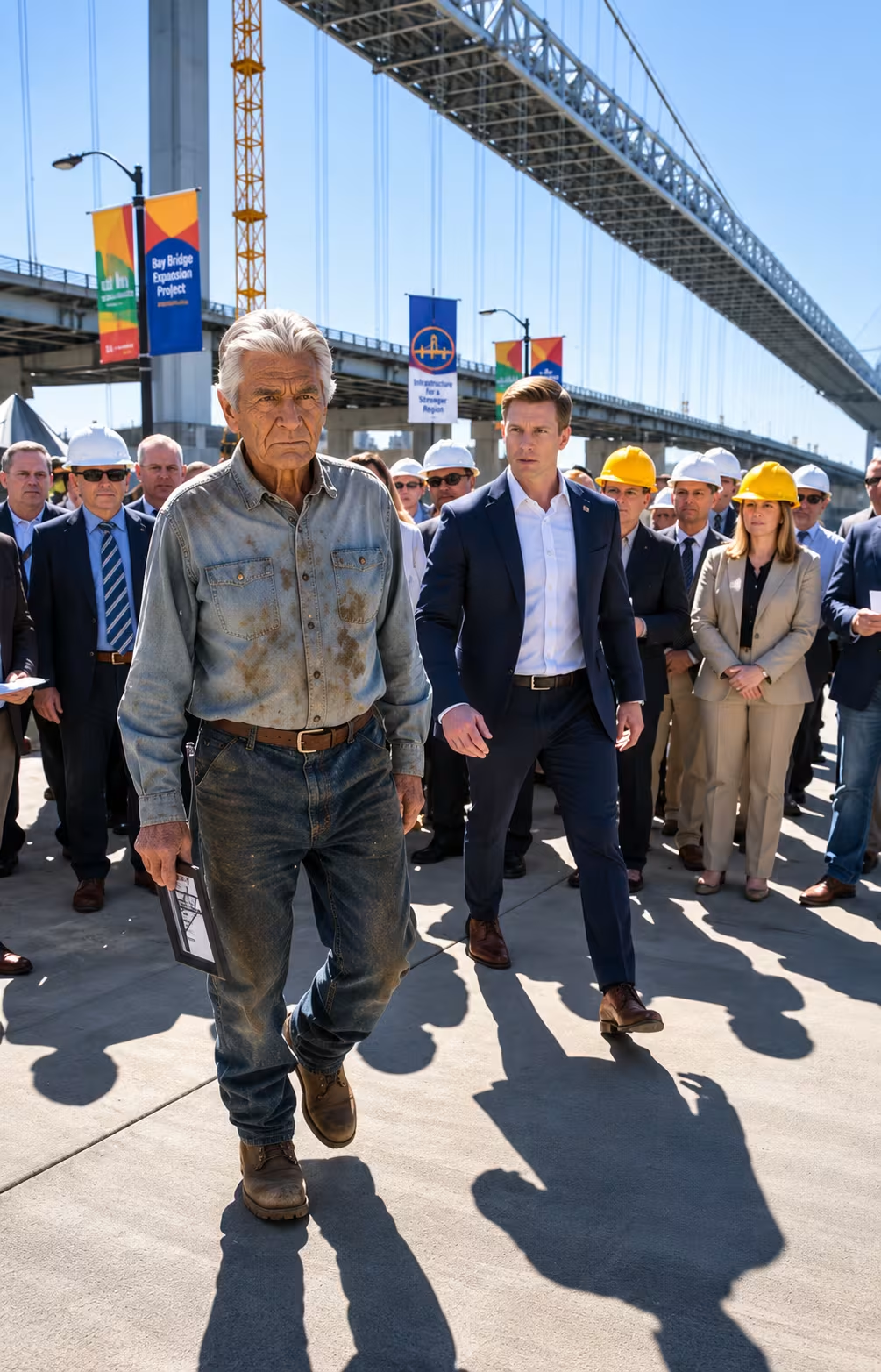
Emily studied the photograph while Arthur explained where it had been taken.
The image showed several workers standing beside a wooden construction platform.
Arthur’s father held a measuring tool and wore a heavy work jacket.
Daniel recognized the temporary wooden supports visible beneath the unfinished roadway.
He asked whether Arthur remembered the other workers pictured.
Arthur identified two men who had lived near his childhood home.
He explained that the construction crew included local carpenters, masons, and equipment operators.
His father had helped build temporary wooden forms used during the concrete work.
Emily was interested because the restoration team had uncovered traces of those original methods.
She explained that engineers had documented the historical features before beginning repairs.
Arthur smiled when she mentioned the stone supports.
His father had frequently described the care required to align the wooden forms.
Daniel asked whether Arthur would allow the historical society to examine the photograph.
Arthur agreed but wanted to keep the original in his possession.
Emily suggested making a digital copy for the town’s records.
The conversation continued until Daniel received a reminder that the ceremony would begin shortly.
An Old Photograph Raises an Important Question
Before returning to his seat, Arthur pointed toward the photograph’s lower corner.
A small handwritten note appeared beneath the date.
Emily leaned closer and read the words aloud.
“First crossing, September 1956.”
Arthur explained that his father had written the note many years earlier.
However, the town’s official records listed the bridge opening in October.
Daniel wondered whether the photograph documented an earlier construction milestone.
Emily suggested that the first crossing might have occurred before the public opening.
Workers often tested or inspected structures before allowing regular traffic.
Arthur remembered his father describing a small gathering after the bridge became passable.
He recalled hearing about a construction vehicle crossing before the dedication ceremony.
The story had remained in the family but was never formally documented.
Daniel contacted a historical society representative attending the event.
The representative examined the photograph and recognized several construction details.
She explained that archived newspapers might clarify the difference between the dates.
Arthur was pleased that the question could be investigated.
Emily assured him that the photograph would be handled carefully if he chose to share it.
The Photograph Becomes Part of the Ceremony
Daniel returned to the podium as the audience gathered near the bridge entrance.
The mayor opened the ceremony by describing the restoration project’s goals.
She thanked the engineers, construction workers, and residents who supported the work.
Emily then explained how the team preserved the bridge’s original appearance.
She described the repaired stone supports and strengthened structural components.
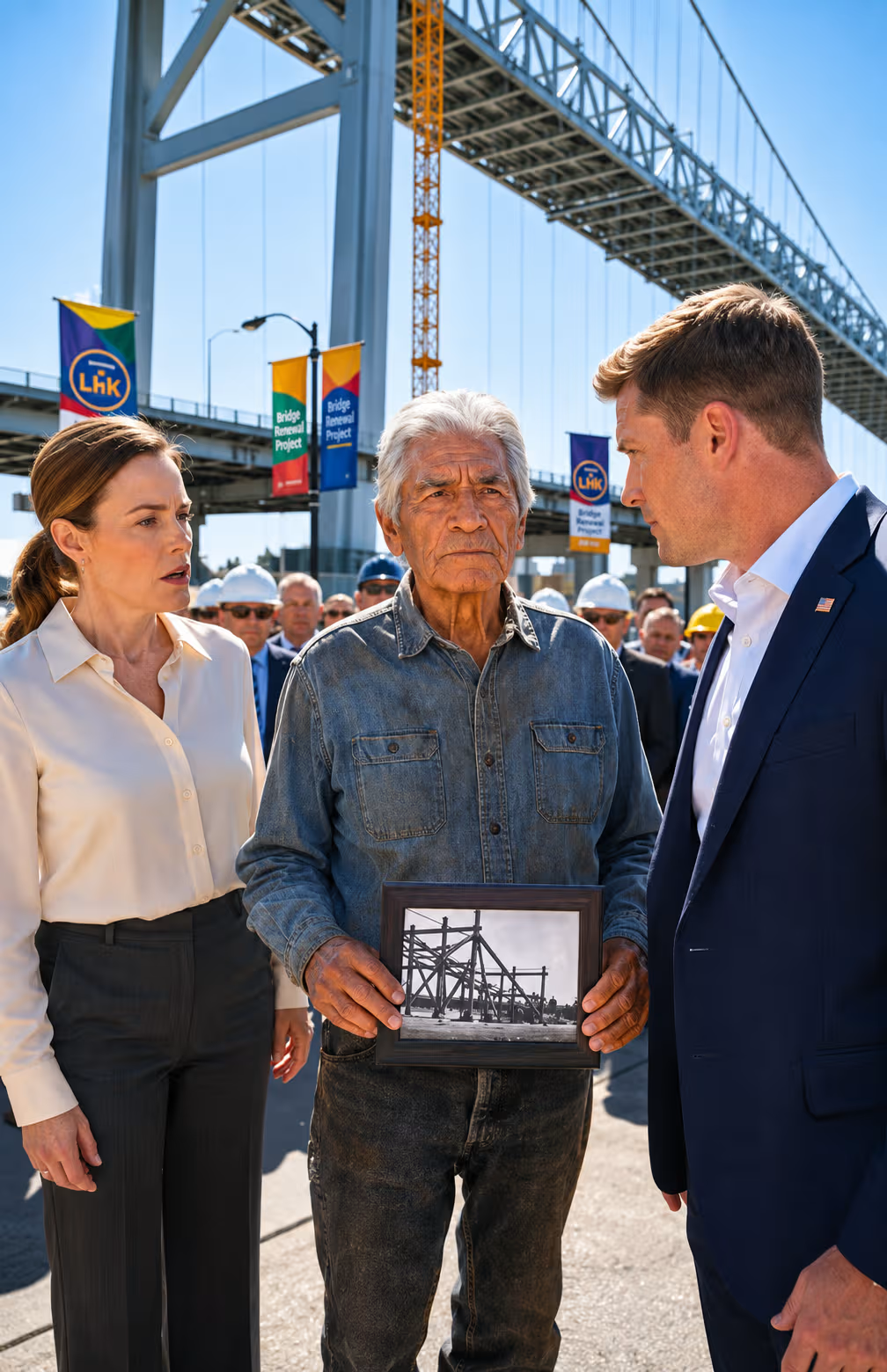
After her remarks, Daniel invited Arthur to join them near the display board.
Arthur walked slowly toward the front while the audience watched.
Daniel introduced him as the son of a worker involved in the original construction.
With Arthur’s permission, Emily displayed an enlarged digital image of the photograph.
The audience could see Thomas Bennett standing beside the unfinished bridge.
Arthur explained how his father had helped construct the temporary wooden forms.
He also described watching the workers from the riverbank as a young boy.
Several longtime residents recognized family names mentioned during his remarks.
The mayor thanked Arthur for preserving an important piece of local history.
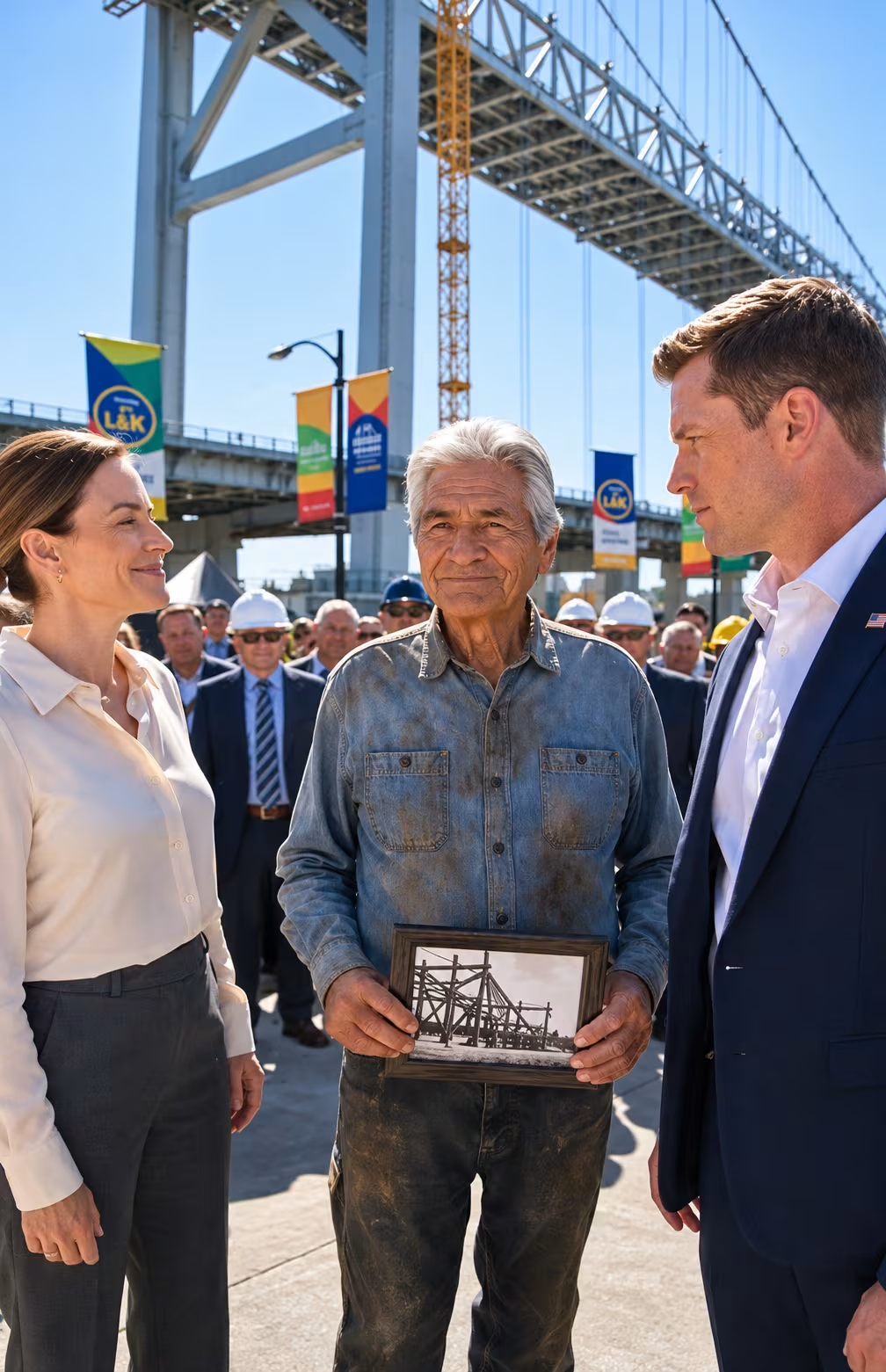
Daniel then invited him to stand beside the officials for the ceremonial ribbon cutting.
Arthur accepted, visibly pleased to participate.
A Family Memory Finds Its Place in History
Following the ceremony, visitors walked across the restored bridge for the first time.
Arthur crossed slowly with Emily and Daniel beside him.
He paused near the center and looked toward the river below.
The view reminded him of afternoons spent watching his father work.
Emily explained that the bridge had been strengthened while retaining its familiar character.
Arthur appreciated that the restoration respected the structure’s original appearance.
Later, a historical society representative contacted him about the photograph.
She had located a newspaper report describing a construction inspection in September 1956.
The report mentioned a successful crossing by a work vehicle before the official opening.
That information appeared consistent with the handwritten note beneath Arthur’s photograph.
However, the archive did not identify every worker pictured.
Arthur helped provide names and family details for the historical record.
The society prepared a digital exhibit about the bridge’s construction and restoration.
His photograph became one of the exhibit’s central historical images.
Daniel arranged for a copy to be displayed at the town library.
Arthur visited the display with his daughter and grandchildren.
A Bridge Connecting Two Generations
Several weeks later, Arthur returned to Riverside Bridge with his family.
His granddaughter carried a printed copy of the photograph.
She asked him to show her where Thomas had stood during construction.
Arthur pointed toward the original stone supports beneath the roadway.
He explained how the bridge had changed while remaining familiar.
His granddaughter listened as he described the workers and their equipment.
For the first time, Arthur felt that those childhood memories had found a lasting home.
Emily later sent him photographs from the reopening ceremony.
One showed Arthur holding his father’s picture beside the restored bridge.
Daniel included the image in the town’s official ceremony archive.
The historical society continued collecting stories from families connected to the original construction.
Arthur’s contribution encouraged several other residents to share photographs and documents.
The bridge remained open for daily travel between the two neighborhoods.
In this fictional story, an elderly man’s photograph helped preserve a forgotten part of local history.
The ceremony became an opportunity to recognize the people who had built the original crossing.
Arthur kept the original photograph safely at home, alongside the new picture from the dedication.
For Arthur, the restored bridge was more than a familiar crossing; it was a lasting reminder of his father’s work and the memories their family could now share with future generations.